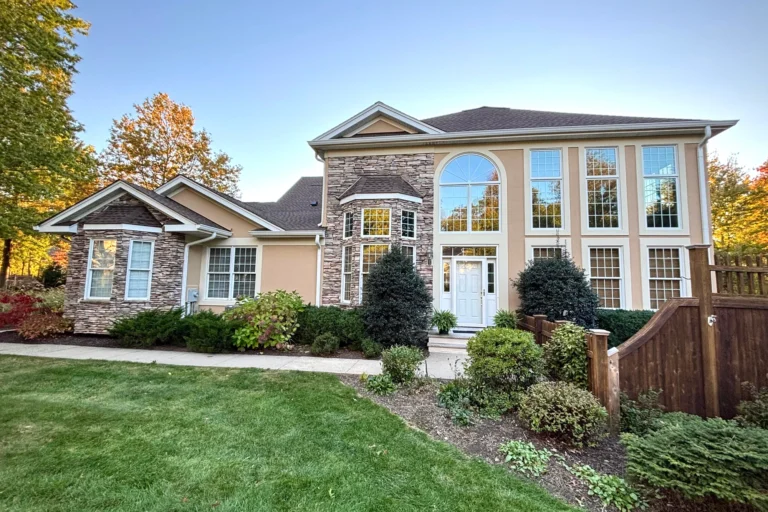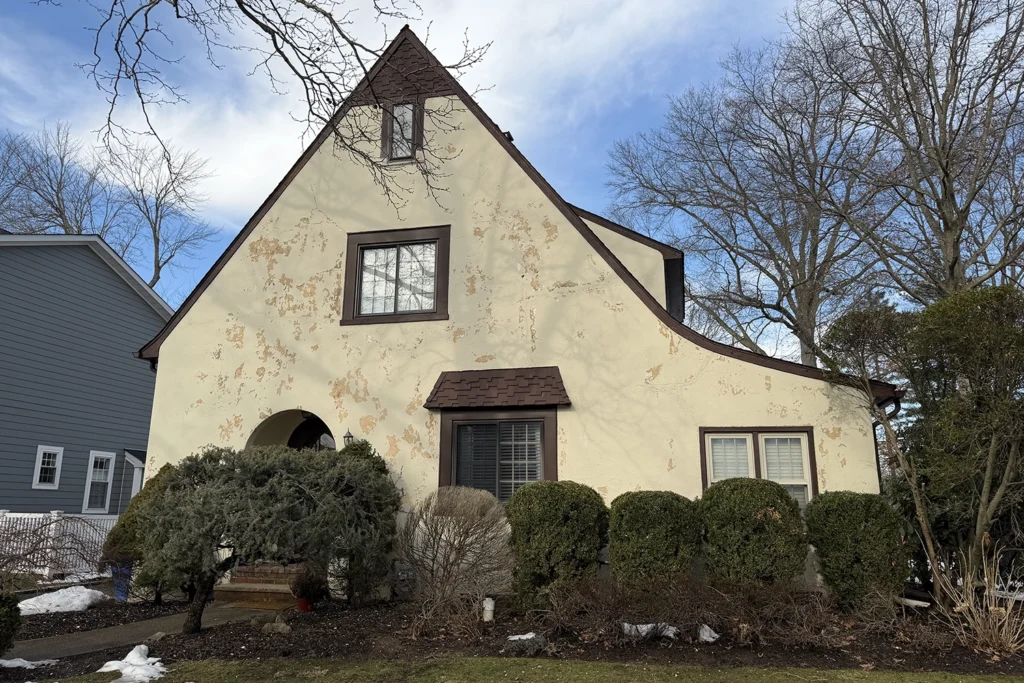
Paint can renew the color of stucco, but it cannot repair a loose, cracked, or wet wall. Repainting may be enough when the stucco is dry, firmly bonded, and affected only by fading, mild chalking, or an outdated color. Stucco repair should come first when cracks keep returning, paint is peeling or bubbling, the surface feels soft or sounds hollow, or stains reappear after rain.
Many New Jersey homeowners call us after noticing cracks or peeling paint and assume a fresh coat will solve the problem. Sometimes it will. In other cases, the visible mark is only a symptom of water entering near a window, roof connection, chimney, deck, or failed sealant joint.
Confirm that the wall is sound and dry before applying any stucco protective coating.
Can I Just Paint Over My Damaged Stucco?
Painting over damaged stucco can improve the appearance for a short time, but it does not correct the cause. Paint cannot rebond detached stucco, rebuild a failed base coat, stop movement around a window, or dry trapped moisture inside the wall.
If moisture remains behind the finish, the same area may develop bubbling paint, peeling, flaking, or new discoloration.
Before repainting, check for active cracks, loose areas, failed caulk, water stains, soft material, and coating adhesion. In the stucco paint vs repair decision, paint treats the finish, while repair corrects damaged material and its cause.
Stucco Repair vs Repainting: A Quick Comparison
| What You See | Likely Next Step | Check First |
|---|---|---|
| Faded color | Repainting | Confirm the wall is dry and solid |
| Mild chalking | Clean and repaint | Test old-paint adhesion |
| Small, stable cracks | Local preparation, then paint | Check whether cracks reopen |
| Wide or recurring cracks | Repair before painting | Look for movement or water entry |
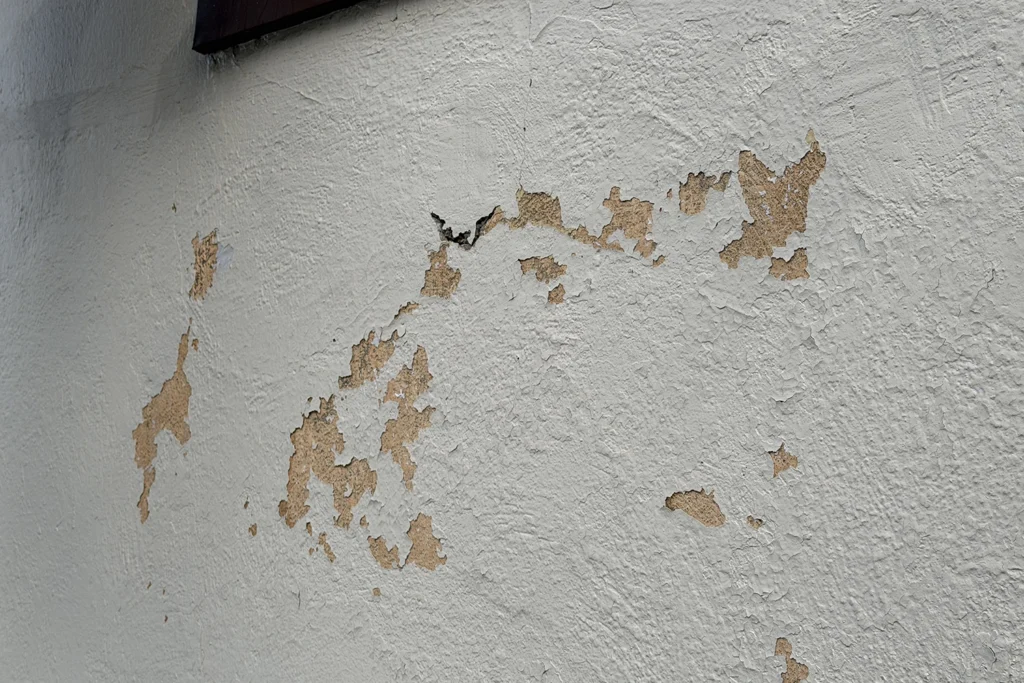
| Peeling or bubbling paint | Repair the cause, then repaint | Check moisture and old coatings |
| White powder or recurring stains | Diagnose before painting | Check for efflorescence |
| Hollow, bulging, or soft stucco | Open and repair the area | Check behind the finish |
| Widespread patches | Consider restoration | Compare local repair with full-wall work |
A small crack in the wrong location can matter more than a larger, stable surface crack. Pattern, location, and whether the defect returns help determine when to repair vs repaint stucco.
When Is Repainting Stucco Enough?
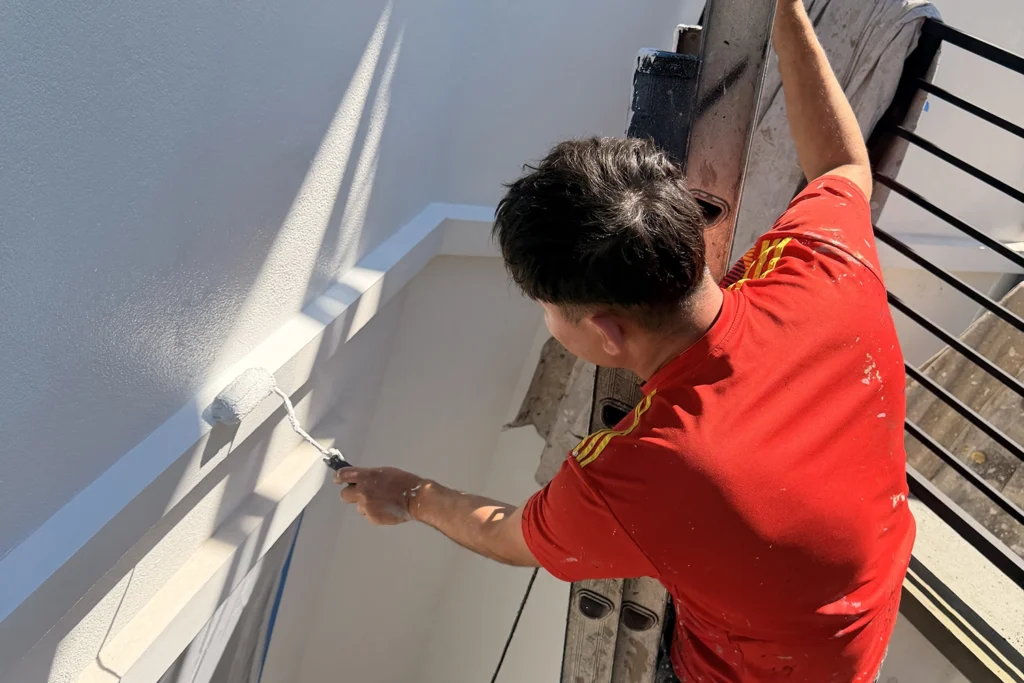
Repainting is usually the right choice when the wall is sound, and the problem is cosmetic.
Faded Color or a Cosmetic Upgrade
If the wall is dry and firmly bonded, a compatible acrylic coating can restore color consistency or give the home a new look.
Mild Chalking
Chalking is the powdery residue that forms as an older coating weathers. It does not always mean the stucco is damaged, but it must be removed during surface preparation. New paint applied over loose powder will not bond well.
Firmly Bonded Existing Paint
If the current coating is not peeling, blistering, or separating, repainting may be a practical maintenance step. It still requires cleaning, minor patching, and careful masking. Poor masking problems can leave overspray and uneven edges.
Our stucco painting services in New Jersey include surface checks, preparation, color matching, and coating selection.
When Does Stucco Need Repair Before Painting?
Cracks Are Growing, Branching, or Reopening
Stucco repair before painting is required when a crack is active or tied to loose material or moisture.
A stable hairline crack may need only local treatment. A crack that becomes wider, returns after patching, forms a web pattern, or appears around windows and doors should be checked before painting.
The stucco crack repair vs paint choice depends on whether the crack is limited to the finish or reflects movement below it. Read our guide to repairing stucco cracks before they spread.
Paint Is Peeling, Flaking, or Bubbling
Stucco paint failure can result from poor preparation, trapped moisture, incompatible coatings, or paint applied before a repair was dry. Scraping the loose paint and adding another coat may repeat the same failure.
A proper stucco peeling paint repair begins by finding out why the coating lost adhesion. Work may include removing loose material, drying the wall, repairing cracks, applying a bonding agent or masonry primer, and recoating. See our solutions for peeling stucco paint.
Stucco Sounds Hollow, or Looks Bulged
A hollow sound can mean the stucco has separated from the layer below it. Bulging, soft areas, and missing chunks point to physical failure that paint cannot fix. The affected area may need to be opened so the materials behind the finish can be checked.
White Spots or Dark Stains Keep Returning
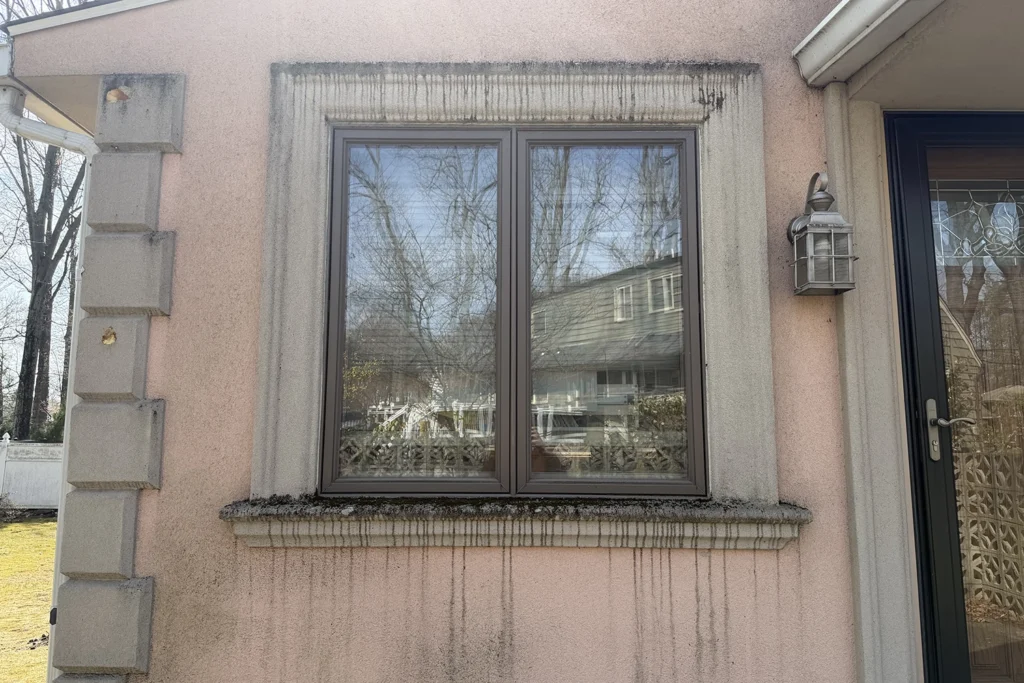
White, powdery deposits are often efflorescence. The residue may be cosmetic, but its return shows moisture movement. Dark streaks and damp areas around windows can also point to water entry. A stucco discoloration paint or repair decision should be made only after the cause is checked.
Read about dealing with stucco discoloration and efflorescence.
Damage Appears Near Windows, Roof Lines, or Wall Openings
Water often enters through failed sealant, flashing, roof-to-wall connections, window details, vents, and pipes. The stain may appear several feet from the entry point.
The stucco damage repair or paint decision should wait until the moisture source is found. Our water infiltration and stucco leak repair service addresses the damage and the route water used to enter.
Can Elastomeric Paint Replace Stucco Repair?
No. Elastomeric paint is a thicker, flexible coating that can bridge very fine, stable surface cracks and help protect a sound wall from wind-driven rain. It cannot secure loose stucco, repair failed flashing, stop active movement, or replace damaged material behind the finish.
Coating selection also affects breathability. A wall with trapped moisture needs to dry, and the wrong coating can slow that process. An acrylic coating or elastomeric system should be selected only after the wall condition and old paint are reviewed. Elastomeric paint is a protective finish, not a substitute for repair.
Stucco Recoat vs Repair vs Restoration
A stucco recoat vs repair decision comes down to the depth and spread of the problem.
A recoat is suitable when the stucco is sound, and the goal is renewed color or added weather protection.
A local repair is suitable when damage is limited to cracks, loose sections, isolated moisture entry, or small failed areas. The repair should be cured, texture matched, and prepared before painting.
The stucco restoration vs repainting decision becomes relevant when the wall has many old patches, broad discoloration, widespread separation, or a finish that cannot be made consistent through isolated work. In that case, professional stucco restoration may give a more even result.
What Should Happen Before Stucco Is Repainted?
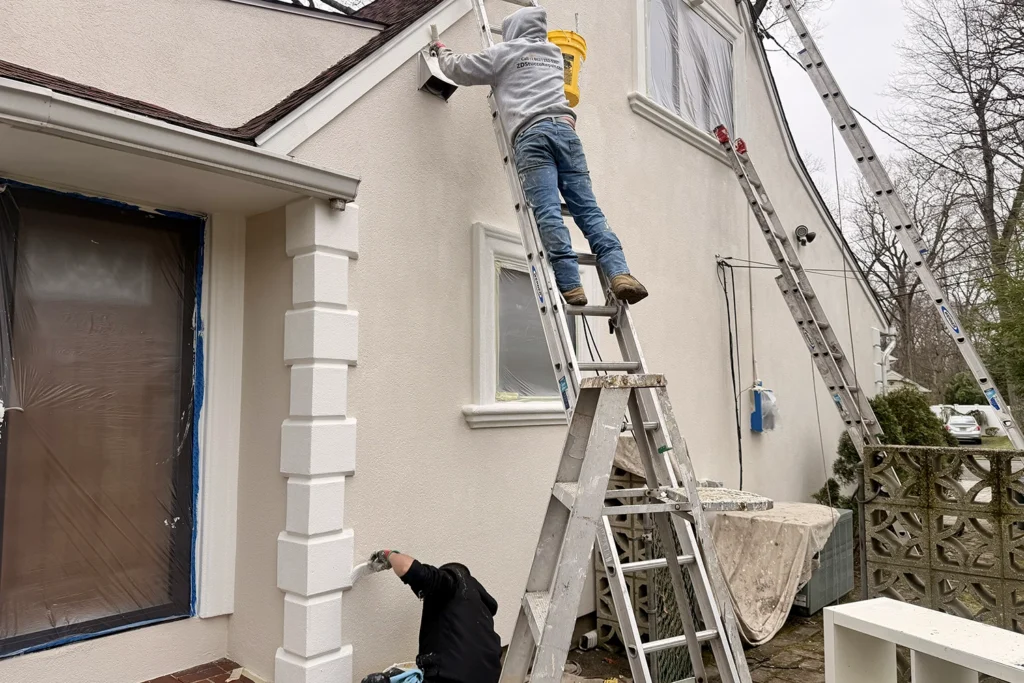
A sound stucco painting and repair project follows this order:
- Inspect cracks, stains, hollow areas, sealant joints, windows, doors, and roof connections.
- Check suspect areas for moisture and find the entry point.
- Correct failed caulk, flashing, drainage, or roof details.
- Remove loose paint and damaged stucco, then repair and match the texture.
- Allow the repair to cure and dry.
- Clean the wall. Controlled power washing may be suitable, but excess pressure can damage stucco or force water into openings.
- Apply the required primer or bonding agent and the selected acrylic or elastomeric coating.
- Check coverage, masking, texture, and color consistency.
Skipping these steps can lead to stucco paint problems even when a good coating is used.
Stucco Repair Cost vs Paint: Which Costs More?
Repainting usually costs less when the stucco is already sound. The stucco repainting cost depends on wall area, access, number of coats, color change, surface preparation, old coating condition, and product choice.
Repair pricing depends on the depth of the damage, texture matching, moisture testing, access, and whether materials behind the finish are affected.
When comparing stucco repair cost vs paint, the lowest initial quote is not always the least expensive. Painting over active damage can lead to another coating failure and a larger repair.
Why This Decision Matters for New Jersey Homes
New Jersey stucco is exposed to heavy rain, humid summers, winter snow, freeze-thaw cycles, and, in some areas, salt. Small gaps can admit water, while shaded walls may dry slowly.
Peeling paint is often the first visible symptom rather than the source. Repainting should begin with a wall-condition check, especially when the same stain or crack has returned.
How to Know When to Repair vs Repaint Stucco
Repainting is likely enough when the wall is dry, solid, free of recurring stains, and affected mainly by fading or mild chalking.
Repair before painting when cracks are active, paint is peeling or bubbling, stucco is hollow or soft, chunks are missing, or discoloration returns after wet weather.
Request a wider assessment when several walls have old patches, uneven texture, recurring moisture, or broad separation. In those cases, restoration may make more sense than another isolated stucco recoat.
At ZD Stucco Repair, we first determine whether the wall needs cleaning, local repair, moisture correction, restoration, or repainting. That lets the homeowner pay for the work the house actually needs.
Frequently Asked Questions
How Long Should Stucco Repair Cure Before Painting?
The curing and drying time depends on the repair material, depth, weather, and coating system. Painting too soon can trap moisture and weaken adhesion.
Will New Paint Hide Old Stucco Patches?
Paint can make the color more consistent, but it will not hide poor texture matching or raised patch edges. The repair texture must be blended before coating.
Should Stucco Be Power Washed Before Painting?
The surface must be clean, but high pressure can damage the finish and push water into cracks. Cleaning pressure and drying time should match the wall.
Is Repainting Enough for Stucco Discoloration?
Uniform fading is often cosmetic. Recurring white deposits, dark stains, or color changes after rain may require moisture correction or repair before painting.
Get the Right Fix Before You Repaint

Not sure whether your New Jersey home needs stucco repair or repainting? Request a free quote from ZD Stucco Repair. We will review the wall condition, look for signs of moisture and separation, and explain which areas should be repaired before any new coating is applied.