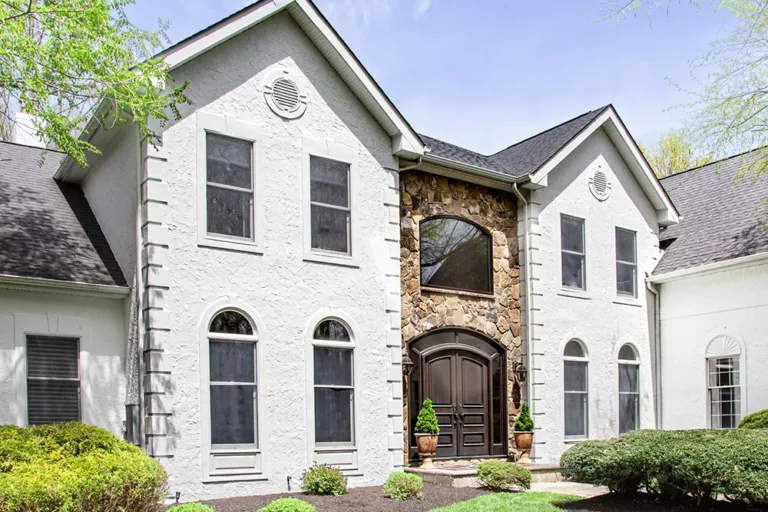
A pink stucco house can look subtle, warm, or distinctly contemporary. The result depends on the shade and the materials around it. Pale blush pairs easily with simple white borders around windows and doors, dusty rose creates a stronger contrast with charcoal, and peach or salmon tones offer a starting point for homes with warm brown roofs.
Start with the parts of your exterior that will stay: roofing, windows, brick, stone, and paving. Then choose a pink that works with those materials.
These 20 design ideas explore combinations for contemporary homes, updated colonials, ranches, split-levels, and coastal houses. They offer practical directions for New Jersey homeowners and others considering a pink exterior.
How to Choose a Pink Stucco Color
“Pink” covers a wide range of colors. Two samples that look similar online can create very different facades.
For an initial shortlist, think in these broad color families:
- Blush and pale pink: light options for a gentle contrast with white or gray.
- Dusty rose: a muted, deeper pink that makes the wall color more noticeable.
- Peach and salmon: warmer directions with an orange influence.
- Pink beige and rose beige: restrained options for homeowners who want warmth close to a neutral.
- Mauve pink: a cooler direction that introduces a violet influence.
These names describe broad color groups. Two manufacturers may use “blush” for different shades, so compare actual samples before choosing.
Your roof, brick, and stone provide a useful starting point. Benjamin Moore’s exterior color guidance recommends choosing colors that work with the existing roof, stone, brick, and landscaping.
For example, a salmon sample might connect with the warmth of brown shingles but look too orange beside a cool gray stone entry. A dusty rose sample could reverse that relationship. Put the materials next to each other before choosing the wall color.
20 Pink Stucco House Ideas
1. Soft Blush Stucco with Warm White Trim
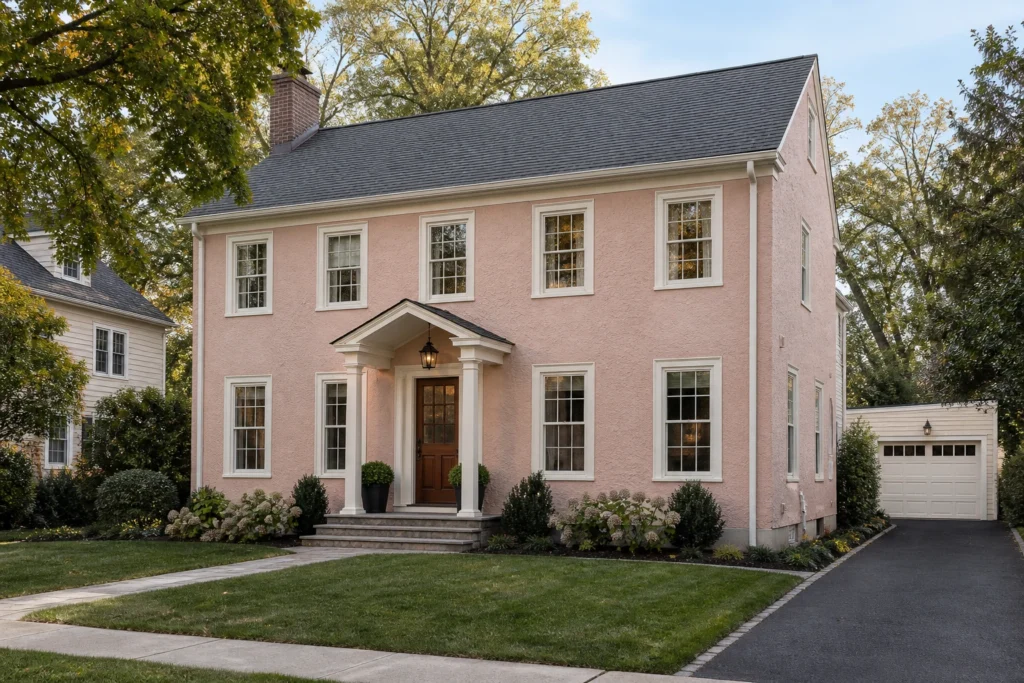
Soft blush walls and warm white trim offer a restrained starting point for an updated colonial. Use white around the windows, on the boards along the roof edge, and at the entrance, then complete the combination with a medium brown wood door.
Keep the trim simple so the house’s proportions remain visible. Compare the white against the pink before committing: a strongly yellow cream may introduce more warmth than you intended.
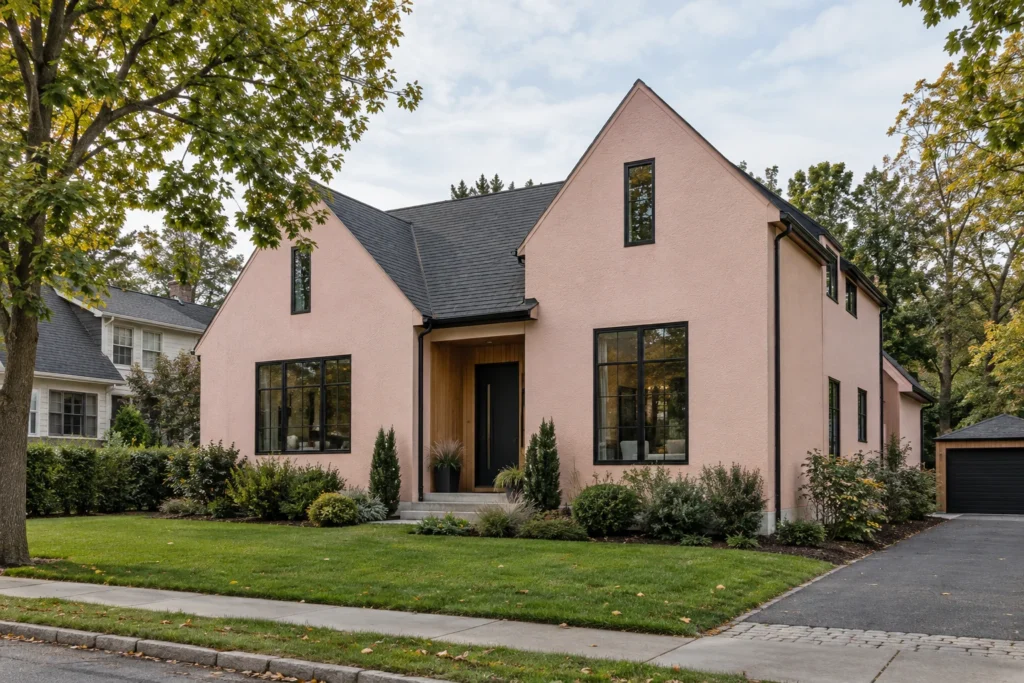
2. Light Pink Stucco with Black Windows
A light pink stucco house with black window frames can suit a contemporary home with a simple pitched roof and large windows. The pale walls provide the background, while the windows establish a clear rhythm across the facade.
Repeat black selectively in the entry light or door hardware. Painting every edge black can make the front of the house look busy, especially where windows differ in size. Let the window frames carry most of the contrast.
3. Dusty Rose Stucco with Taupe Trim
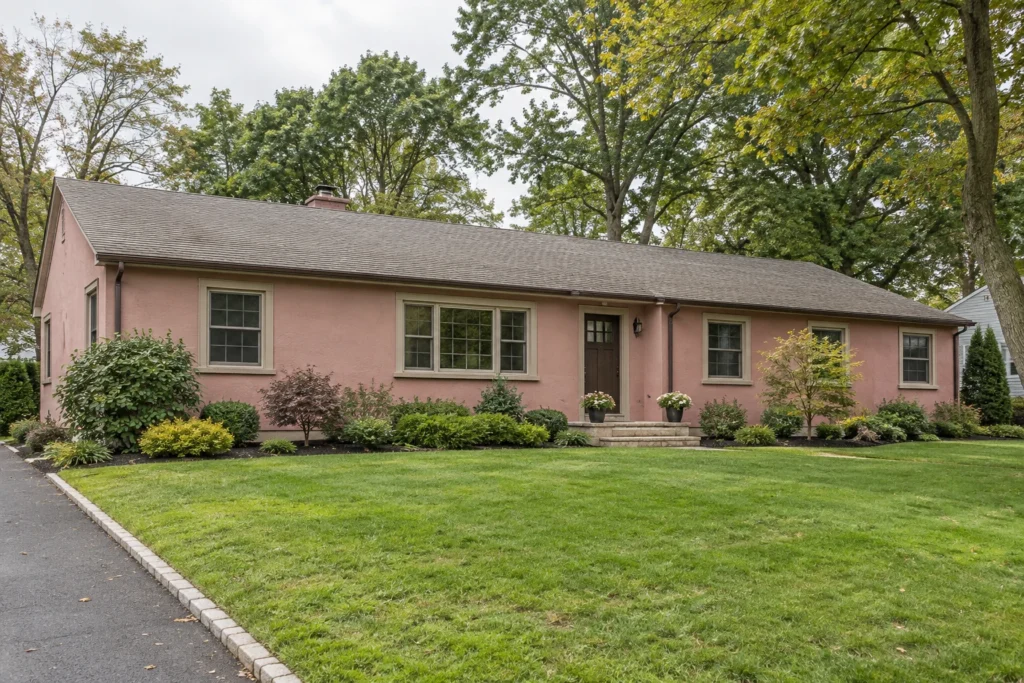
Dusty rose and taupe, a muted gray-brown, create a quieter combination for a long ranch facade. Choose a muted wall color and a trim shade that shares some of its warmth, then use a darker brown door to identify the entrance.
The challenge is separation. If the taupe and rose are too close in both color and lightness, the details may disappear from the street. View the samples from the sidewalk as well as up close.
4. Pink Beige Stucco with a Brown Shingle Roof
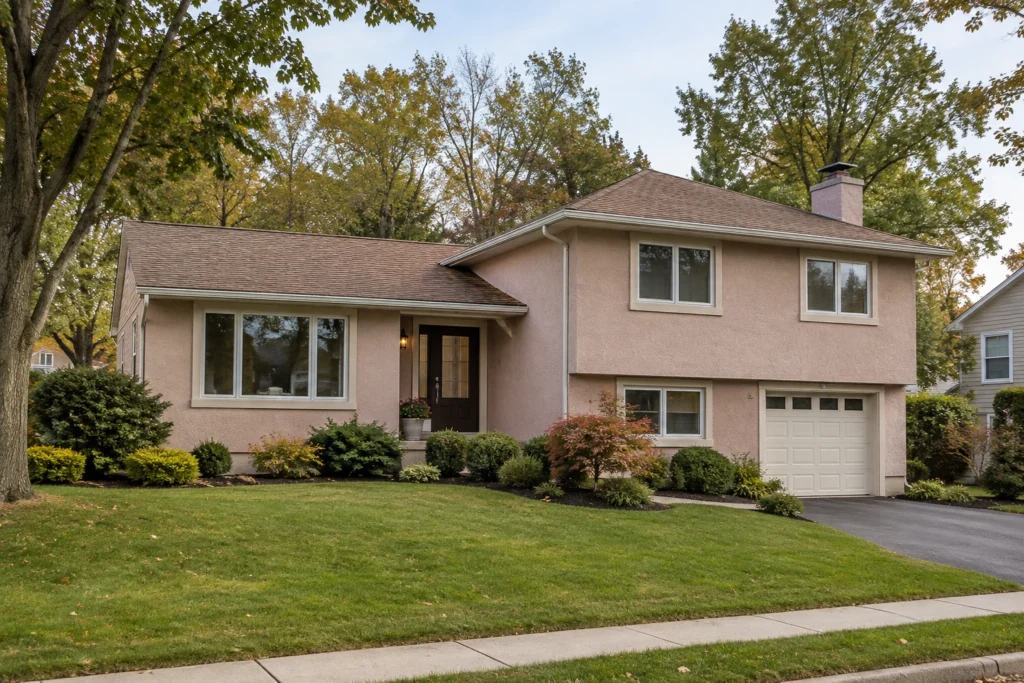
Pink beige is worth testing when a brown roof will remain. On a split-level home, it can connect the upper and lower wall areas without introducing a strong new color.
Use an off-white around the windows and a brown or bronze accent at the entry. Check the roof’s individual shingle colors before choosing the pink. A roof with orange notes may call for a different sample than one with gray-brown tones.
5. Muted Salmon Stucco with Cream Trim
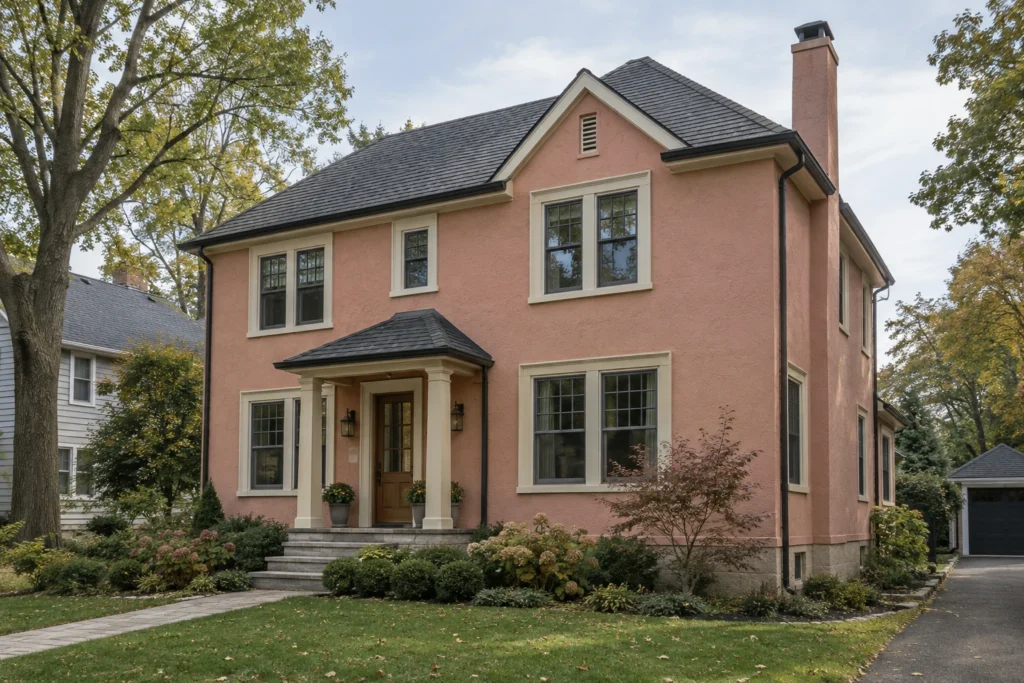
Muted salmon gives a traditional two-story house a warmer appearance. Cream borders around the windows and a simple wood door help the colors work together, while a dark roof stands out above the pink walls.
Choose the salmon by looking at a large sample rather than the color name. Some options lean noticeably orange. If the house already has orange brick steps or paving, compare those surfaces carefully so the overall color combination does not become brighter than you intended.
6. Peach Pink Stucco with Bronze Windows
Peach pink walls and bronze window frames create a softer contrast than pale pink and black. This combination suits a contemporary home with broad windows, a low roof that slopes down on all sides, and an entrance set back from the front wall.
Keep other metal details close to the window finish. Bronze can range from nearly black to distinctly brown, so examine the actual frame sample. A finish that looks dark indoors may reveal more brown in daylight.
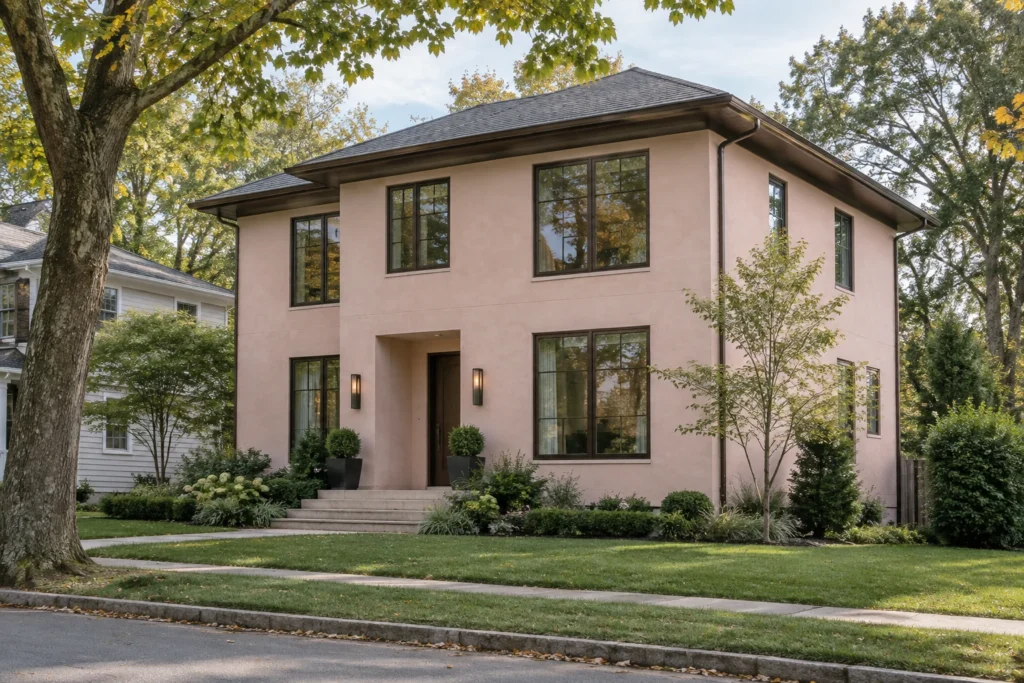
7. Pale Pink Stucco with Gray Stone
A pale pink facade can bring color to an updated Cape Cod while allowing a gray stone entry or foundation to remain prominent. White window trim and a charcoal roof complete the combination.
Compare the pink with the stone and with the material between the stones, called mortar. Some gray stone has hints of blue or green; other stone leans toward beige or brown. If the first pink sample clashes with the stone, try a softer pink or one with a slight hint of purple instead of orange.
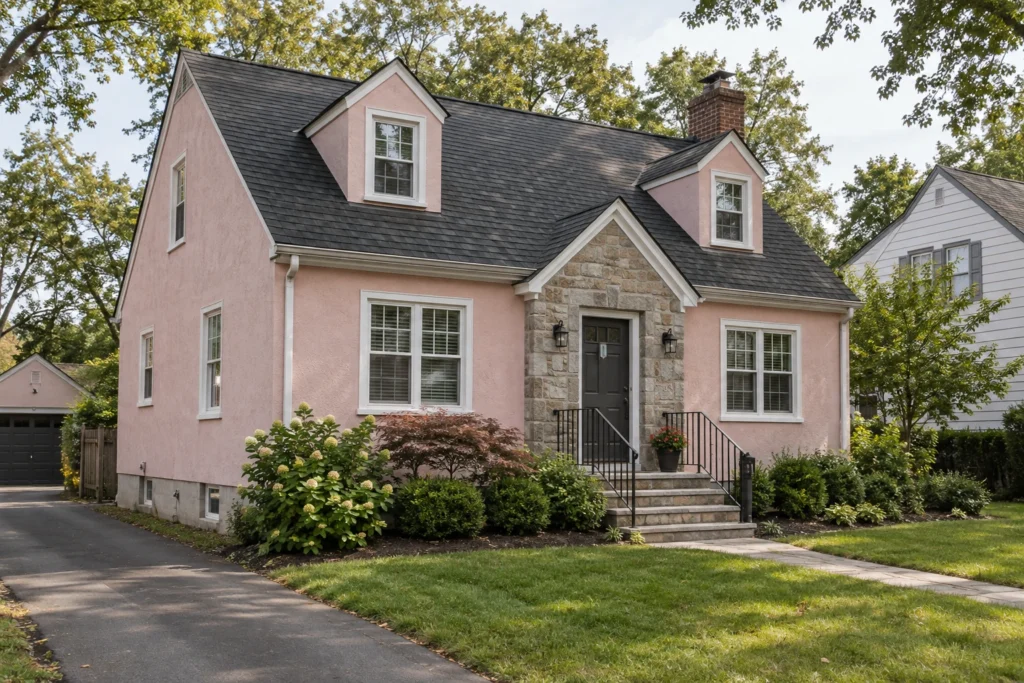
8. Muted Coral Stucco with a Cedar Entry
Muted coral walls and cedar accents suit a contemporary ranch with a sheltered front entrance. Use wood around the entry or beneath the porch roof to create a clear focal point.
Keep the coral restrained enough that the wood grain remains part of the composition. A strongly orange stain and a vivid coral wall can compete. Compare the intended wood finish with the wall sample before approving either one.
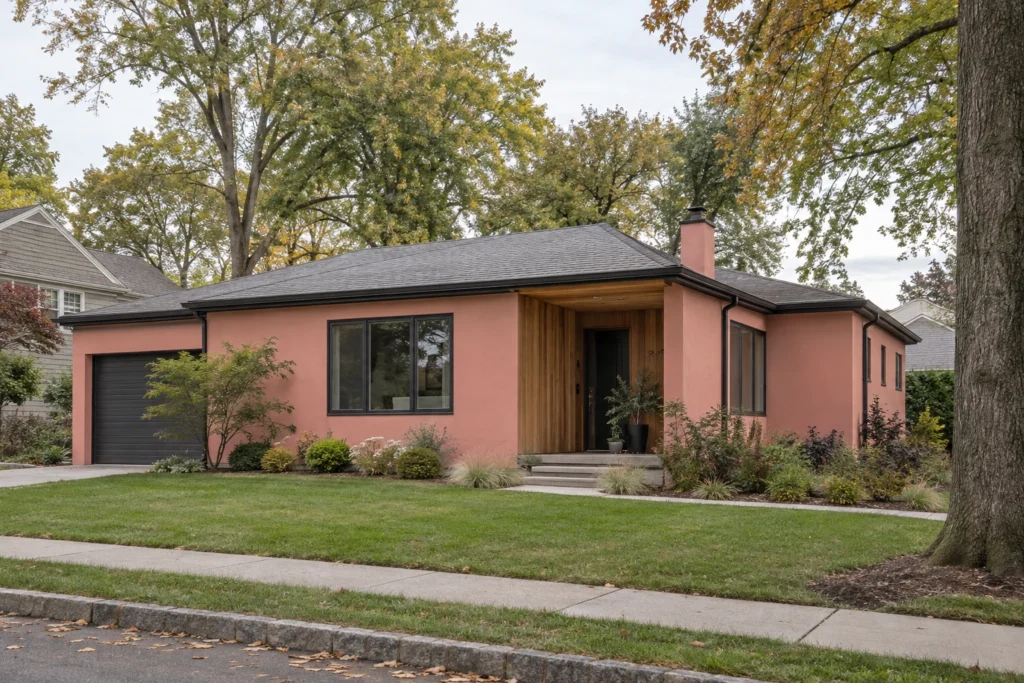
9. Rose Beige Stucco with a Limestone Entrance
Rose beige stucco and light limestone can suit a home that combines traditional and modern details, with evenly arranged windows and a small covered entrance. The wall color supplies a subtle pink note, while the stone provides texture.
Use limestone in a defined area, such as the entrance, rather than scattering small stone accents across the facade. Check the exact stone sample: cream limestone and cooler gray limestone will lead to different choices for the stucco and trim.
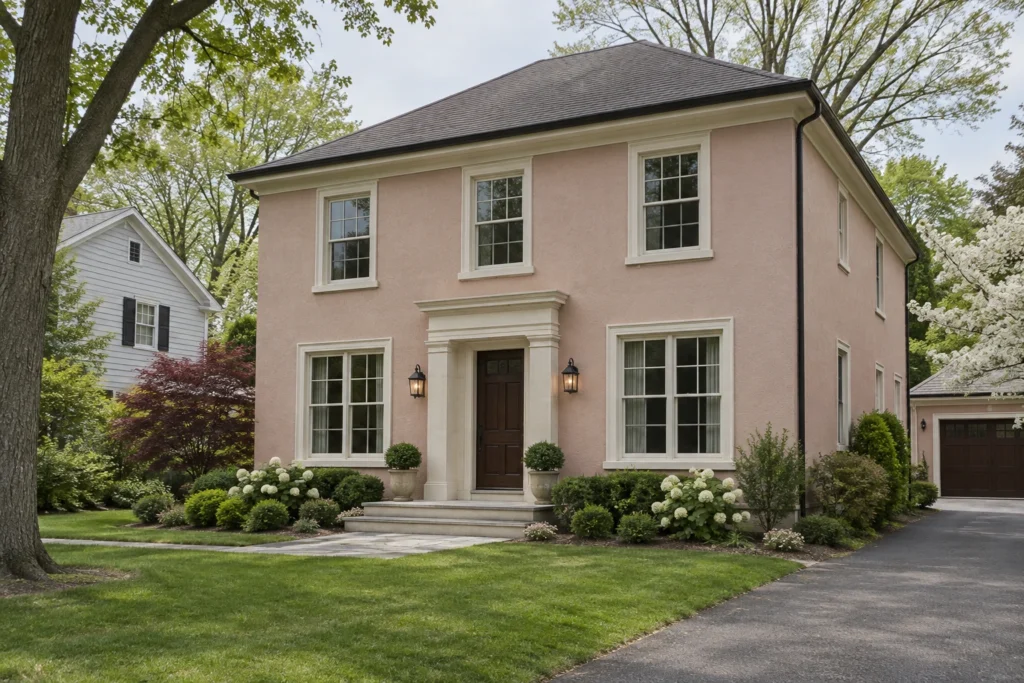
10. Pale Blush Stucco with a Navy Front Door
A navy door gives a pale blush exterior a distinct entrance without requiring dark trim around every window. Pair it with white window frames and a medium gray roof on a compact coastal house.
Keep navy concentrated at the door. Matching blue shutters, planters, railings, and garage doors can turn one focal point into several. Using fewer colors helps both the pink walls and the entrance stand out.
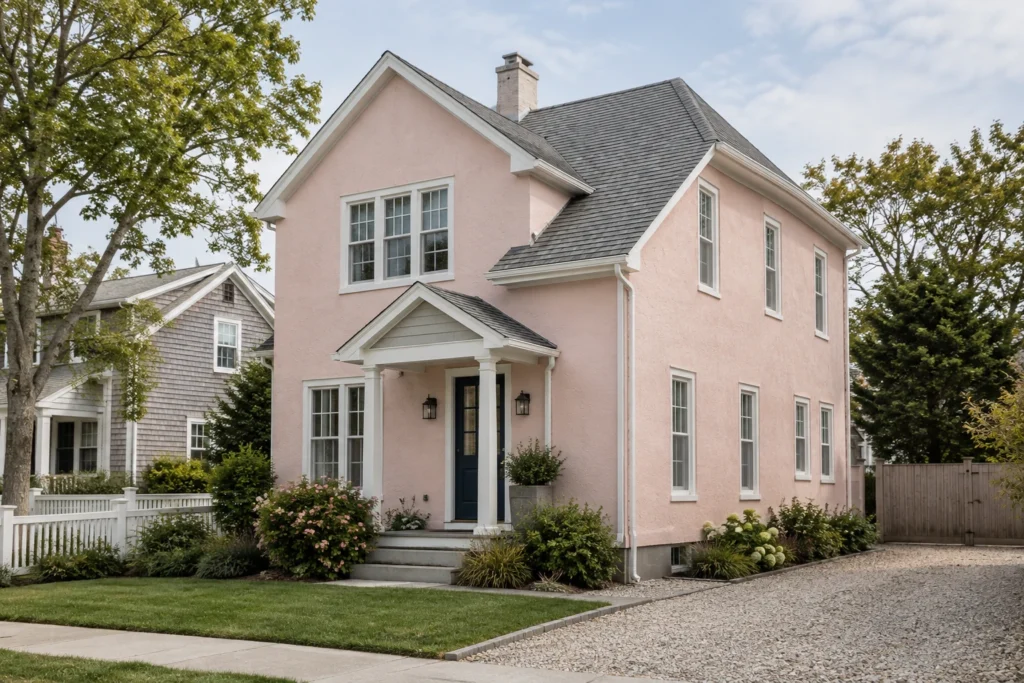
11. Blush Stucco with Deep Green Shutters
Blush walls, off-white trim, and deep green shutters offer a direction for an updated colonial with evenly spaced windows.
Use shutters where they suit the window proportions. Avoid adding narrow decorative shutters beside broad picture windows simply to repeat the green. A deep green front door can provide the same color connection where shutters would look awkward.
Keep the surrounding planting simple enough that the architectural details remain visible.
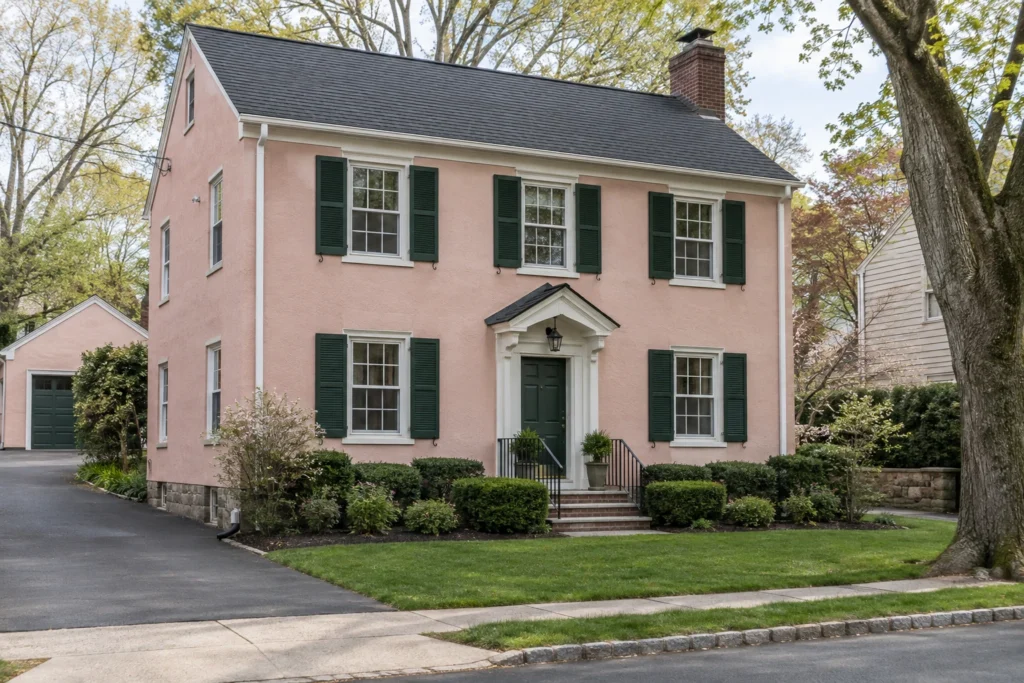
12. Cool Dusty Rose Stucco with a Charcoal Roof
A cooler dusty rose can complement a charcoal roof on a contemporary split-level. Soft gray trim and a dark entry door help the wall and roof colors work together.
Check for a violet cast in the pink sample. That may be exactly what you want, but it can become more noticeable beside warm brown paving or reddish wood. Review those existing materials together before choosing the final shade.
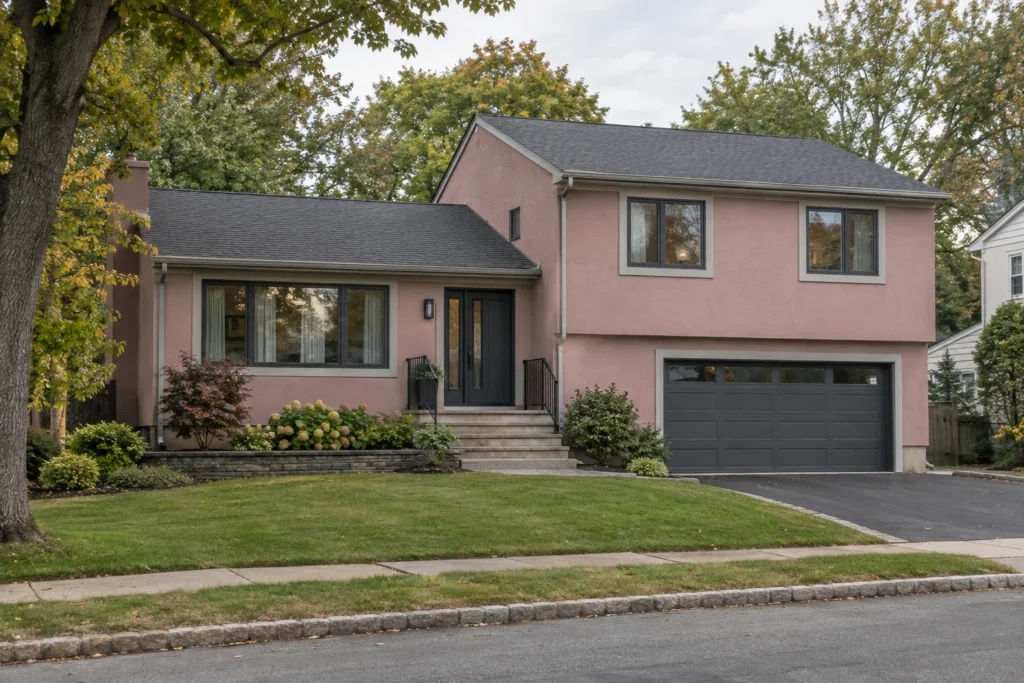
13. Pink Stucco with Existing Red Brick
If your home combines stucco and red brick, use the brick as the reference material. A subdued rose or pink beige may connect the surfaces without trying to match every brick.
On a renovated colonial, keep the existing brick in place and test several pink samples beside both the brick and mortar. The goal is a combination of colors that work well together. A near-match that is slightly too orange or purple can look less intentional than a clearer difference.
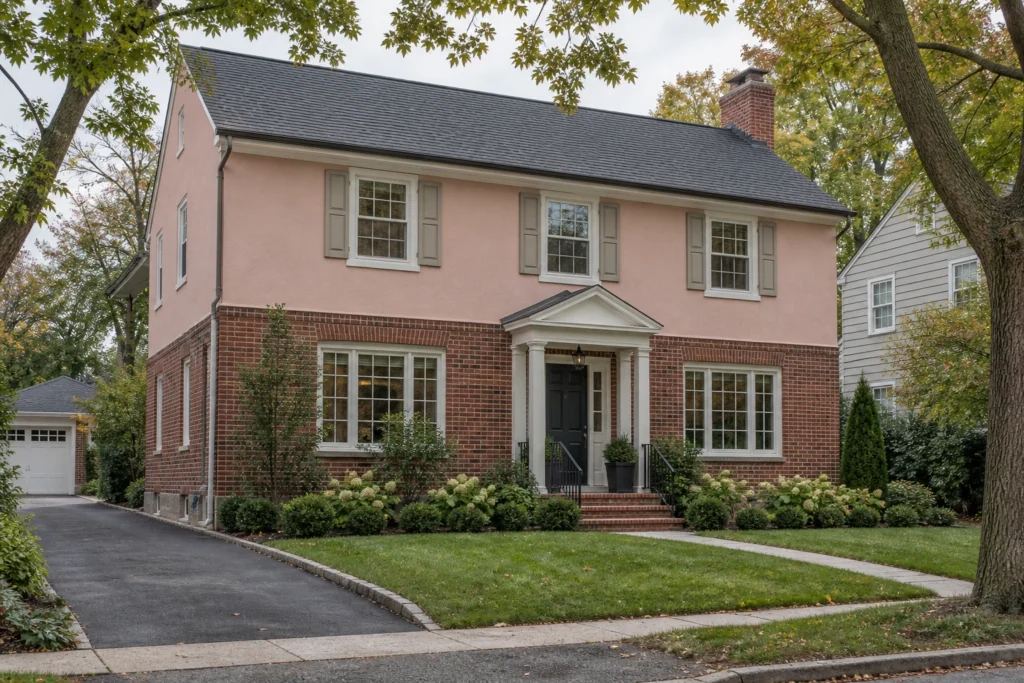
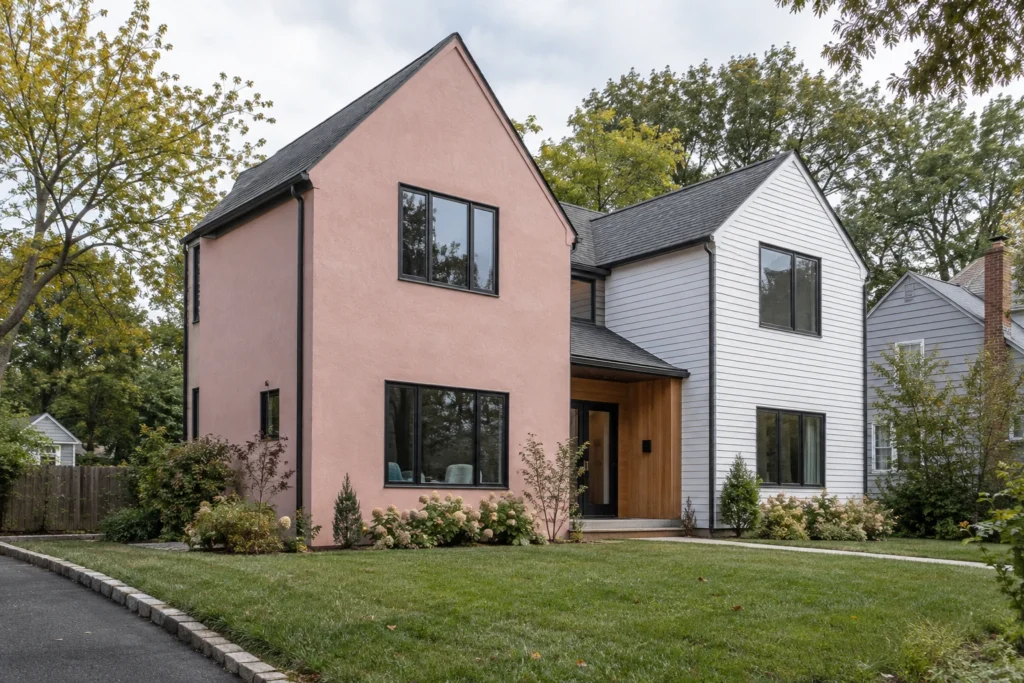
14. Blush Stucco with White Horizontal Siding
White horizontal siding on one wing and blush stucco on another can suit a modern home with clearly separated sections. The material change gives each section a purpose.
Change materials at a corner, where a wall steps back, or where one section of the house meets another. Avoid ending a color halfway across a continuous wall. Repeat the same window finish across both sections to connect them, and compare the white siding sample with the chosen stucco color.
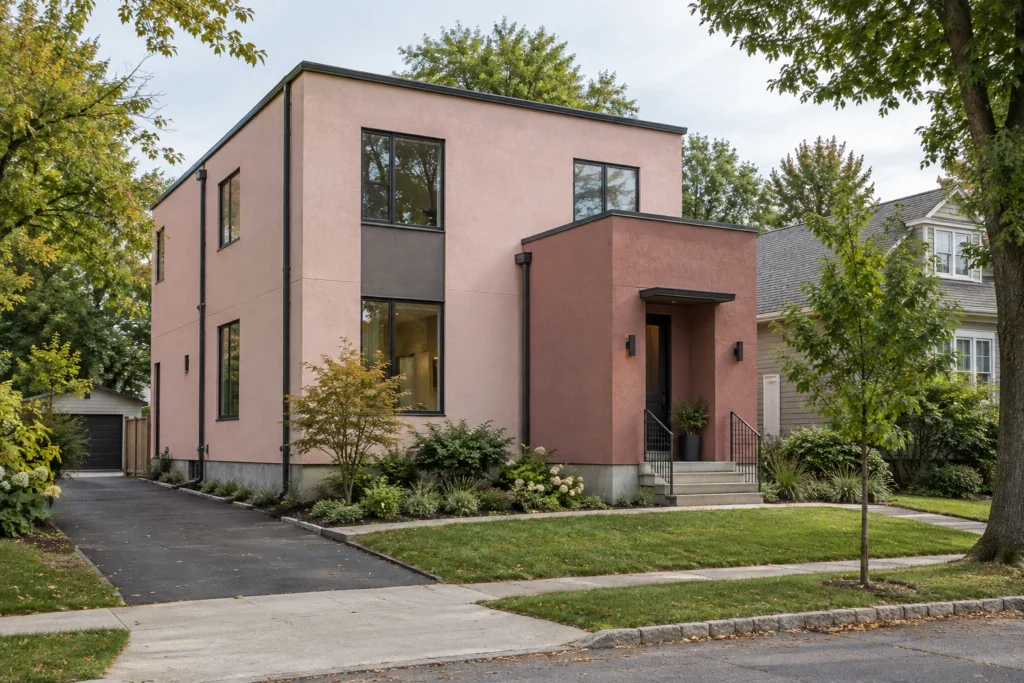
15. Two-Tone Pale Pink and Dusty Rose Stucco
Use pale pink on the larger part of a contemporary home and dusty rose on a projecting entry or smaller wing. This creates depth through color while keeping the facade within one family.
Choose the two shades together. Choose one noticeably lighter shade and one darker shade that look good together. Put the darker shade on a clearly defined section, such as a projecting wing, so the color change follows the shape of the house.
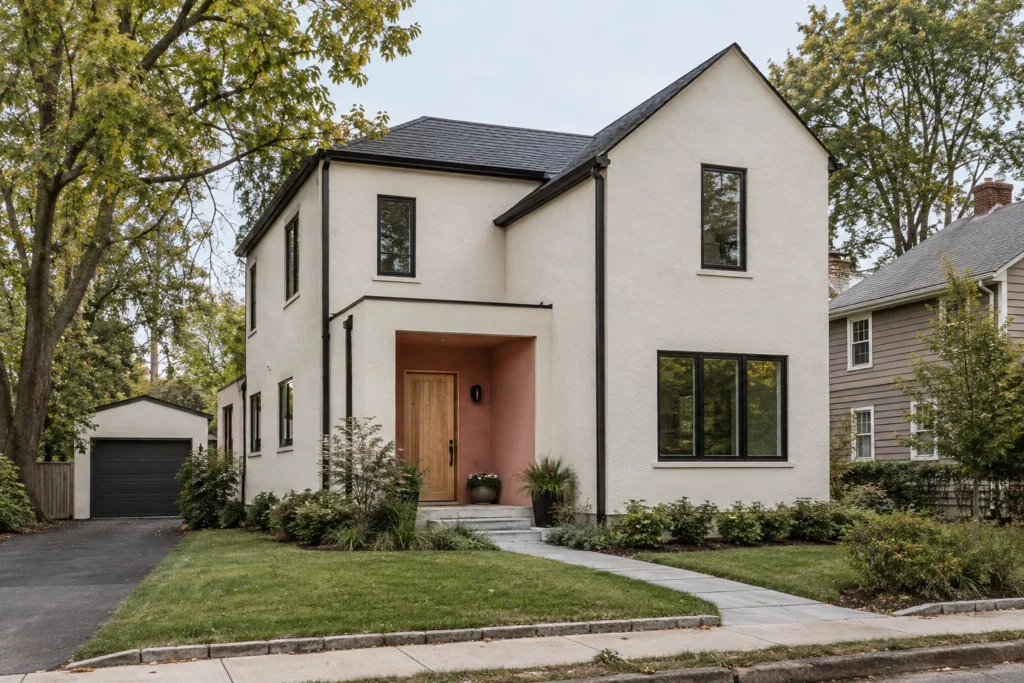
16. Rosy Pink Stucco Around a Sheltered Entrance
A pink entrance set back from the front wall offers a limited application for homeowners who prefer a mostly neutral exterior. Use warm off-white on the main walls and a muted rosy pink on the sheltered entry walls.
This approach suits a modern home with a sheltered entrance set back from the main wall. Examine the pink in that location: a sample displayed on the sunny front wall will not show how the color looks inside the sheltered entrance.
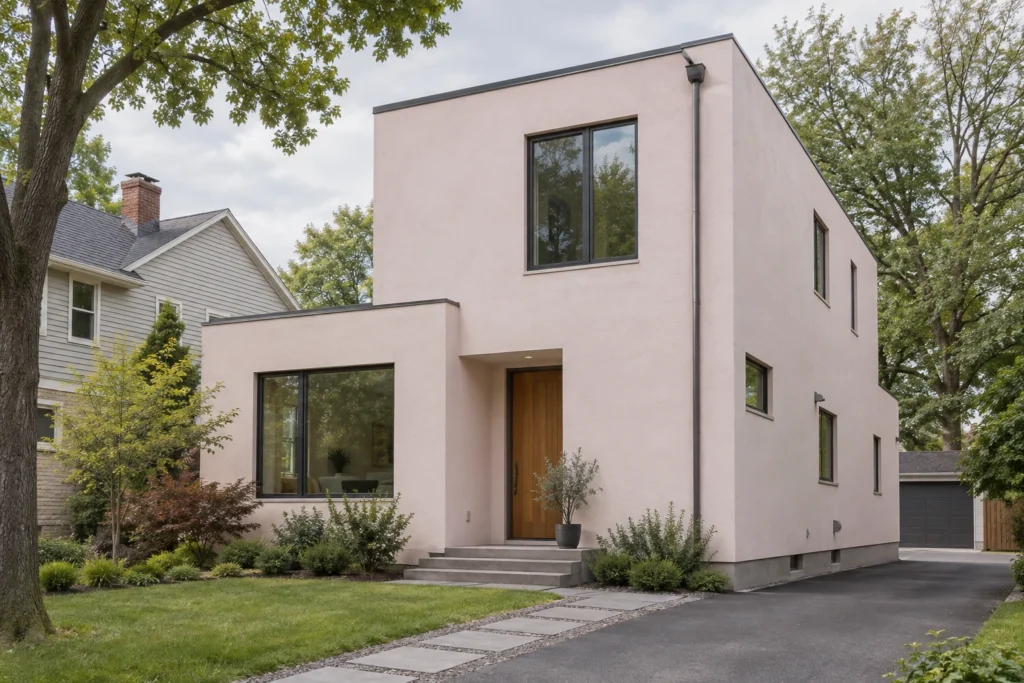
17. Near-White Pink Stucco with Minimal Trim
For a subtle pink exterior, choose a very pale shade and keep the wall detailing restrained. Slim bronze windows and a plain wood door can work well on a contemporary home with a compact, geometric shape.
Compare the sample with both white and beige before deciding. A near-white pink may look almost neutral on its own but reveal its color more clearly beside another finish. Keep that relationship in mind when choosing colors for the underside of the roof overhang and the window frames.
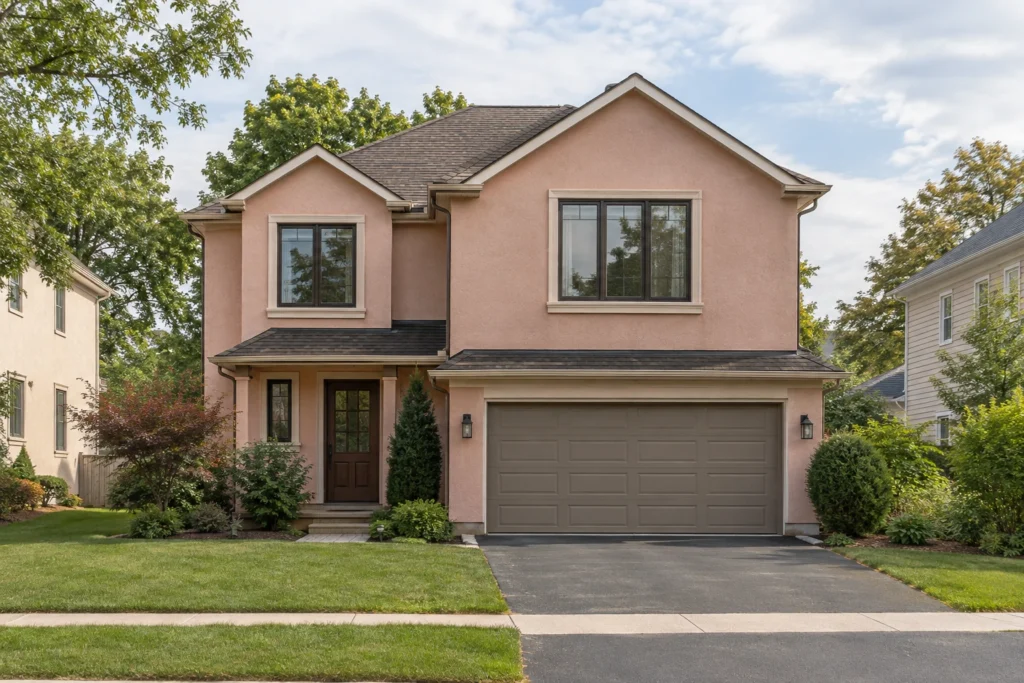
18. Warm Pink Stucco with a Taupe Garage Door
On a house with a prominent front-facing garage, the garage door has a major effect on the overall color combination. Warm pink walls, a compatible taupe garage door, and bronze details can provide a balanced starting point.
Choose a gray-brown that works with the walls without matching them exactly. Use a more noticeable color at the front door so visitors can easily find the entrance.
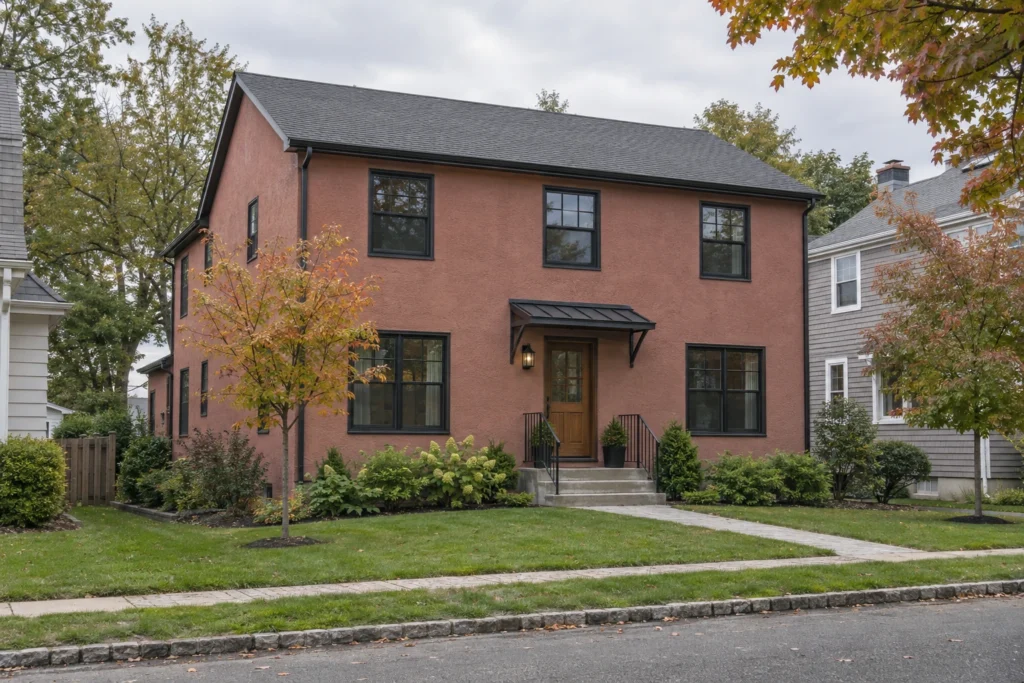
19. Deep Dusty Rose Stucco with a Black Entry Canopy
Deep dusty rose and a slim black metal canopy create a more pronounced contemporary look. This combination can suit a narrow urban house or a compact detached home with a simple front.
Limit the dark accents to a few clear elements, such as the canopy and window frames. Before choosing the deeper wall color, ask your contractor to confirm that the shade is available in a paint or finish suitable for your exterior.
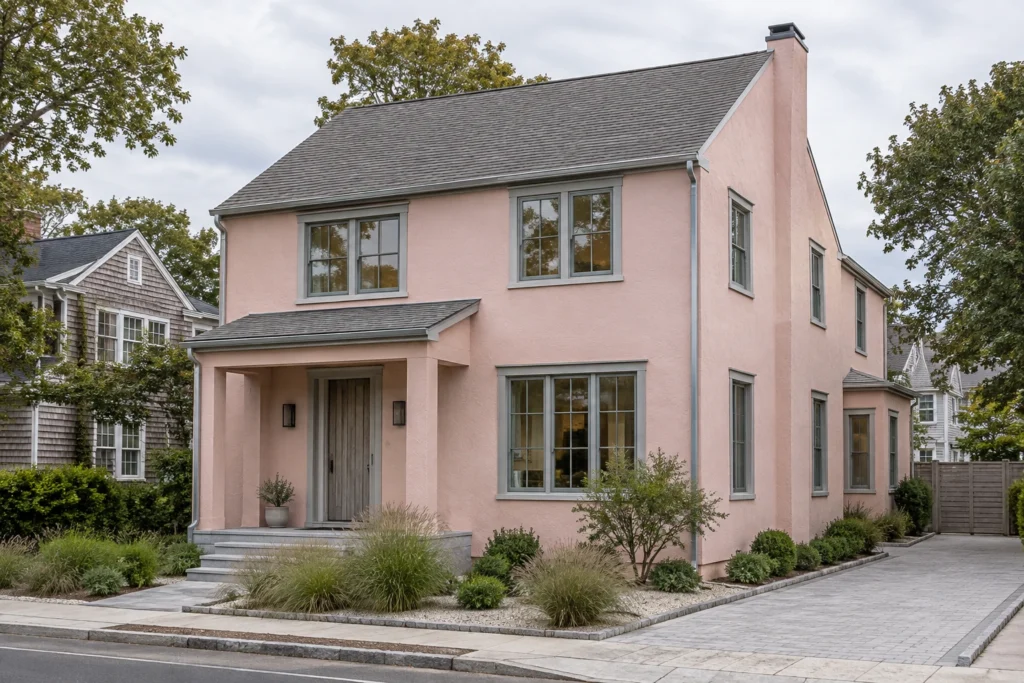
20. Pale Pink Stucco with Silvery Gray Coastal Details
Pale pink stucco, silvery gray trim, and a weathered gray wood door create a soft coastal color combination. Use it on a modern shore house with straightforward rooflines and an uncluttered porch.
Add interest with different surfaces: lightly textured stucco, visible wood grain, and light gray paving. Compare the gray finishes together. Mixing a blue-gray trim with a strongly beige-gray door can change the appearance of the entire combination.
Compare Pink Stucco Color Combinations
Use this table to narrow your choices around a feature that will remain. Each color combination is a starting point. Check samples beside the actual materials before choosing.
| Existing exterior feature | Pink palette to test | What to check together |
|---|---|---|
| Warm brown shingle roof | Pink beige walls, off-white trim, brown or bronze accents | Compare the pink with both the warm and gray tones in the shingles. |
| Black window frames | Light blush walls with restrained dark accents | Look at the whole front of the house before adding black borders around other features. |
| Cool gray stone | Pale pink or muted dusty rose with soft white trim | Place samples beside the stone and the material between the stones to see whether their colors work together. |
| Red brick | Subdued rose or pink beige with simple neutral trim | Check whether the pink looks too orange or purple beside the brick. |
| Natural wood entry | Muted coral, peach pink, or soft blush | Compare the finished wood sample with the wall color, including any orange or red tones. |
| Large front-facing garage | Warm pink walls, taupe garage door, darker front door | Make sure the front door remains easy to identify from the street. |
| White siding on an adjoining wing | Blush stucco with a consistent window finish | Compare the white siding with the pink and change colors where one section of the house meets another. |
How to Update an Existing Pink Stucco Exterior
Start by deciding whether you dislike the wall color itself or the combination around it. A pink facade with mismatched trim, shutters, and garage doors can be difficult to judge as a whole.
Take a straight-on photograph and compare a few simple changes:
- Replace several competing trim colors with one coordinated neutral.
- Give the front door a clear accent color.
- Test a quieter garage door color if the garage dominates the facade.
- Compare simple lighting and hardware finishes with the existing windows.
- Remove proposed color changes from features that do not need emphasis.
Digital previews can help you compare arrangements, but choose the actual colors from physical samples.
If you still dislike the stucco color after reducing the number of colors around it, move on to wall samples. ZD Stucco Repair’s guide to choosing your stucco paint color provides additional context for evaluating the house and its surroundings.
Test Pink Exterior Paint Colors Before You Commit
Once you have a shortlist, compare all the exterior colors together.
- Gather samples of the materials that will stay. Use available samples of roofing, stone, siding, and window frames. Check them against the actual house.
- Shortlist a few pinks. Include a lighter option and one that leans toward peach or purple so you can see which works best with your house.
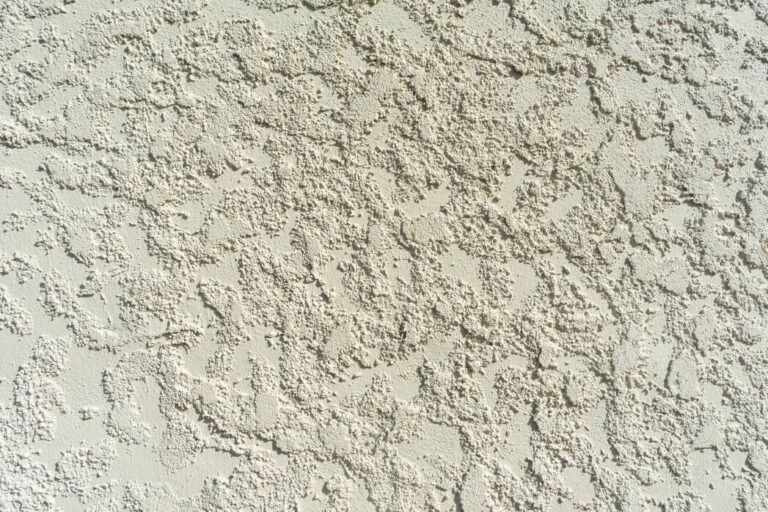
- Use samples that match the planned wall finish. If you plan to paint, ask for a sample using the proposed paint on a surface with a similar smoothness or roughness to your walls. If the color will be mixed into a new stucco finish, request a sample of that material.
- Compare walls and trim together. Do not select each color separately and assume the combination will work.
- Review the samples throughout the day. Look at areas in direct sunlight as well as shaded or sheltered areas.
- Step back to the street. Check the relationship between the walls, roof, garage, and entrance.
- Write down the final product and color choices. Keep the manufacturer, color name or code, product, finish, and sample details together.
A photograph or screen preview can help you compare the overall color combination. It cannot confirm the exact color you will see on your home. Benjamin Moore also notes this limitation on its Pleasant Pink color page, where screen representations are distinguished from actual paint colors.
Plan the Finish Around Your Home
Choose two or three of these ideas that fit the materials already on your house. Compare their wall, trim, and accent colors together before expanding the shortlist.
If the stucco needs repair or the existing paint is peeling or coming loose, have your contractor check it as part of the project. ZD Stucco Repair offers stucco painting services in New Jersey for homeowners planning an exterior color update.
Bring photographs, your preferred palettes, and any material samples to the discussion. That gives the project a clear starting point: the appearance you want and the surfaces that need to support it.
Frequently Asked Questions
Can You Paint Stucco?
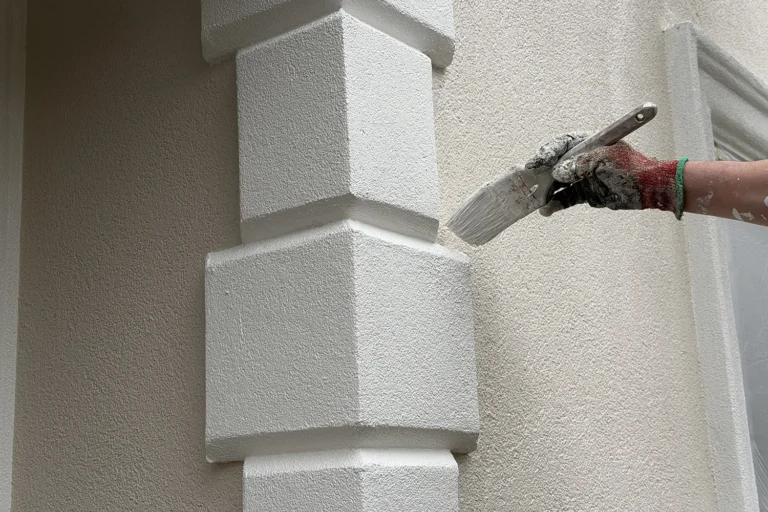
Yes. Stucco can be painted with an exterior paint suitable for the existing surface. Before repainting, loose material and peeling paint need to be removed, and cracks need to be checked and repaired. Sherwin-Williams’ guidance on painting stucco, brick, and concrete explains the importance of checking the surface underneath the paint and repairing cracks.
The right paint depends on the condition of your walls and what is already on them. For more background, see whether stucco can be painted.
How Do I Choose a Pink That Works With My Roof?
Start with the colors already visible in your roof. If it has brown or tan shades, try pink beige, soft peach, or muted salmon. If the roof is gray or charcoal, compare pale blush and dusty rose. Treat these as starting points and check them against your actual roof.
Place large, dry color samples where you can see them together with the roof, then step back to the driveway or sidewalk. Compare them in sunlight and shade, with the window frames, brick, and stone also in view. Choose the pink that works with the whole exterior.
Does Exterior Paint Look Lighter or Darker?
It can look either lighter or darker depending on the viewing conditions. Benjamin Moore explains that exterior color appears differently in sunlight and shade.
This is different from asking how wet paint changes as it dries. Judge a dry sample under the conditions where it will be used. Avoid automatically choosing a darker pink just because someone says exterior colors always look lighter.