Stucco Water Damage Repair in New Jersey

Water stains, cracks, soft areas, or window leaks can signal hidden stucco damage. Based in Elmwood Park, ZD Stucco Repair locates entry points, repairs damaged wall layers, and matches exterior finishes across New Jersey and the Greater New York area.

Get a Free Estimate
Tell us about your project. We’ll review the details and contact you to arrange a site visit if needed.

What Stucco Water Damage Repair Covers

Stucco water damage repair starts with finding how water entered the wall. We inspect cracks, windows, flashing, sealant joints, and drainage, then remove failed stucco as needed and replace damaged sheathing, framing, weather barrier, lath, and finish coats.

Once the wall is repaired and dry, stucco waterproofing or stucco sealing can help reduce surface absorption and protect the finish. A breathable sealer cannot replace failed flashing or drainage.

Is the Damage Limited to the Surface?

If the wall is dry and only has cracks, chips, fading, or worn color, a full water damage repair may not be needed. Choose the service that best matches the condition of your stucco.

Signs of Stucco Water Damage

One symptom does not confirm what is happening behind the finish, but these changes are good reasons to have the wall reviewed.
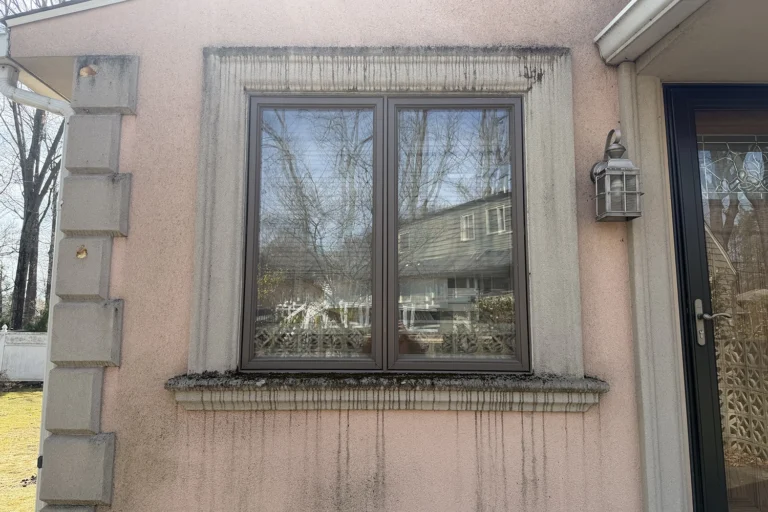
Pink stucco wall with dark water streaks and staining around the window frame and sill

Water Stains and Discoloration

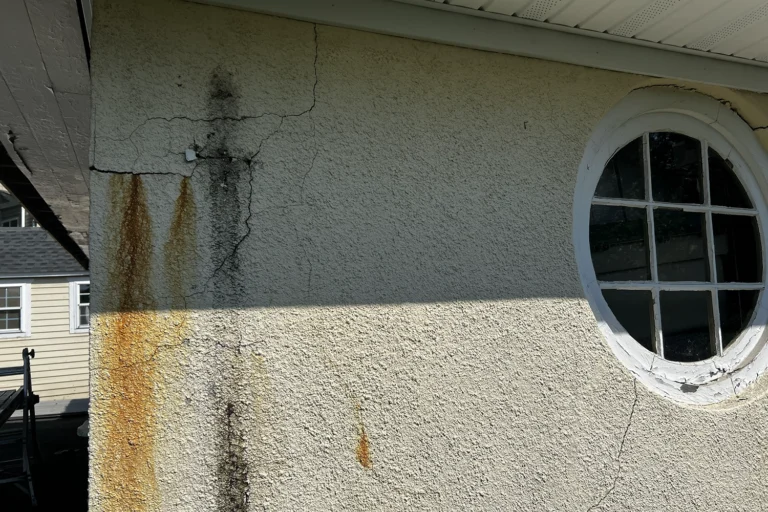
Dark streaks, recurring damp patches, or rust-colored marks are more than a cosmetic issue. They may show where water is entering or moving behind the stucco.
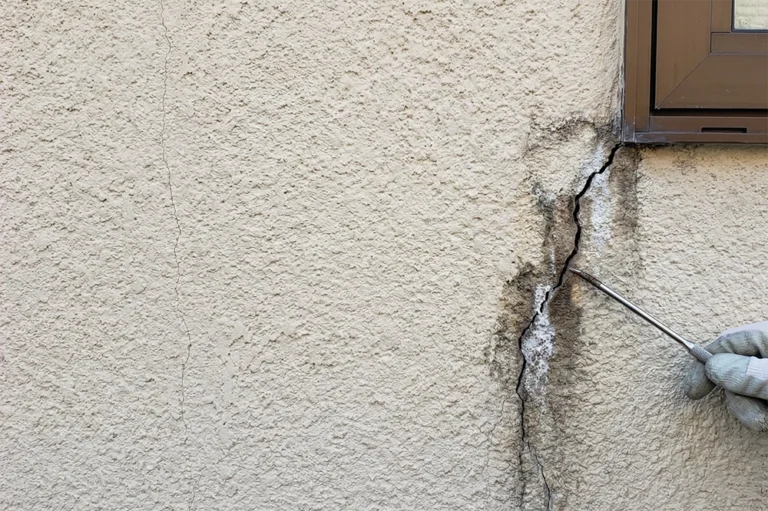
Diagonal crack in stucco with brown rust stains indicating water infiltration and metal oxidation behind the surface

Cracks and Failed Sealant Joints

Cracks around windows, doors, rooflines, or wall penetrations can let rain behind the stucco. Failed sealant joints or flashing often make the problem worse.
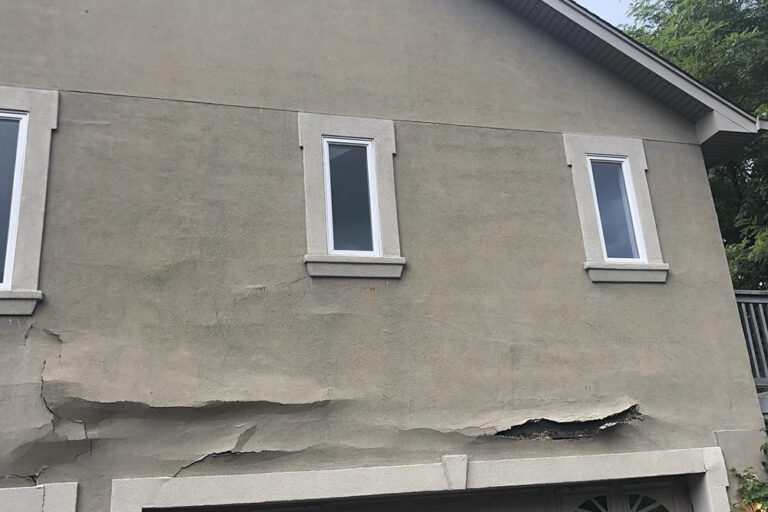
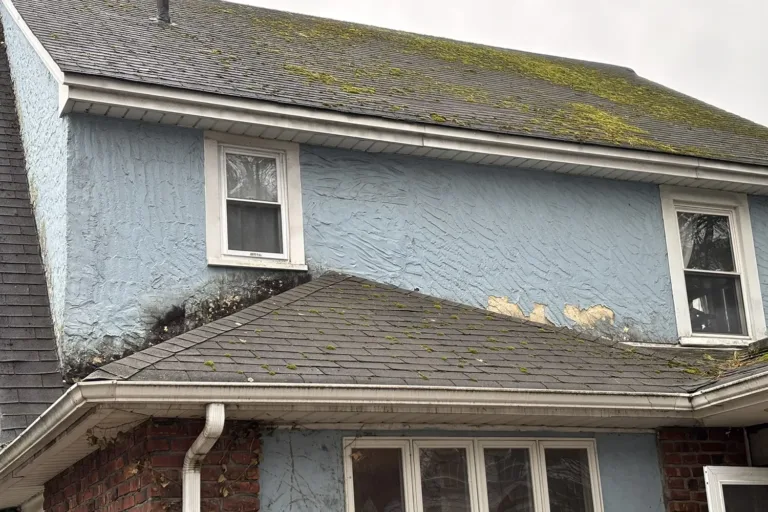
Large sections of loose and delaminating stucco falling from an exterior wall

Bulging, Soft, or Loose Areas

If the stucco feels soft, sounds hollow, bulges, or breaks away, moisture may have weakened the bond or damaged the wall layers below.
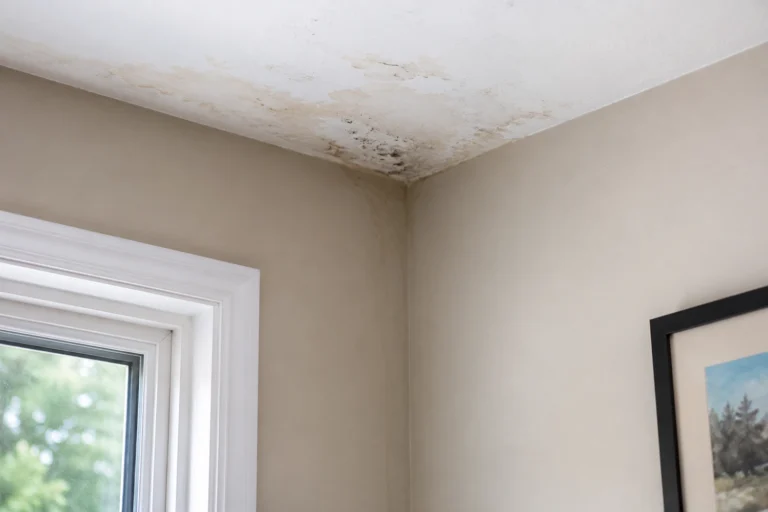
Interior ceiling water stains near a window caused by stucco leaking during heavy rain in a New Jersey home.

Interior Moisture Near an Exterior Wall

Peeling paint, damp trim, or interior stains may point to stucco water intrusion. Roofing, plumbing, and condensation should also be ruled out before repairs begin.

Where Water Gets Behind Stucco

Stucco water intrusion usually starts around an opening, joint, or transition where water can slip behind the finish. Common problem areas include:

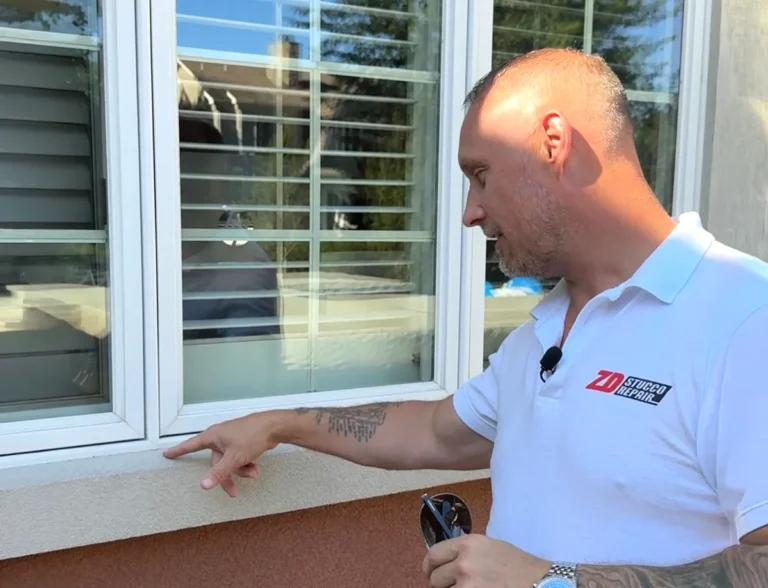
Diagram showing water entering stucco through failed window seals, roof and chimney flashing, pipe penetrations, ground contact, and clogged gutters.

Our Stucco Water Damage Repair Process

ZD Stucco Repair owner Zoltan Dicso inspecting stucco beneath an exterior window

1. Find the Water Path

We inspect the damaged area, nearby openings, flashing, sealant, and drainage to trace the likely water path.

Opened stucco wall exposing damaged sheathing and framing around a window

2. Open the Damaged Area

Failed stucco is removed only as required to see the condition of the layers below and define the repair boundary.
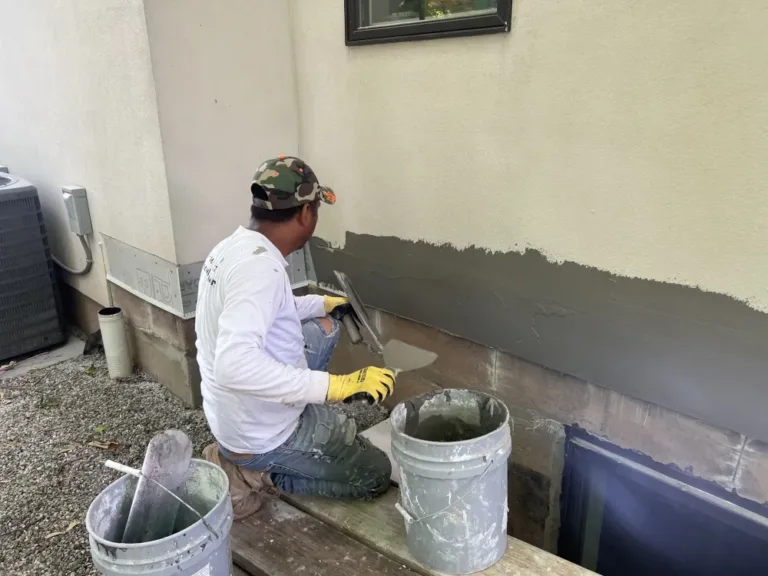
Worker kneeling on bench outdoors applying gray stucco base coat to foundation wall with trowel and bucket

3. Repair the Wall Layers

The scope may include flashing or drainage corrections, new sheathing, a water-resistive barrier, lath, and base materials.

Completed stucco repair with matched texture and exterior finish

4. Match the Stucco Finish

We restore the wall system, texture the repair, and blend the finish as closely as the existing color and surface allow.

What Affects Stucco Water Damage Repair Cost?

The price depends on what must be opened and rebuilt, not only on the size of the visible stain or crack.

Main factors include:

Technician carrying a ladder and tool belt at a residential job site.

What You Can Expect From ZD Stucco Repair

Our team serves properties across New Jersey and the Greater New York area.

We provide a clear stucco repair scope before work begins.

Project photos show wall repair and completed stucco finishes.

Your proposal lists the planned stucco repairs before scheduling.

Applicable stucco repair warranty terms appear in your proposal.

Our licenses and contact details are available in the footer.

Stucco Sealing at Amherst Mews in Basking Ridge, NJ

ZD Stucco Repair completed water-repellent stucco sealing for 44 homes in the Amherst Mews community. The breathable treatment helps reduce surface water absorption and protect the stucco finish from rain and weather exposure.

Recent Water Damage and Stucco Repair Projects

See completed exterior repairs from New Jersey properties, including wall openings, damaged-layer replacement, flashing work, and finished stucco surfaces.

Reviews from Property Owners

Read what customers say about communication, the written scope, site care, and the finished repair.

All Reviews 5.0google logoGoogle 4.9houzz logoHouzz 5.0yelp logoYelp 4.6facebook logoFacebook 5.0bbb logoBBB 5.0angieslist logoAngiesList 5.0
Overall Rating
5.0 227 reviews
Ready to Address Stucco Water Damage?

Use the short form at the top of the page, or call us to discuss the property. Photos and the location of the leak or stain can help with the first review.

Frequently Asked Questions

How do you repair exterior stucco after water damage?

The first step is finding and correcting the entry point. We then open the damaged area as needed, remove wet or deteriorated materials, and rebuild the wall with compatible barrier, reinforcement, base, and finish materials. The repaired texture and color are matched as closely as the existing wall allows.
The right repair depends on the crack’s size, location, movement, and whether water is getting in. A dry surface crack may need a local repair, while a recurring or stained crack near an opening may require us to check the flashing, sealant, and wall layers behind it.
A small cosmetic patch may be manageable when the wall is dry and the damage is limited. If the area feels soft, looks damp, bulges, sits near a window, or keeps cracking, a surface patch can hide the real cause and delay the proper repair.
Yes. Many cracks, loose areas, impact marks, and localized water-damaged sections can be repaired without replacing the whole exterior. The final scope depends on the condition of the surrounding stucco, lath, sheathing, framing, flashing, and drainage details.
The process normally includes checking the damage, tracing the cause, defining the work area, removing failed material, replacing damaged wall layers, and rebuilding the stucco coats. Texture matching, finish work, cleanup, and a review of the completed area follow.
Stucco does not have a fixed replacement schedule. Installation, drainage, weather exposure, movement, and maintenance all affect how it performs. Local repairs may be enough for isolated damage, while repeated or widespread failures may call for a larger replacement area.
Yes. Traditional stucco is porous and can absorb some rainwater. A properly built wall manages that moisture with a water-resistive barrier, flashing, drainage, and weep details. Dark areas that do not dry, soft spots, or interior staining should be checked.
Water can enter through cracks, failed joints, penetrations, window or door openings, and poor flashing or drainage details. The finish is only one part of the wall system, so an interior leak near stucco may have more than one possible source.