A yellow stucco house can feel soft and understated, warm and traditional, or bold and contemporary. The difference comes from the shade of yellow, the size of the painted surfaces, and the colors around them. Butter yellow with white trim creates a gentle contrast. Golden yellow works with earthy materials, while muted mustard can give a simple facade more definition.
Start with the parts of your exterior that will stay: the roof, windows, brick, stone, and paving. Then choose a yellow that works beside them. These 15 ideas offer different ways to combine stucco walls with trim, doors, and architectural details, followed by a practical way to test your favorites.
Choose Your Yellow Before Choosing the Accents
“Yellow” covers a wide range of colors. A pale cream with a hint of yellow will look very different from ochre, even when both are paired with the same white trim.
As you compare yellow stucco house colors, consider three qualities:
- Lightness: How light or dark the color appears.
- Saturation: How vivid or muted it looks.
- Undertone: The subtle influence of another color, such as orange, green, or brown.
For pale yellow house exterior color schemes, compare several samples against your actual window frames. A white frame that looks neutral on its own may appear cooler beside a creamy yellow.
Texture also matters. Raised areas of stucco catch light, while recessed areas create shadows. A smooth color card helps narrow your choices, but it cannot show the full effect of your wall finish.
The combinations below are design starting points. Their success depends on your building’s materials, proportions, and light.
15 Yellow Stucco House and Building Ideas
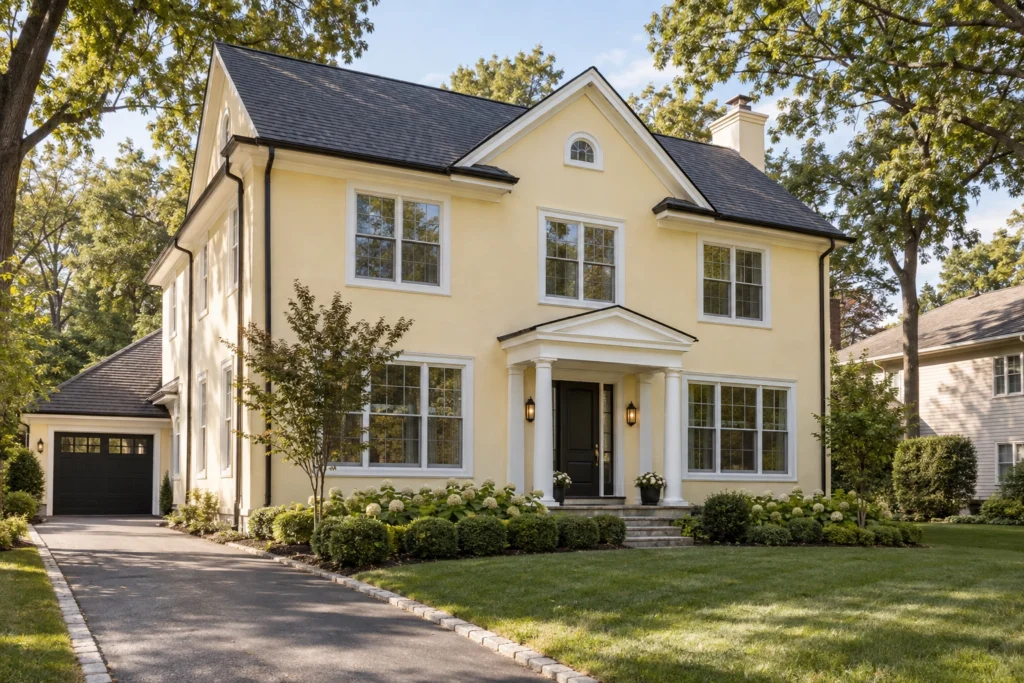
1. Butter Yellow with White Trim
Butter yellow walls and white trim offer a straightforward starting point for a traditional stucco home. The yellow gives the main surfaces warmth, while the white defines windows, porch columns, and the roofline.
Choose a white that looks clean beside the yellow without making the walls appear unexpectedly orange. A charcoal roof and a dark front door can provide enough contrast to keep the palette from looking washed out.
This combination is particularly useful when you want the whole house to feel coordinated without emphasizing every small architectural detail.
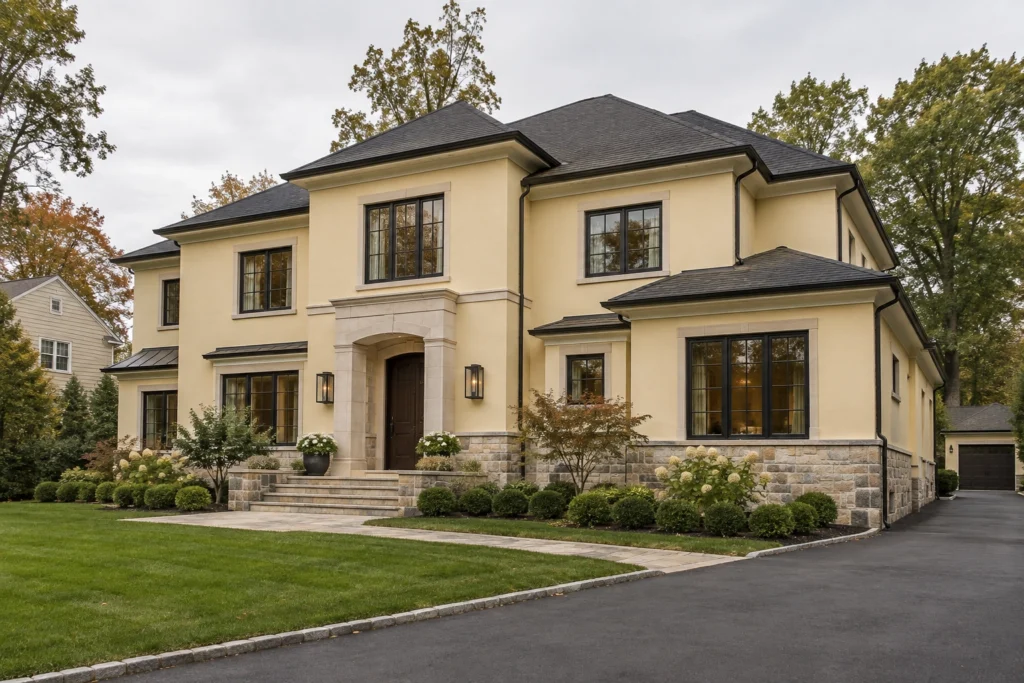
2. Cream Yellow with Natural Stone
A cream yellow exterior can work well when the house already has limestone-colored steps, buff stone, or warm beige paving.
Look for a subtle yellow that relates to one of the lighter tones in the stone. Keep the trim close to an existing pale stone color, then use a darker wood door to distinguish the entrance.
Compare samples against several stones rather than selecting from a single piece. Natural stone often contains a mix of colors, and the wall should work with the overall surface.
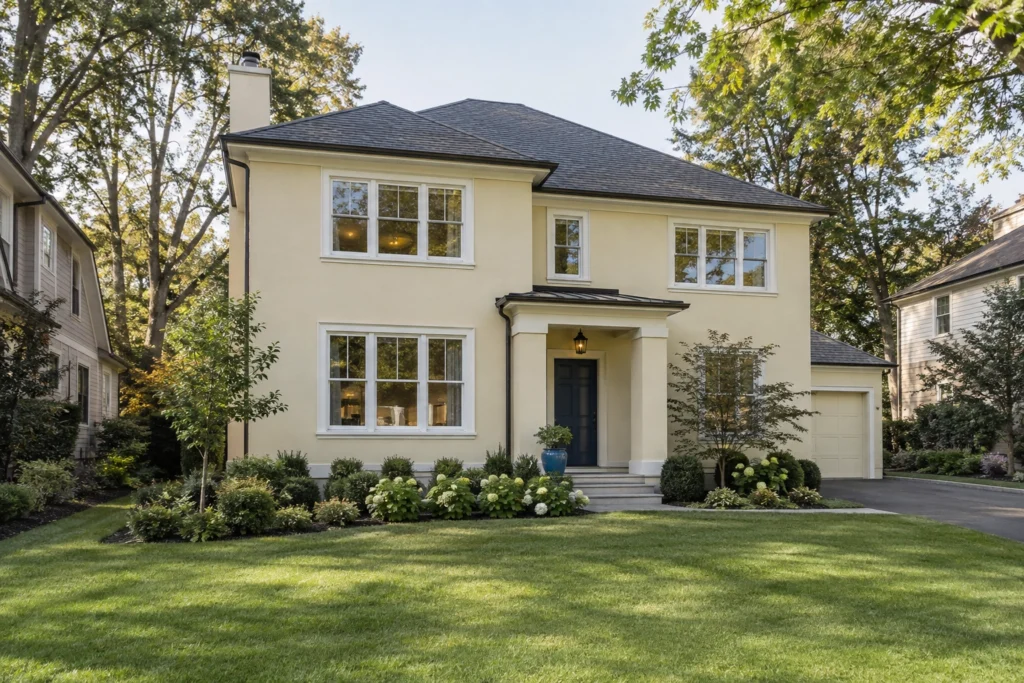
3. Pale Yellow with a Navy Front Door
A navy door gives a pale yellow stucco house a clear focal point. Keep the window trim white or soft off-white so the blue remains concentrated at the entrance.
This approach suits a facade with a visible front door and relatively simple detailing. If a large garage faces the street, consider keeping it closer to the wall or trim color. Painting both the garage and front door navy may shift attention toward the larger surface.
A small repeat of navy in a planter can connect the entrance to the landscaping.
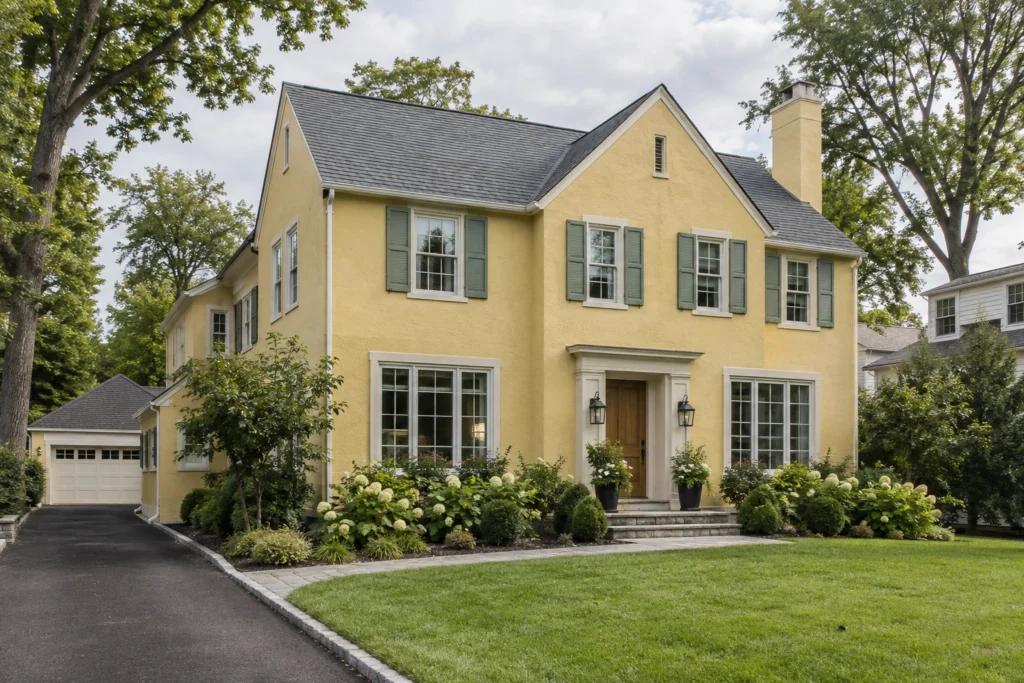
4. Soft Yellow with Sage Green Shutters
Sage green shutters introduce a quieter accent than black. Against soft yellow stucco, the muted green can connect the house visually with surrounding trees and planting beds.
Keep the window frames and trim light enough to separate the shutters from the walls. For a more grounded entrance, consider a natural wood door.
Before adding decorative shutters, check their proportions against the windows. Narrow shutters beside wide windows can look out of place, regardless of how well their colors coordinate.
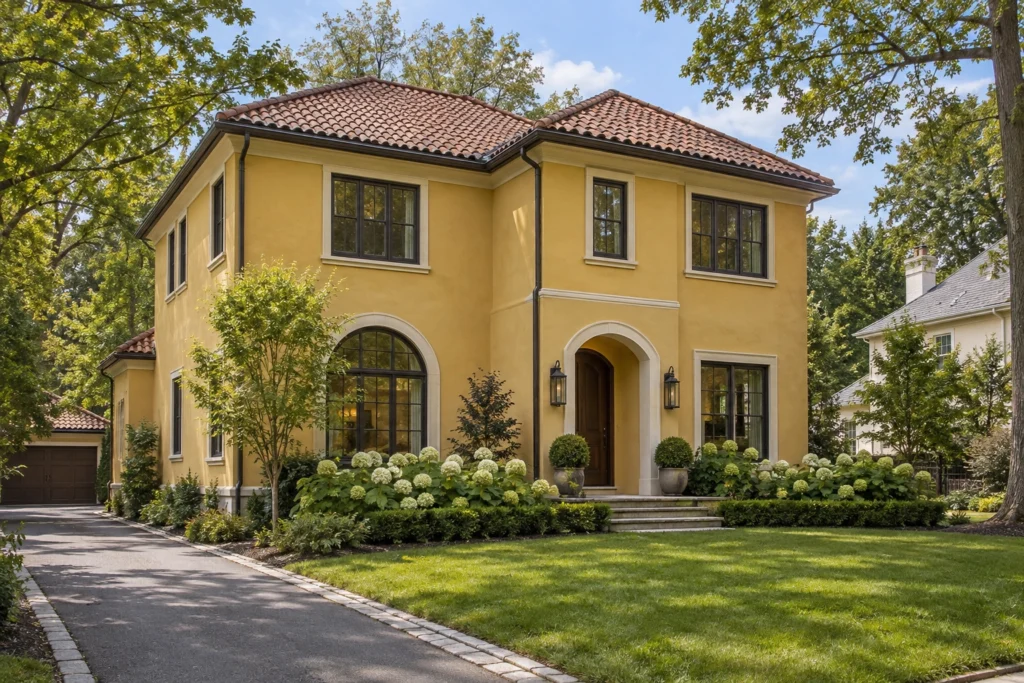
5. Golden Yellow with a Terracotta Roof
Golden yellow stucco is a useful direction for a Mediterranean-inspired home with terracotta roof tiles, arched openings, and shaded outdoor spaces.
Start by comparing yellow samples against the roof. Some tiles lean orange, while others contain deeper red or brown tones. A muted golden yellow can connect with that warmth without making every surface equally vivid.
Cream-colored trim and dark metal details can complete the palette. Keep additional accent colors restrained when the roof and walls already provide strong color.
6. Earthy Ochre with Dark Wood
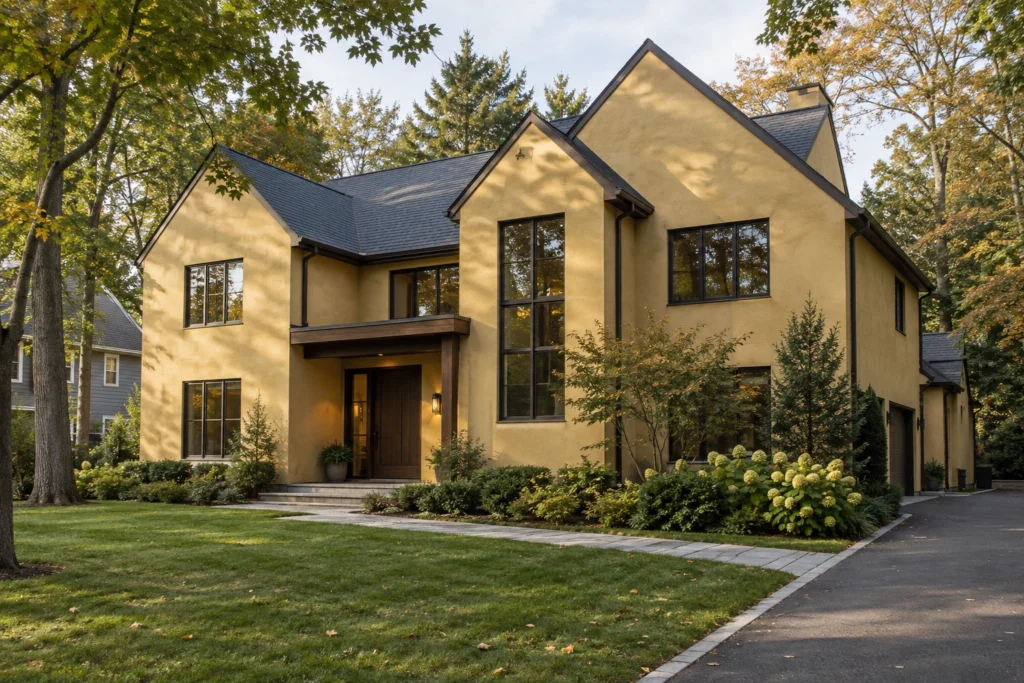
Ochre has a brown or earthy quality that gives yellow more depth. Try it with a dark wood entrance door, exposed timber details, and subdued stone paving.
This combination works especially well as a design direction for a courtyard, a recessed entrance, or a rustic stucco home. The wood grain adds visual interest without introducing another painted accent.
Check the ochre in shaded areas before committing. A color that feels golden in direct sunlight may look considerably heavier beneath a deep porch.
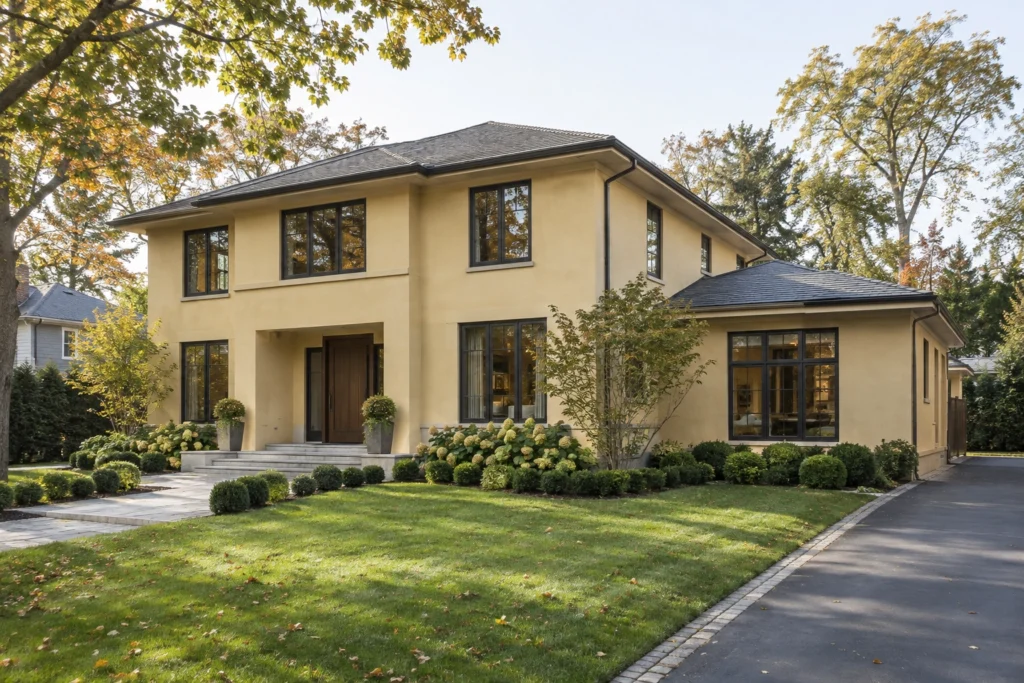
7. Muted Mustard with Black Window Frames
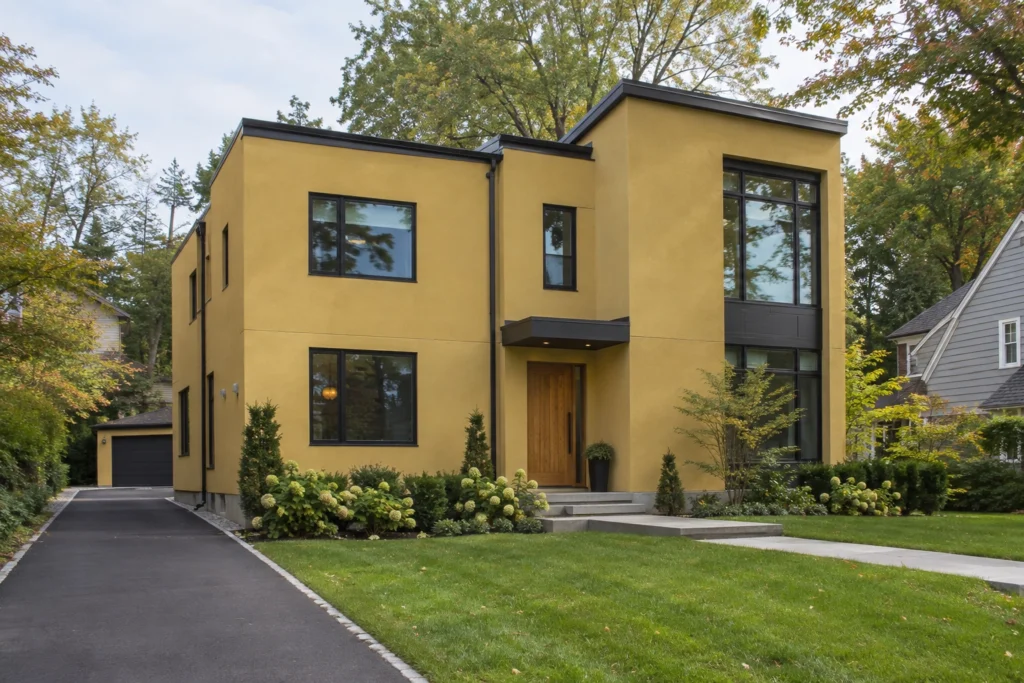
For a contemporary yellow stucco house, combine muted mustard walls with slim black window frames and simple architectural forms.
The strength of this palette comes from a limited number of colors. Let the yellow cover the main wall planes, and use black to define openings and selected metal details. A wood door can soften the overall effect.
Treat existing window frames as a fixed element unless their manufacturer allows refinishing. The palette can be built around factory-finished black frames without requiring them to be painted.
8. Light Lemon Yellow with Dusty Blue Accents
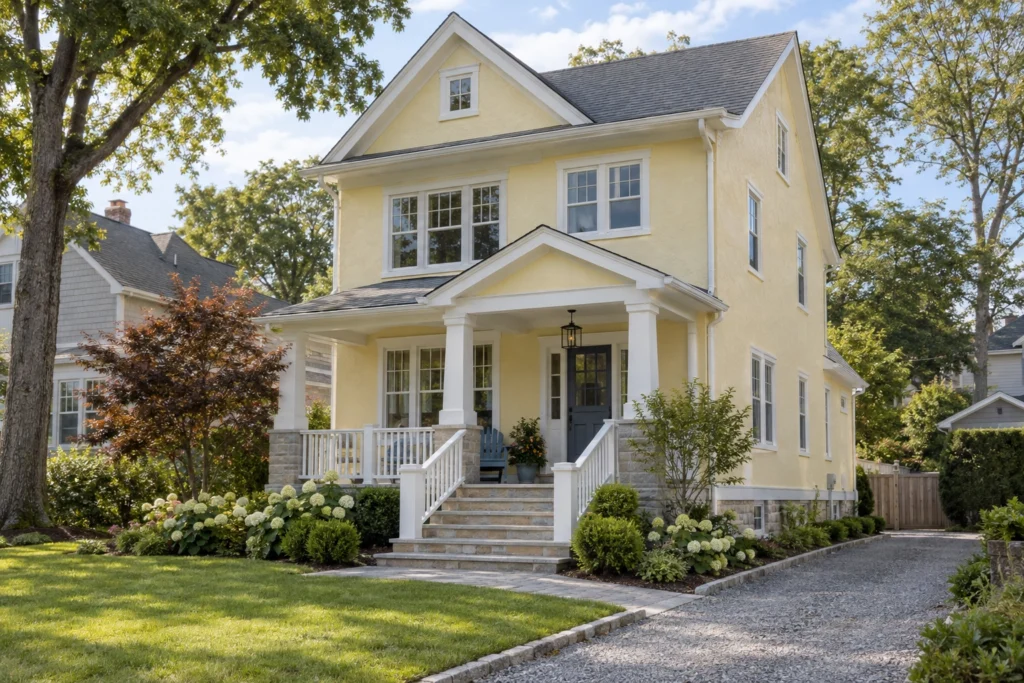
Light lemon yellow and dusty blue offer a playful direction for a small cottage or coastal-inspired home.
Use white trim to separate the two colors, then place the blue on the front door, shutters, or porch furniture. Choosing one main location for the blue helps the exterior remain easy to read.
A subdued blue keeps the contrast gentler than a highly saturated turquoise. Test the combination in full sun, where both colors may appear more intense than they do indoors.
9. Wheat Yellow with a Brown Roof
If your home has a brown roof that will remain, consider a wheat yellow with a beige or brown influence.
Pair it with warm off-white trim and an espresso-colored or stained wood door. This keeps the roof connected to the walls while giving the entrance some definition.
Avoid selecting the yellow from memory. Place the sample where you can see the roof and wall together, then step back far enough to judge the whole building.
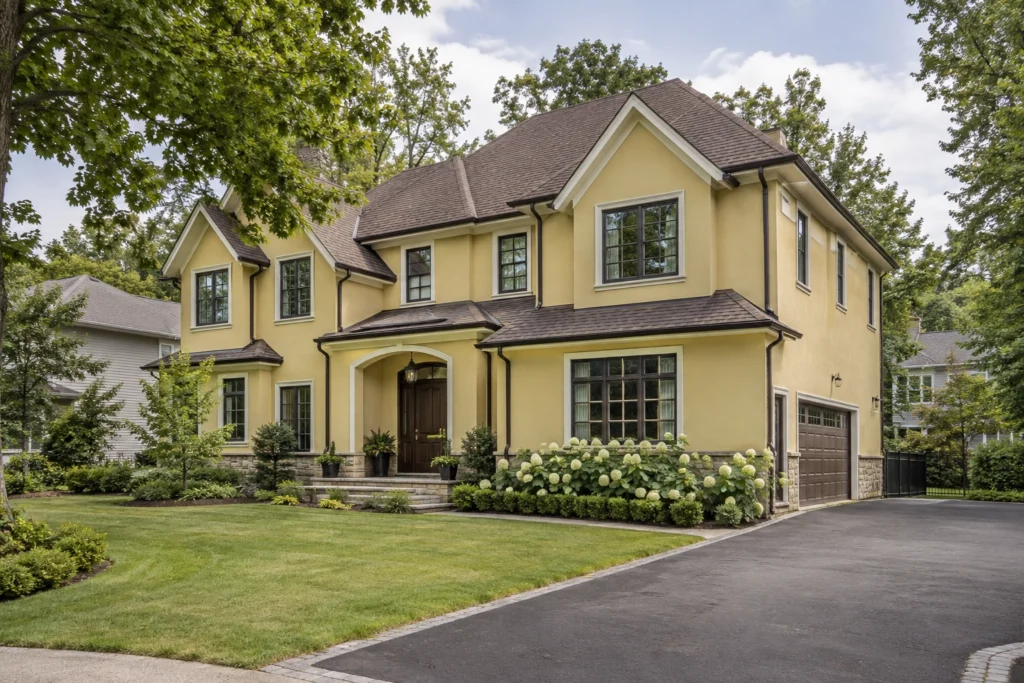
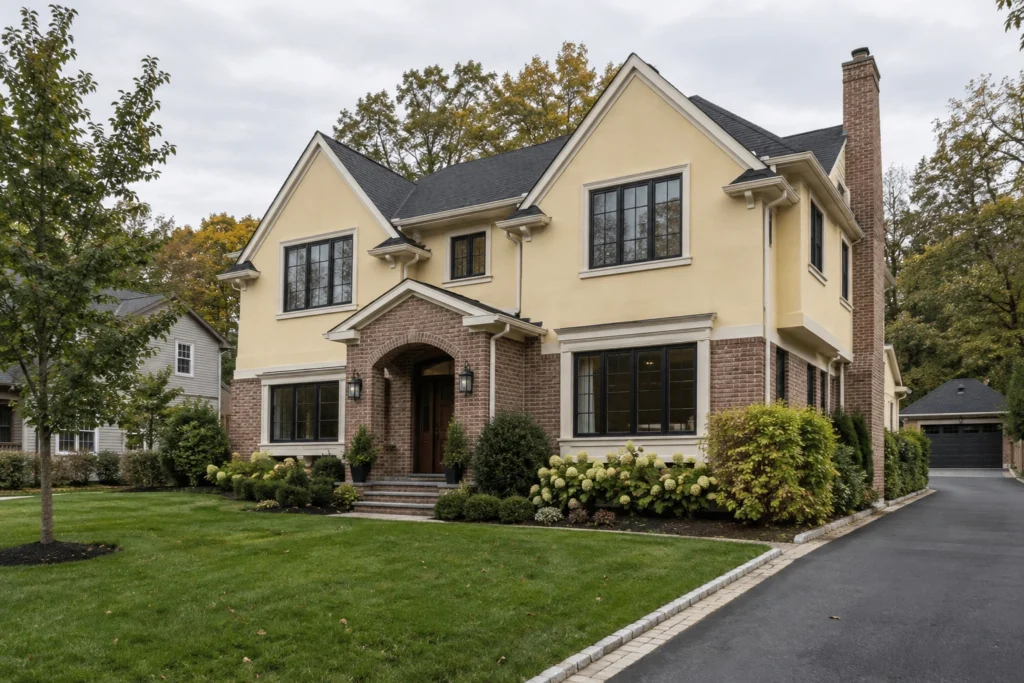
10. Pale Yellow Beside Red Brick
On a house with both stucco and brick, the yellow needs to work with the masonry as well as the mortar.
A restrained pale yellow is one option for stucco above a brick base or beside a brick chimney. Use trim that relates to the mortar, and keep the door color simple while evaluating the combination.
Watch for a yellow that makes orange-red brick appear more vivid than you want. Compare a creamy yellow with a more muted wheat shade before settling on the final color.
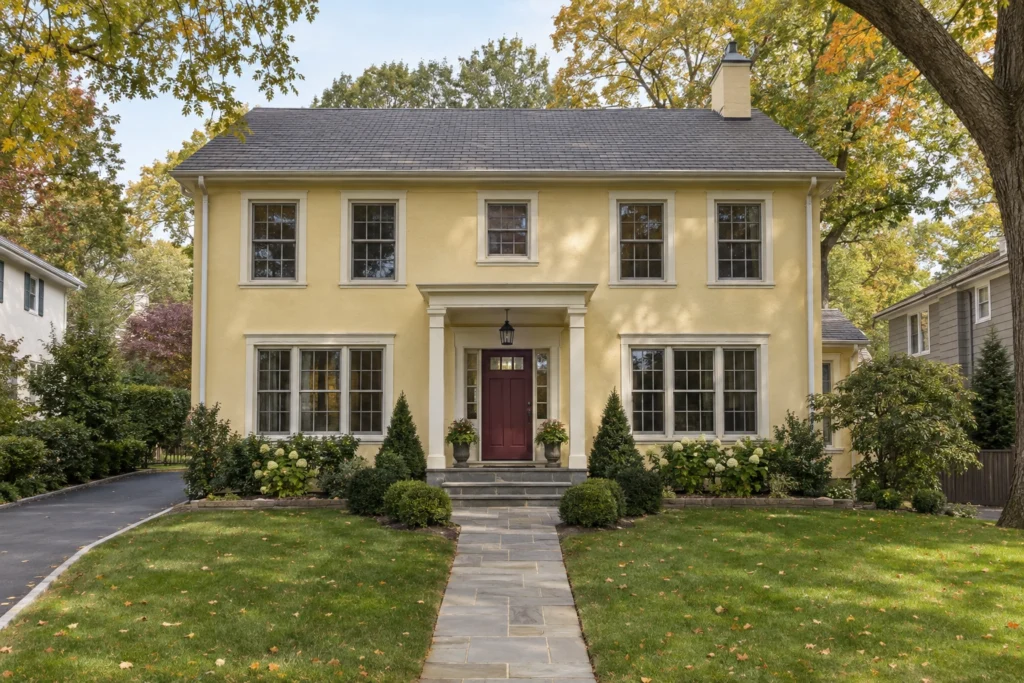
11. Warm Yellow with a Burgundy Door
A burgundy door can give a warm yellow facade a more formal entrance. The deeper red provides color without the sharpness of a bright scarlet.
Use cream trim to outline the door, and repeat burgundy sparingly if the house has shutters or another small accent area. Keep larger surfaces, such as garage doors, quieter.
This palette can suit a traditional house with a centered entrance. On a facade with many competing details, simplify the surrounding colors so the door remains the focus.
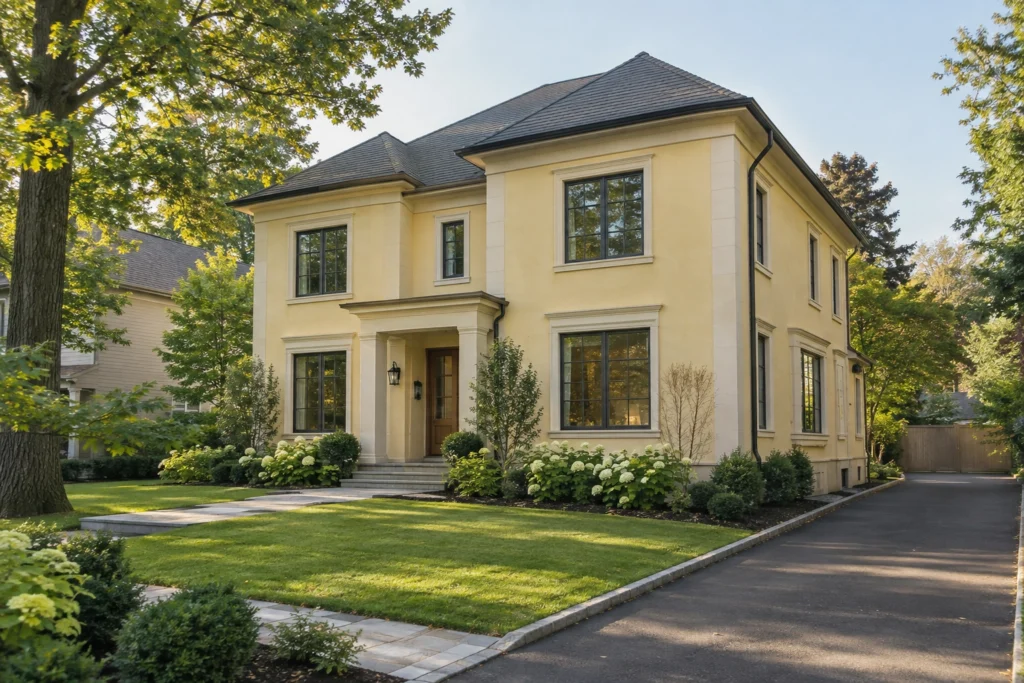
12. Pale Yellow Walls with Cream Trim
For a subtle exterior, choose pale yellow walls and cream trim with a modest difference in lightness.
This approach allows the shape of the house and its stucco texture to carry more of the design. It can work well when window surrounds, arches, or cornices already create strong shadows.
Check the combination from the street. If the trim disappears more than you intended, adjust one of the colors. A small dark element, such as a door handle or light fixture, can add definition without changing the quiet palette.
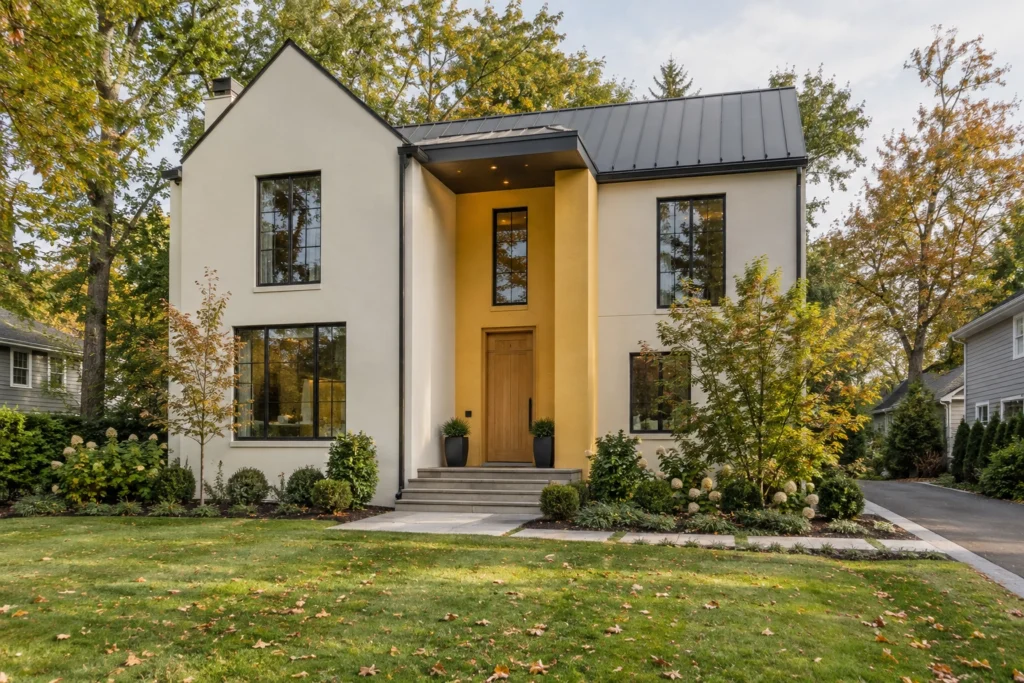
13. A Yellow Entrance on a Mostly White Building
You can use yellow stucco on a limited part of the facade. Try a recessed entrance, a porch wall, or an entire projecting section against a warm white main exterior.
Follow an existing architectural boundary when changing colors. A corner, recess, or material transition gives the change a clear starting and stopping point.
This is a useful option when you like yellow but want a smaller commitment. It also lets the entrance stand out while the rest of the building stays visually restrained.
14. A Yellow Townhouse with Consistent Trim
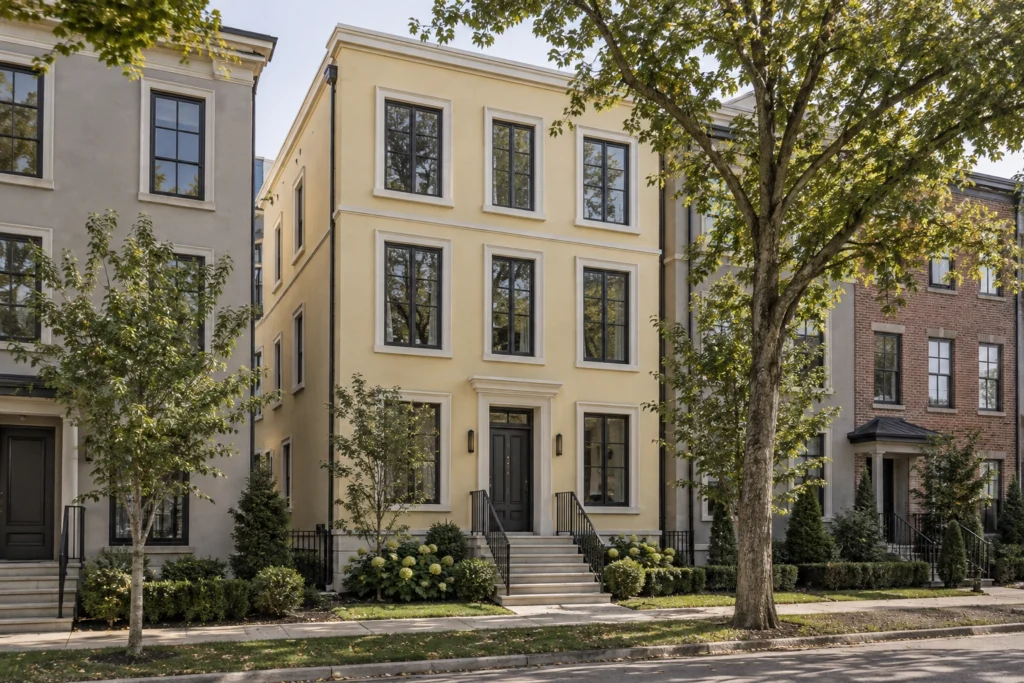
A narrow townhouse can carry a distinct yellow exterior while fitting into a row of neighboring buildings.
Look at the colors immediately beside it before choosing your shade. Pale yellow may provide enough distinction between darker neighbors, while a muted gold can relate to nearby brick or warm masonry.
Keep the trim consistent from one floor to the next. Repeating the same color around windows, doors, and cornices helps the facade feel unified rather than divided into separate levels.
15. Muted Yellow for a Small Commercial Building
For a small office, studio, or neighborhood storefront, muted yellow can make the exterior recognizable without requiring a highly saturated facade.
Combine it with dark bronze or charcoal storefront frames and a simple entrance treatment. Compare the proposed wall color with the actual sign materials so lettering remains easy to distinguish.
If the building has multiple tenants, use a consistent background color and coordinate individual accents. Large samples are especially useful here because a long uninterrupted wall can make yellow more prominent than expected.
Match Yellow Stucco to the Exterior You Already Have
When comparing yellow house trim colors, start with the materials that would be difficult or expensive to replace. Use this table to narrow your sample choices.
| Existing feature | Color direction to sample | What to check |
|---|---|---|
| White window frames | Pale yellow walls with white or soft off-white trim | Whether the trim looks noticeably creamier or cooler than the frames |
| Charcoal or gray roof | Butter yellow walls with light trim and a dark door | Whether the roof has blue, green, or brown tones that affect the combination |
| Brown roof | Wheat yellow walls with warm off-white trim | Whether the yellow becomes too orange beside the roof |
| Terracotta roof tiles | Muted golden yellow walls with cream accents | The combined intensity of the roof and wall colors in direct sunlight |
| Red brick or warm stone | Cream yellow or subdued wheat walls with trim related to the mortar | The full range of masonry colors, including weathered and shaded areas |
| Black or bronze window frames | Muted yellow walls with restrained trim and a wood entrance door | Whether the dark outlines emphasize the features you want to highlight |
Test the Complete Color Scheme Before Painting
A favorite photograph can help you identify a direction, but the color on your screen is not a reliable paint match. Lighting, image editing, and your display all affect what you see.
Use this process to compare your shortlist:
- Photograph the existing exterior in daylight. Include the roof, windows, paving, and any brick or stone. Use the photo to identify the surfaces that will remain.
- Choose a few yellow candidates. Include a lighter or more muted option alongside your initial favorite.
- Pair each yellow with the proposed trim and accent. View the colors together instead of approving each one separately.
- Use portable samples for the first comparison. Move them between the entrance, sunny walls, and shaded walls. Benjamin Moore’s exterior sampling guidance recommends viewing sample boards outdoors and notes that its interior brush-on samples should not be applied directly to exterior surfaces.
- Confirm the finalist on a representative stucco sample. Ask your contractor or finish supplier for a textured sample panel using the proposed exterior coating or finish. This helps you evaluate color and texture together.
- Review it at different times of day. Look from close range and from the street before approving the final combination.
For example, a pale yellow sample may look right beside white trim in the morning but appear too creamy under a shaded porch. Seeing both conditions lets you decide whether that variation suits the house.
Check the Stucco Before Changing Its Color
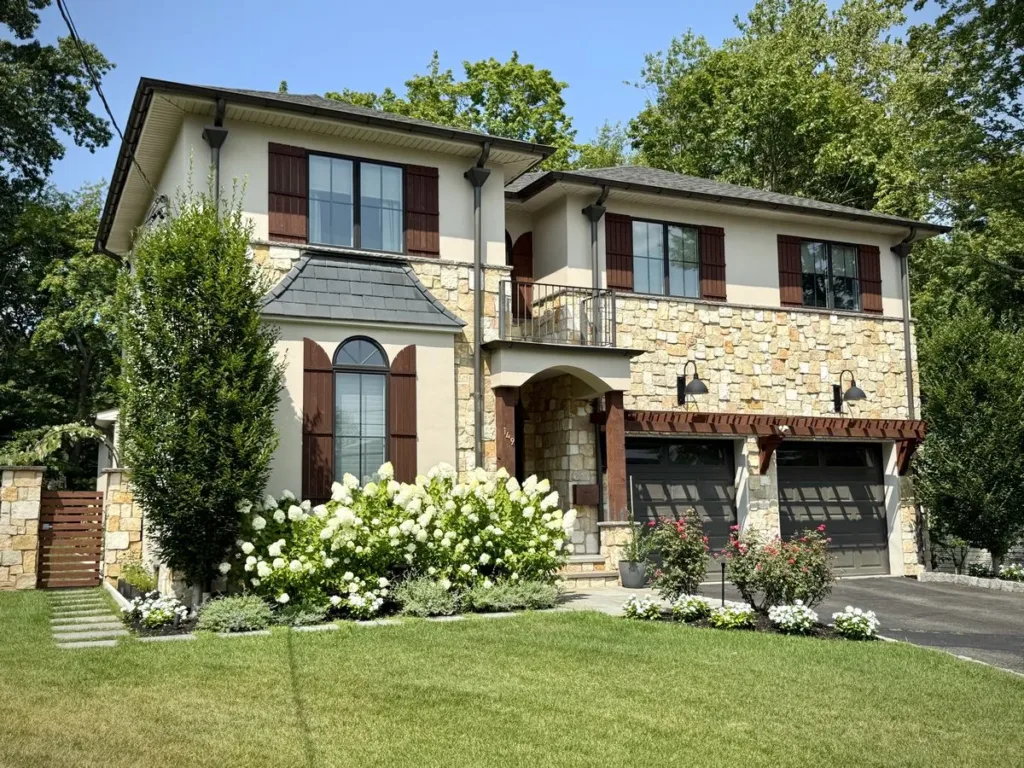
A color update also needs a suitable surface. Before selecting the final coating, ask the contractor to identify the wall system, assess existing finishes, and explain any preparation or repairs.
Discuss:
- Cracks, loose areas, or peeling paint.
- Recurring damp patches or staining.
- The compatibility of the proposed coating with the existing surface.
- Whether the work will preserve the current texture or change it.
If white deposits keep returning, review what efflorescence on stucco can indicate before treating the problem as a color issue.
Once you have a shortlist, bring the samples and photographs of your exterior to a painting consultation. ZD Stucco Repair’s stucco painting services can help New Jersey homeowners discuss color selection and the preparation needed for their property.
Frequently Asked Questions
Is yellow a good color for house exterior?
Yellow can be a good choice when its intensity suits the building and its surroundings. For a quieter appearance, start with pale or muted yellows. Stronger yellows can be considered for smaller wall areas or buildings where a more noticeable facade is the goal. Review the color against neighboring homes as well as your own materials.
What color trim goes with a yellow house?
White, cream, charcoal, and some muted gray or green tones are options to sample. Existing window frames are a useful reference: compare the proposed trim directly beside them. You do not need to make every exterior detail the same color, but unrelated shades of white can create an accidental mismatch.
What color shutters go with a yellow house?
Black, navy, sage green, dark brown, and white can all work, depending on the yellow and the surrounding materials. The amount of shutter area matters. A dark color repeated across many windows has a much stronger effect than the same color on one pair.
What color front door goes with a yellow house?
Navy, burgundy, forest green, black, or a natural wood finish are useful starting points. Test the door color at the entrance itself. A deeply shaded porch can make a dark door difficult to distinguish, so a lighter option or clearer contrast with the door surround may work better.
What color roof goes with a yellow house?
Gray, charcoal, brown, and terracotta-colored roofs can all be considered. Match the specific roof sample to the specific yellow rather than relying on the color name. For an existing roof, choose the wall palette around it; for a replacement, compare roofing and wall samples together before ordering.