Direct Answer
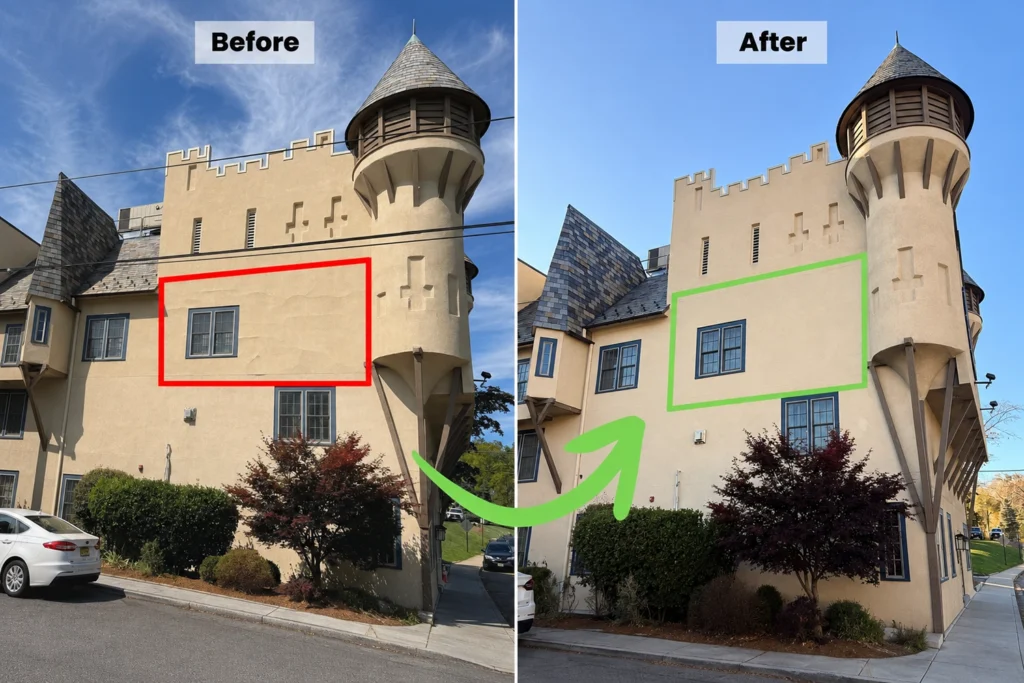
ZD Stucco Repair restored the historic stucco facade of Lake Mohawk Country Club in Sparta, New Jersey—a 1930s Swiss Alpine-style clubhouse listed on both the National Register of Historic Places and the New Jersey Register of Historic Places. The restoration involved repairing water-damaged stucco, addressing moisture infiltration issues, ensuring proper drainage integration, and reproducing the original texture and color to preserve the building’s historic character while protecting it for the community’s upcoming centennial celebration.
Why Lake Mohawk Country Club Matters
Lake Mohawk Country Club isn’t just another commercial building. It’s the architectural and social centerpiece of one of New Jersey’s most distinctive planned communities—a 2,700-family lake resort community founded in 1927 by Arthur D. Crane Company. The clubhouse itself, built in 1930, is the gem of Lake Mohawk, serving as the gathering place for the community’s 2,700 homes, three lakes, 12 beaches, and 25 miles of private roads.
The building’s significance extends far beyond its role as a social hub. Lake Mohawk Country Club is a contributing resource in the White Deer Plaza & Boardwalk District, a National Register historic district recognized for its architecture, commerce, and community planning. The district represents a rare example of a planned commercial and recreational center with unified English Tudor village architecture—unique in Sussex County and northern New Jersey when it was developed.
The clubhouse itself is architecturally distinctive: a large T-shaped structure with a 3-story main block, 4-story crenellated corner towers, turrets, decorative stone and brickwork, stucco siding, and slate roof details characteristic of the “Lake Mohawk Tudor” and German Baronial architectural styles. This isn’t a building where standard stucco repairs will suffice. Every repair must honor the historic integrity of the structure while ensuring its longevity for future generations.
The Problem: Water Damage Threatens Historic Stucco
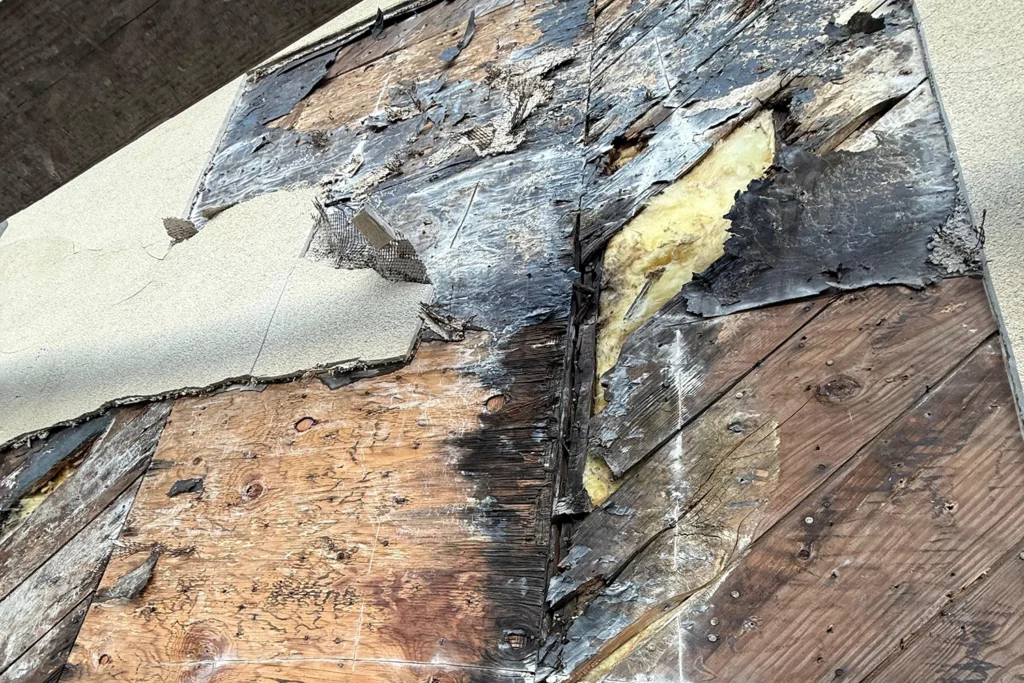
In the winter of 2025, the Lake Mohawk Country Club management team discovered a critical problem: stucco delamination on the building’s exterior. The stucco, which had been worked on in 2010, was showing signs of failure. Water was infiltrating behind the stucco facade, threatening the structural layers beneath and risking accelerated deterioration of the building’s historic wooden frame and substrate.
This is a common problem with historic buildings, but it’s particularly urgent when the structure is listed on the National Register and serves as the centerpiece of a community preparing for its centennial celebration. The General Manager of Lake Mohawk Country Club understood the stakes immediately.
“This past winter, it was realized that we were having problems and it was causing possible water damage to the layers beneath,” the manager explained. “The building is under the National Historic Registry as being constructed in 1930, so we needed to find the right contractor who understood not just stucco repair, but historic preservation.”
The Challenge: Finding Specialized Historic Stucco Expertise
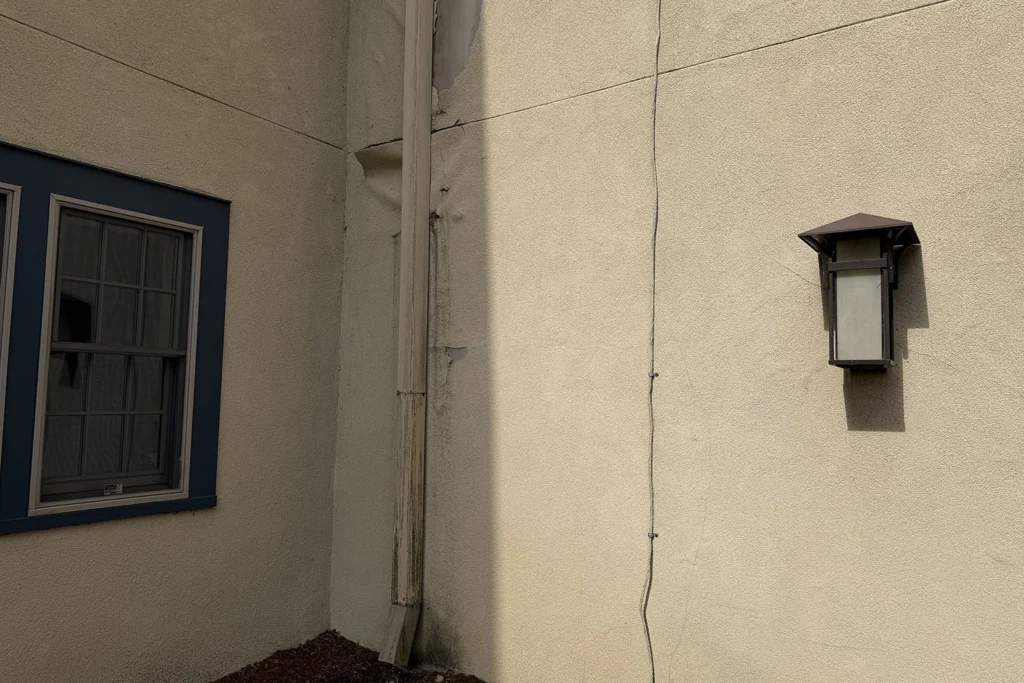
The search for a qualified contractor revealed a critical industry problem: specialized stucco repair contractors are increasingly rare. While many companies will install new stucco on modern buildings, few possess the expertise to properly repair historic stucco while preserving its original character.
“In my research online, I realized that companies that actually provide this type of specialized repair work are few and far between,” the manager noted. “It’s definitely a skill set that is becoming less in demand as far as repair work. There are a lot of companies that will do new stucco, but very few that actually specialize in the repair work.”
The search led to ZD Stucco Repair, a company that had been previously used for personal projects. When evaluating options, three critical factors were considered: the ability to handle specialized historic restoration, a fair price point, and demonstrated professionalism. ZD Stucco Repair met all three criteria.
Why Historic Stucco Repair Requires Specialized Expertise
The Lake Mohawk Country Club restoration illustrates why historic stucco repair is fundamentally different from standard stucco work. Historic buildings from the 1930s were constructed with lime-based stucco systems designed to “breathe”—allowing moisture vapor to pass through the material while managing water infiltration through proper drainage and flashing.
Modern stucco repair contractors often apply Portland cement-based stucco to historic lime-based systems, a critical mistake that accelerates building deterioration. The rigid modern material creates a moisture trap, causing water to become trapped behind the stucco and accelerate decay of the underlying wooden structure.
Proper historic stucco restoration requires:
- Moisture assessment and management — Understanding how water infiltrates and designing drainage solutions
- Substrate repair — Addressing water damage to the underlying structure through stucco remediation before applying new stucco
- Material compatibility — Using lime-based or compatible stucco formulations that allow the building to breathe
- Texture reproduction — Matching the original hand-applied texture, not applying modern spray-applied finishes
- Flashing and drainage integration — Ensuring water sheds properly and doesn’t become trapped
- Seamless integration — Making repairs invisible so the historic character is preserved
Our Four-Phase Restoration Process
The Lake Mohawk Country Club restoration followed a comprehensive approach designed specifically for historic preservation.
Phase 1: Comprehensive Moisture Assessment and Structural Inspection
Before any stucco work could begin, we conducted a detailed assessment of the moisture infiltration and structural damage. We carefully removed damaged stucco sections to expose the underlying substrate, identifying the full extent of water damage to the wooden frame and substrate materials.
As the manager observed, “ZD Stucco Repair always pointed out areas that might have been missed as far as having to have a seamless look as well as future integration and the repair work with our drainage that we have off of the building.”
This phase revealed the critical issues that had to be addressed:
- Water infiltration paths through damaged stucco
- Compromised substrate materials requiring replacement
- Drainage and flashing deficiencies that allowed water to become trapped
- Areas where previous repairs had failed due to incompatible materials
Phase 2: Structural Repair and Moisture Control
Once we identified the problems, we removed all compromised materials and repaired the underlying structure. We installed modern breathable moisture barriers that integrate with the historic construction while providing protection against future water infiltration.
This phase is where most standard contractors cut corners, rushing to apply new stucco without addressing the root cause of failure. We took the time to do it right: ensuring that the building’s historic wooden structure was protected, that drainage would work properly, and that future moisture problems would be prevented.
Phase 3: Custom Material Formulation and Texture Reproduction
The most critical phase of historic stucco restoration is applying the correct material in a way that seamlessly integrates with the original work. We formulated a custom stucco mix designed specifically for the Lake Mohawk Country Club project—one that provides the necessary strength and durability to withstand New Jersey’s weather while maintaining the flexibility and breathability required for historic compatibility.
Our craftspeople then spent considerable time reproducing the original 1930s hand-applied texture. This wasn’t done with modern spray equipment or quick application techniques. Instead, we used traditional hand-trowel methods, carefully studying the original texture and recreating it section by section until the new work was indistinguishable from the original.
Phase 4: Drainage Integration and Protective Coating
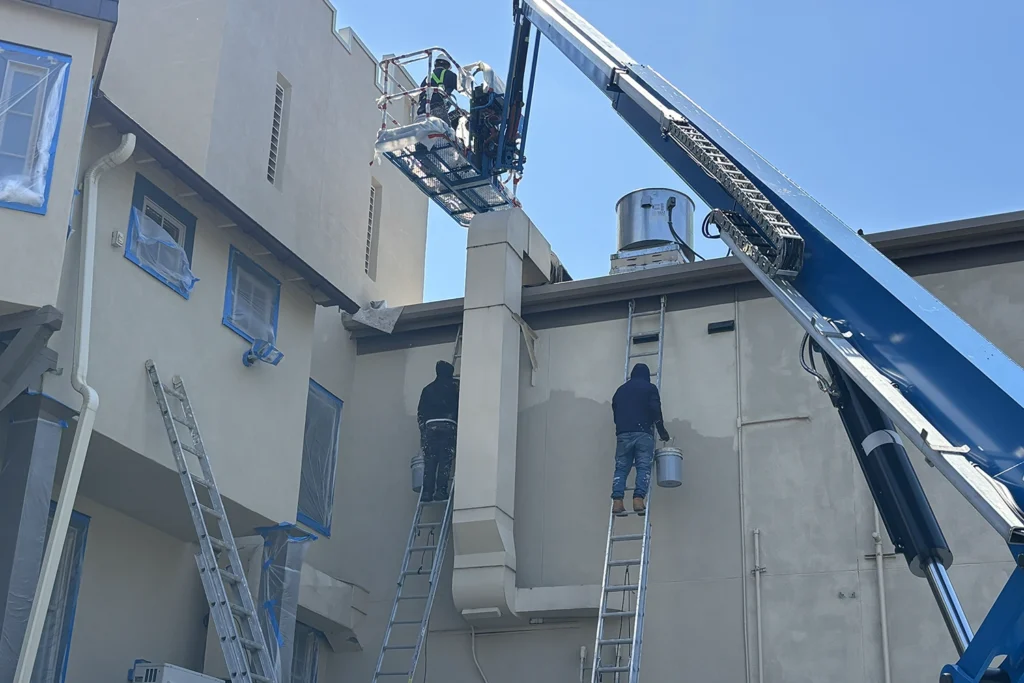
The final phase involved ensuring that the restored stucco integrated seamlessly with the building’s drainage system. We applied a specialized high-breathability protective coating that provides water resistance while allowing moisture vapor to escape from the building’s structure.
The manager emphasized the importance of this attention to detail: “I always appreciate when things are done the right way the first time, as opposed to the cheap way and constantly having issues in the future.”
Working Around a Historic Building’s Active Schedule
Lake Mohawk Country Club isn’t a vacant historic property. It’s an active community center used seven days a week, hosting events, banquets, weddings, and member activities throughout the year. The building had to remain presentable at all times during restoration work.
This presented a unique logistical challenge. ZD Stucco Repair had to coordinate the restoration schedule around the club’s event calendar, ensuring that work didn’t disrupt the community’s activities or compromise the building’s appearance during important events.
“While we were doing the repair, ZD Stucco Repair worked around the schedule that we required so that the events could be managed appropriately without any changes,” the manager explained. “The crew was very polite, very courteous, very welcoming and always smiling. That means a lot.”
This level of professionalism and communication is essential when working on a building that serves as the social centerpiece of a 2,700-family community. The crew’s behavior reflected the quality of the work itself—meticulous, respectful, and focused on excellence.
The Historic Importance of Proper Restoration
Lake Mohawk Country Club’s significance to the community extends beyond its architectural value. The building is central to the community’s identity and its upcoming centennial celebration in 2027. The clubhouse will host major centennial events throughout the year, including the main banquet on January 9th, 2027, along with ski tournaments, fireworks displays, and community dinners.
For a building with this level of community importance, proper restoration isn’t just about preventing water damage—it’s about stewardship. As the manager noted:
“Lake Mohawk Country Club was built in 1930, and it is the gemstone structure in our community. It is the place where we come together. We have meetings, lots of events and banquets, and functions. It is very much important for us to make sure that the entire facility looks its best. It is also on the National as well as the state Historic District Registry, and for that reason as well, we are very much required and provide ourselves as being stewards of maintaining the building to the standards to which it was built.”
This stewardship mindset is exactly what proper historic restoration requires. It’s not just about fixing a problem—it’s about preserving a community treasure for future generations.
Why ZD Stucco Repair for Historic Properties
The Lake Mohawk Country Club project demonstrates why specialized expertise matters when restoring historic properties. We don’t offer gimmicky “lifetime warranties” that disappear when a contractor leaves the business. Instead, we provide honest, durable stucco work that has earned the trust of over 1,000 homeowners and commercial property managers across New Jersey and the greater New York area since 2017.
When you work with ZD Stucco Repair on a historic property, you get:
- Specialized Historic Preservation Knowledge — We understand the chemistry of historic building materials and the physics of old wall construction
- Moisture Management Expertise — We identify and solve the root causes of water infiltration, not just patch symptoms
- Texture Matching Capability — We can reproduce original textures and finishes from any era
- Professional Communication — We keep you informed throughout the project and respond promptly to concerns
- Craftsmanship — We take the time to do work right the first time, not the cheap way
- Respect for Historic Character — We understand that historic buildings require more than standard repairs—they require stewardship
The manager’s final endorsement captures the value of this approach: “If I had contractors like ZD Stucco Repair for all of the work here, my life would be that much easier and much more enjoyable. I thank all of the crew and staff at ZD Stucco Repair, and I look forward to working with them again in the future.”
Frequently Asked Questions About Historic Stucco Restoration
What makes historic stucco repair different from standard stucco repair?
Historic stucco from the 1930s-1950s was typically lime-based and designed to breathe, allowing moisture vapor to pass through while managing liquid water through proper drainage. Modern Portland cement stucco is rigid and moisture-trapping. Proper historic repair uses compatible materials, addresses drainage, and preserves the original character. Standard contractors often make the problem worse by applying incompatible modern materials.
How do you match the original texture on 90-year-old stucco?
Texture reproduction requires craftsmanship, not modern tools. We analyze the original application method, create sample boards, and use traditional hand-trowel techniques to reproduce the exact pattern, depth, and movement of the original work. This process takes time but is essential for seamless restoration.
Will stucco repair affect my building’s historic register status?
When done properly by historic preservation experts, stucco repair protects and preserves your historic status. The key is following the Secretary of the Interior’s Standards for the Treatment of Historic Properties, which emphasize repair over replacement and use of compatible materials and visual matching. We follow these standards on every historic project.
How long does historic stucco restoration take?
Timeline varies significantly based on damage extent and building size. Localized repairs might take days, while comprehensive restoration like Lake Mohawk Country Club takes weeks. We provide detailed timelines during the initial consultation.
Do you work on properties outside of Sparta, New Jersey?
Yes. ZD Stucco Repair serves commercial and residential clients throughout New Jersey and the greater New York area. We regularly work in Clifton, Montclair, Newark, Franklin Lakes, Fort Lee, and surrounding communities. We also travel to other regions for significant historic restoration projects.
What if there’s water damage behind the stucco?
Water damage is common with failed stucco. We always inspect for and repair water-damaged structure before applying new stucco. Skipping this step guarantees that new repairs will fail within a few years as moisture continues to damage the underlying structure.
How much does historic stucco restoration cost?
Historic restoration requires specialized materials and high-level craftsmanship, making it an investment in your property’s future. Costs depend on square footage, extent of structural damage, and texture complexity. We provide free estimates without obligation and work with clients on cost-effective repair plans tailored to budget and priorities.
How often should historic stucco be painted or coated?
Historic stucco should only be coated with high-breathability, specialized masonry paints or elastomeric coatings designed for historic structures. Standard exterior paint traps moisture and causes the same problems that damaged the building originally. A high-quality breathable coating typically lasts 10-15 years before recoating.
Can I use modern stucco repair methods on a historic building?
No. Modern spray-applied stucco, rigid Portland cement materials, and standard moisture barriers are incompatible with historic construction. Using them accelerates deterioration rather than preventing it. Historic buildings require historic-compatible materials and methods.
What’s involved in the initial consultation?
We inspect your property, assess moisture issues, identify structural damage, discuss your goals and timeline, and provide a comprehensive restoration plan. We explain what needs to be done and why, answer your questions, and provide a detailed estimate. There’s no obligation.
The Lake Mohawk Story: A Community Treasure Preserved
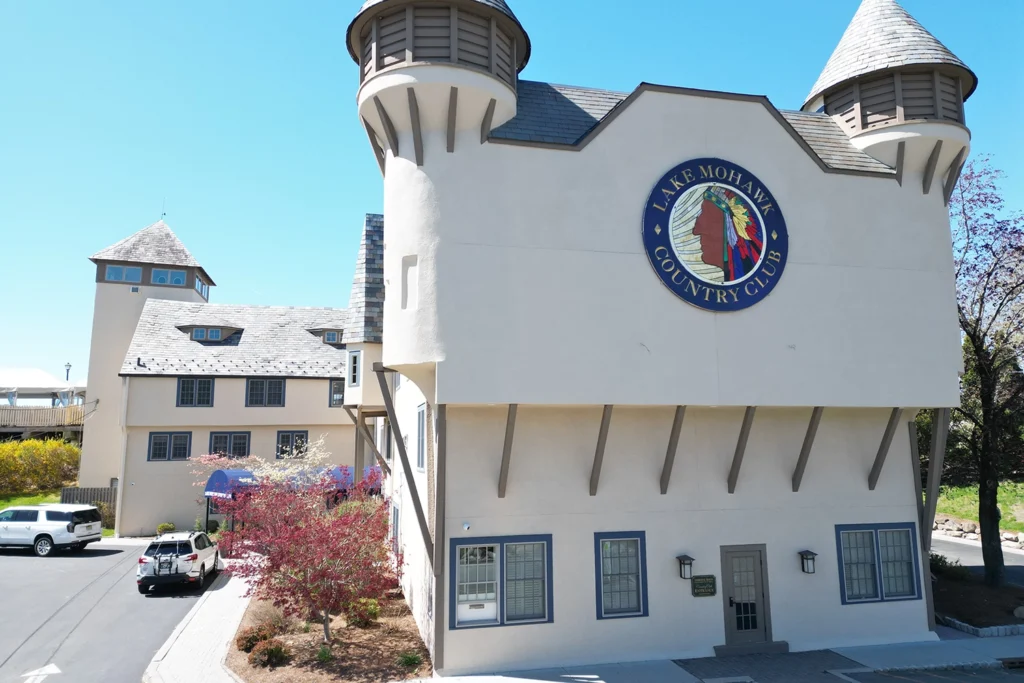
Lake Mohawk Country Club’s restoration represents more than just a successful stucco repair. It represents the commitment to preserving a community treasure for future generations. The building that Arthur D. Crane envisioned nearly 100 years ago—a castle-like clubhouse as the social center of a planned lake community—will continue to serve that role for decades to come, thanks to proper historic restoration.
For Sabine Watson and the Lake Mohawk community, the restoration ensures that the building will look its best for the centennial celebration in 2027 and beyond. For ZD Stucco Repair, it’s a privilege to have been trusted with such an important project.
Ready to Restore Your Historic Property?
If you own or manage a historic building in New Jersey or New York with damaged stucco, don’t trust the repair to a standard contractor. Protect your investment and preserve your building’s architectural heritage with experts who understand historic preservation.
We offer a free, no-obligation assessment. Our team will inspect your property, discuss your options, and provide a comprehensive restoration plan that respects your building’s history while ensuring its structural integrity for generations to come.
Contact ZD Stucco Repair Today:
Phone: 862-232-5307
Email: services@zdstuccorepair.com
Service Area: New Jersey, New York, and surrounding regions
Hours: Monday-Friday, 8:00 AM – 5:00 PM