Woodpecker stucco damage needs two responses: keep the bird from reaching the wall, then repair every damaged layer of the stucco or EIFS system. A surface patch may be enough for a shallow chip in sound cement stucco. A hole through an EIFS finish, reinforcing mesh, or foam board needs a system-compatible repair. Before closing any cavity, make sure it is not an active nest.
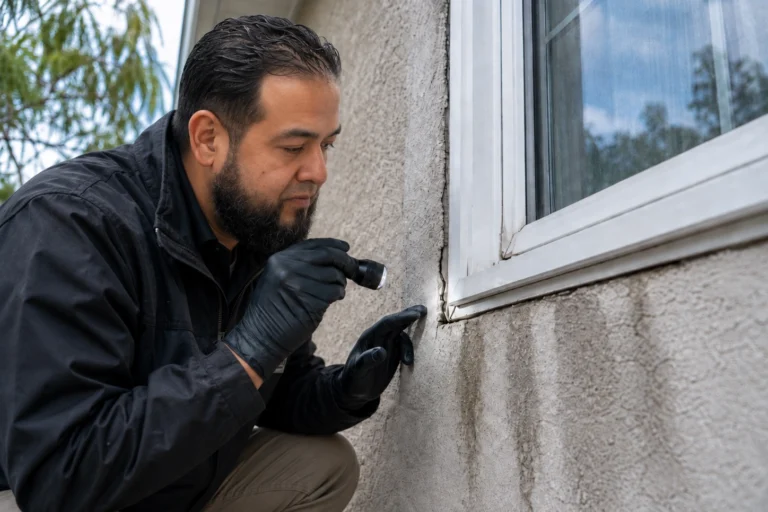
Open holes should not be ignored. Rain can enter through the break, wet the insulation or sheathing, and turn a small repair into a moisture problem. The safest first step is to photograph the area from the ground, watch for bird activity, and arrange an inspection if the hole is high, deep, soft around the edges, or close to a window, roofline, or joint.
Why Do Woodpeckers Peck My House?
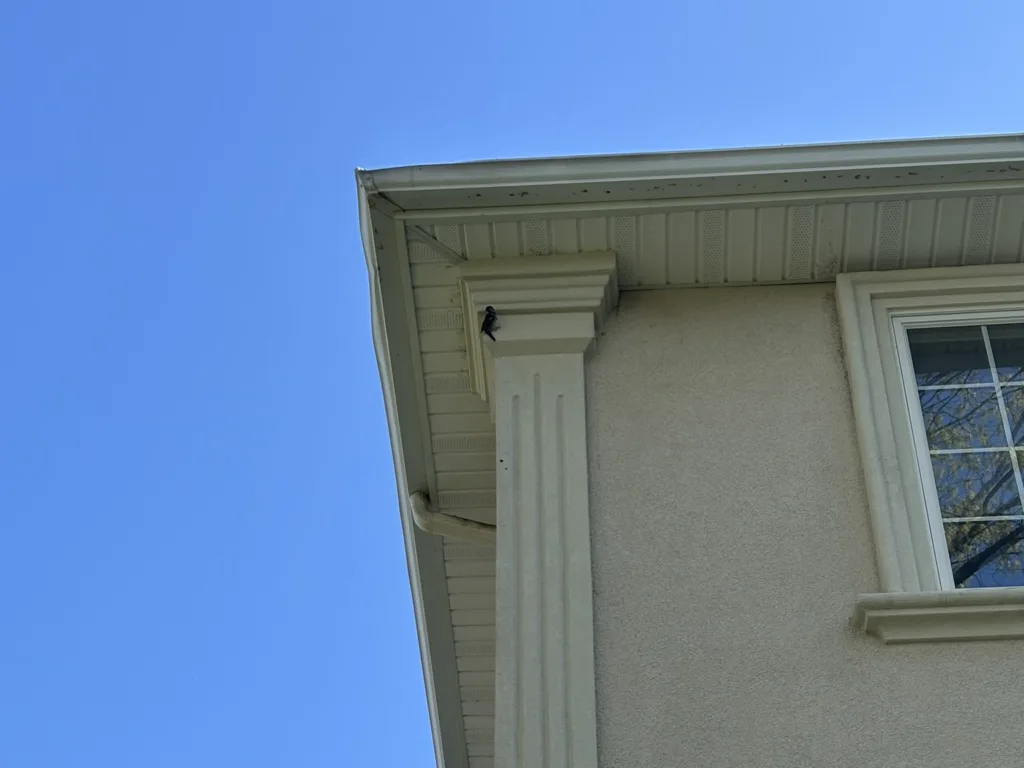
Woodpeckers do not eat stucco. They strike exterior walls for several different reasons:
- Drumming produces a loud sound used to announce territory or attract a mate.
- Excavation creates a cavity for nesting or roosting.
- Foraging exposes insects or larvae behind siding, trim, or nearby wood.
- Repeated use may continue because the bird has already accepted the wall as a useful site.
The pattern can give you a clue. Fast tapping without much visible damage often points to drumming. A large, smooth cavity may be intended for a nest or roost. Small, irregular holes can indicate foraging. These clues are useful, but they do not prove what is happening behind the wall.
EIFS is a frequent target because it contains insulation board beneath a thin reinforced coating. The wall can sound hollow and is easier to excavate than cement plaster. ZD Stucco Repair’s EIFS repair guide explains the typical drainage layer, insulation, mesh, base coat, and finish coat that may need to be checked after an impact.
Traditional hard-coat stucco is denser, but it is not immune. Birds may attack foam architectural trim, weakened patches, cracks, or wall areas next to wood components. Identifying the wall system is the first repair decision.
What Do Woodpecker Holes Look Like?
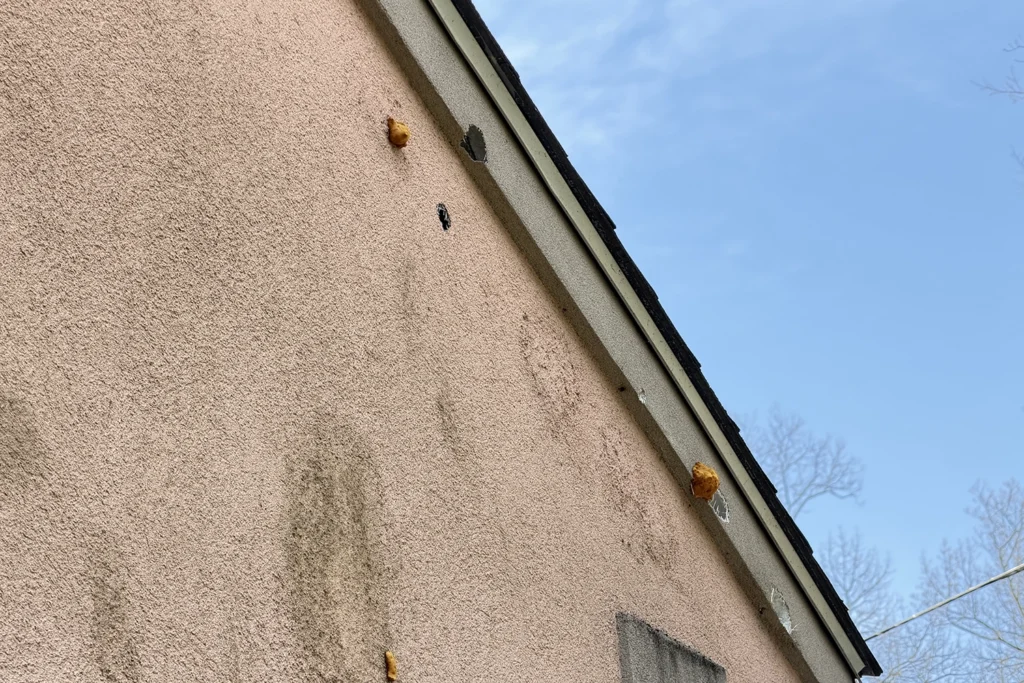
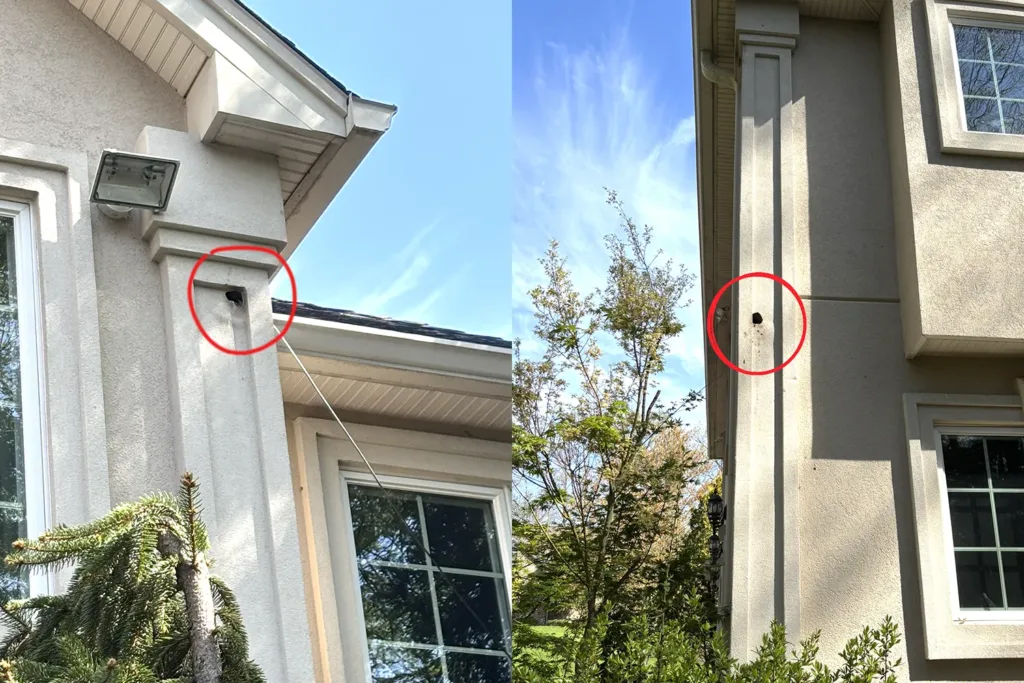
Woodpecker holes usually have a deliberate pattern that differs from random cracking or impact damage. Look for:
- Round or oval openings with chipped but fairly defined edges
- Several holes clustered on the same wall, trim band, chimney, or gable
- Exposed white or colored foam beneath an acrylic finish
- Loose mesh, cracked coating, or a soft area around the opening
- Stucco crumbs or insulation fragments on the ground
- Repeated tapping from the same part of the building
- Water staining, bubbling, or softness below the damaged area
Do not judge the repair by the visible diameter alone. A small opening can cut through reinforcing mesh or a water-resistive barrier. A larger-looking surface chip may still be shallow. The system, depth, surrounding bond, moisture condition, and access determine the repair scope.
| What You See | What It May Indicate | What to Check Next |
|---|---|---|
| Shallow chip on hard, solid cement stucco | Finish or surface damage | Loose edges, cracks, sound material around the chip |
| Hole with exposed foam | EIFS or foam trim damage | Mesh, base coat, depth of missing insulation |
| Large smooth cavity | Possible nest or roost excavation | Bird activity before any closure |
| Small irregular holes near wood trim | Possible insect foraging | Carpenter bees, larvae, damp or decayed wood |
| Staining, bubbling, or a soft wall below the hole | Possible water entry | Moisture behind the finish and condition of sheathing |
| Repaired spot that has been opened again | Recurring bird access or weak patch | Exclusion plan and compatibility of the prior repair |
Can a Woodpecker Damage Your House?
Yes. A woodpecker can open the wall finish, cut reinforcing mesh, remove insulation, and create a path for rain. The visible hole may be small even when the surrounding wall has lost its bond or retained moisture.
A quick response limits both repeat pecking and rain exposure. Follow this order:
- Photograph the damage. Capture the hole, the full wall, nearby windows or roof edges, and any debris below it.
- Watch from a distance. Look for a bird entering the cavity, carrying nesting material, or feeding young.
- Check for related symptoms. Note stains, soft areas, open joints, carpenter bee activity, or interior dampness.
- Keep the bird away with a lawful, nonlethal method if no active nest blocks the work.
- Arrange a weather-tight repair that matches the actual stucco system.
- Add a prevention measure at the same elevation so the bird does not simply move a few feet away.
Most native woodpeckers, along with their nests and eggs, are protected under federal law. The U.S. Fish and Wildlife Service guidance for woodpeckers and homes says control measures must wait when a nest contains eggs or young. Do not seal a cavity until you know it is vacant. If you are unsure, contact a wildlife professional or the appropriate Fish and Wildlife Service office before work begins.
How to Stop Woodpeckers From Pecking Stucco
The best method depends on whether the bird is drumming, searching for food, or excavating a cavity. Physical exclusion offers the strongest long-term control because it prevents the bird’s bill from reaching the wall. Visual devices may help when installed early, but birds can become used to them.
| Method | Best Use | Limitation |
|---|---|---|
| Taut bird netting | Repeated damage on an accessible wall or under an eave | Must be mounted correctly and checked for gaps or tears |
| Reflective streamers or Mylar tape | Early activity at a small, defined area | Results vary and movement is needed |
| Moving hawk silhouette or other mobile | Short-term disruption near a new pecking site | Static decoys often lose their effect |
| Plastic owl | Temporary trial only | Birds commonly learn that it is harmless |
| Sound devices | Short-term harassment where noise is acceptable | Birds may become used to the sound; neighbors may object |
| Insect inspection and treatment | Pecking linked to carpenter bees or larvae | Treating insects alone will not stop territorial drumming |
| Repair plus stronger compatible surface system | Recurring damage to a limited EIFS feature | Product choice and installation must match the existing wall |
| Sticky gel or tacky repellent | Avoid | Can trap feathers, impair flight, or harm birds |
Reflective woodpecker deterrent streamers can help when installed close to a new pecking site and kept moving in the wind. Cornell researchers found that reflective streamers were the only tested device that worked with any consistency, yet they eliminated damage at only half of the 16 test sites. Cornell Lab’s woodpecker guidance also explains that no deterrent worked every time.
For netting, Cornell advises keeping it taut, at least 3 inches from the wall, and closed at the sides so birds cannot become trapped. The Fish and Wildlife Service also describes physical exclusion as probably the most effective control method. Installation should preserve access to windows, vents, drainage paths, and service equipment.
Avoid sticky repellents. The Colorado State University Extension guidance warns that these products may injure or trap birds. It also notes that owl figures are generally unsuccessful. Homemade pepper, garlic, or oil sprays should not be treated as a dependable wall treatment because they may stain finishes, harm landscaping, or lack clear evidence for bird-safe use.
How to Repair Woodpecker Holes in Stucco
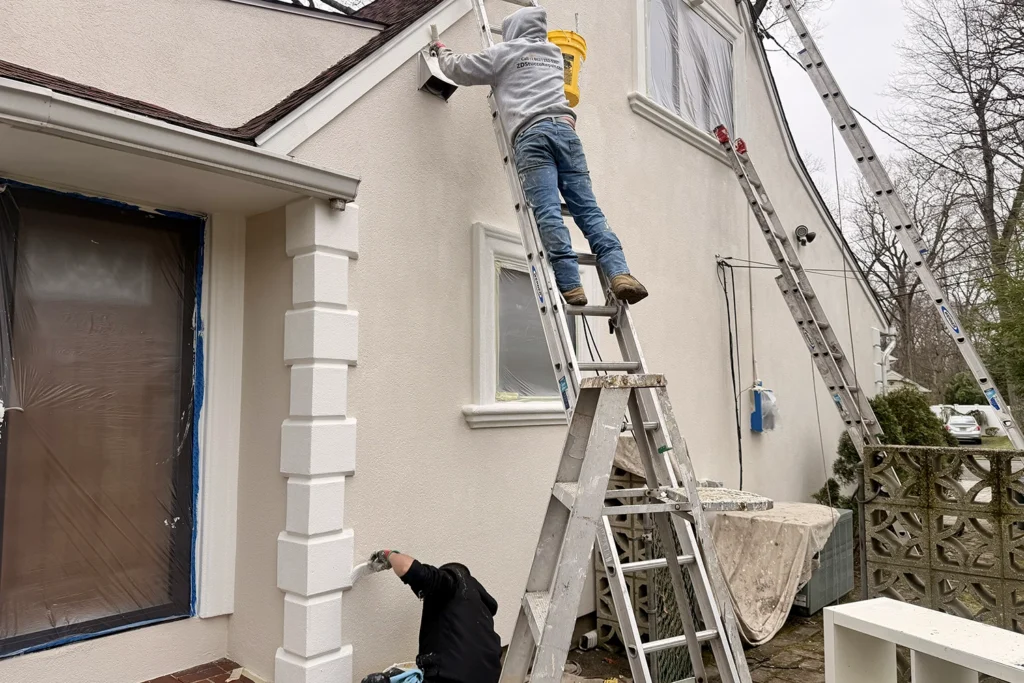
The correct woodpecker stucco repair restores every layer that was damaged. Filling only the visible opening can hide cut mesh, missing foam, wet sheathing, or a failed bond around the hole.
How to Patch Woodpecker Holes in Hard-Coat Stucco
A small surface repair may be reasonable when the surrounding cement stucco is solid, the damage is shallow, no lath or weather barrier is exposed, and there are no moisture signs. The loose material is removed, the surface is prepared, and a compatible repair material is built and textured to match the wall. Coating or paint is applied only after the repair has cured as required by the product.
Even a small patch can remain visible because aged stucco changes color with sun, weather, and previous coatings. Texture and color matching should be discussed before work begins.
Repairing a Hole in EIFS
EIFS repair usually involves more than filling the cavity. Depending on depth, the work may include:
- Removing loose finish and base coat to stable edges.
- Checking the insulation board, reinforcing mesh, and water-resistive layer.
- Removing wet, crushed, or contaminated material.
- Replacing missing insulation with a compatible material.
- Rebuilding the reinforcing mesh and base coat with proper overlap.
- Applying a compatible finish and matching the surrounding texture and color.
- Checking the repair edges, nearby joints, and drainage details.
A local repair is often possible when the surrounding system is sound. Wider removal may be needed when moisture, soft sheathing, delamination, repeated patches, or clustered holes extend beyond the visible opening. Full-wall replacement is not automatic. The repair boundary should follow the condition found during inspection.
When Moisture Has Entered the Wall
Water may travel away from the hole before a stain appears. Warning signs include a soft substrate, swelling, interior discoloration, musty odor, failed sealant, or damage below the opening. The source must be closed, affected materials must be assessed, and wet components must be allowed to dry or be replaced as needed.
ZD Stucco Repair’s page on water infiltration and stucco leak repair covers other moisture entry points that may exist near bird damage, including window joints and flashing. Repairing the bird hole will not solve a separate leak at a nearby transition.
DIY Patch or Professional Repair?
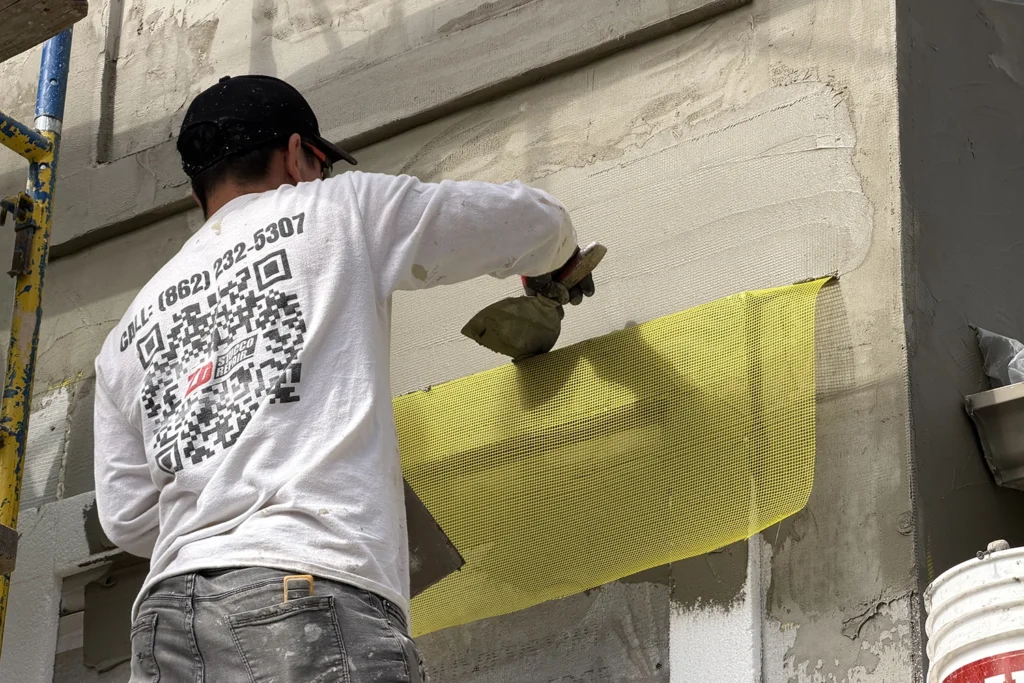
The safest choice depends on the wall system and what the bird reached.
| Condition | A Limited Homeowner Repair May Be Reasonable | Professional Inspection Is the Safer Choice |
|---|---|---|
| Wall type | Confirmed hard-coat stucco | EIFS, foam trim, or unknown system |
| Damage depth | Shallow surface chip | Exposed foam, mesh, lath, barrier, or sheathing |
| Moisture | Area is dry and firm | Stains, softness, bubbling, odor, or interior symptoms |
| Location | Safe access from the ground | Second story, roof edge, chimney, or utility area |
| Pattern | One new, isolated chip | Multiple holes, recurring damage, or a large cavity |
| Nest activity | Cavity is confirmed vacant | Bird enters the hole or eggs or young may be present |
| Finish match | Minor appearance difference is acceptable | A uniform texture or color is required |
Do not use a universal hole-size rule. Depth and wall construction matter more than diameter. A plug that looks neat from outside can still leave a path for water around its edges or seal damp material inside the wall.
How to Reduce the Chance of Repeat Damage
Repair and prevention should be planned together. Closing a hole without changing access may invite the bird to reopen the patch or start nearby.
Use this follow-up checklist:
- Inspect the rest of the elevation, especially foam trim and hollow-sounding projections.
- Install netting or another physical barrier where repeat attacks are likely.
- Place reflective streamers close to the active area and remove or reposition them when they stop moving well.
- Check nearby wood for carpenter bees, larvae, rot, or dampness.
- Repair failed joints and other openings that can admit water.
- Recheck the wall after wind-driven rain and during the next period of bird activity.
- Photograph any new damage so its location and rate of change are clear.
New Jersey homes often experience active drumming in spring, but foraging and roosting can occur at other times. Start deterrence as soon as activity begins. Once a bird has established a site, moving it away may take more than one method.
When to Call a Stucco or EIFS Specialist
Arrange an inspection when the wall system is unknown, foam or mesh is exposed, the hole is high, the area feels soft, moisture signs appear, or prior patches have failed. A specialist should explain which layers are damaged, how far material will be removed, how the reinforcing layer will be restored, and what prevention is practical for the elevation.
The Fair Lawn bird-hole and staining project shows why bird damage and moisture symptoms should be evaluated together. ZD Stucco Repair serves residential and commercial properties across New Jersey and the greater New York area, with 200-plus five-star reviews, a 4.9 average customer rating, and more than 1,300 completed jobs reported on its EIFS service page.
Frequently Asked Questions
Does homeowners insurance cover woodpecker damage?
Coverage depends on the policy language, the cause of the loss, and whether the damage developed over time. Photograph the hole and any interior symptoms, take reasonable steps to prevent more weather exposure without disturbing an active nest, and ask the insurer how the policy treats bird damage and related water intrusion. Keep inspection reports and repair estimates.
Do fake owls keep woodpeckers away?
A fake owl may interrupt a new pattern for a short time, especially if it moves or is repositioned, but static owl figures often stop working as the bird becomes used to them. Use an owl only as a temporary measure. Reflective movement or correctly installed physical exclusion has better support.
Are woodpeckers protected?
Almost all birds native to the United States, including woodpeckers, their nests, and their eggs, are protected under the Migratory Bird Treaty Act. Nonlethal deterrence and property repair are possible, but an active nest with eggs or young must not be sealed. Contact the U.S. Fish and Wildlife Service when the legal status or nest condition is uncertain.
What time of day do woodpeckers peck?
Woodpeckers are active during daylight. Drumming is often noticed in the early morning and late afternoon, especially during spring territorial and breeding activity. Watch the damaged area at different daylight hours before deciding that a cavity is vacant.
Protect the Wall, Then Fix the Right Layers
Woodpecker holes are openings in a wall system, not only surface blemishes. Confirm that no active nest is present, block access with a bird-safe method, and base the repair on the damaged layers. If foam, mesh, a water barrier, or sheathing may be affected, an EIFS or stucco inspection can keep a small opening from becoming a larger moisture repair.
ZD Stucco Repair can inspect bird holes, check nearby moisture concerns, rebuild damaged stucco or EIFS layers, and match the repaired finish as closely as site conditions allow.