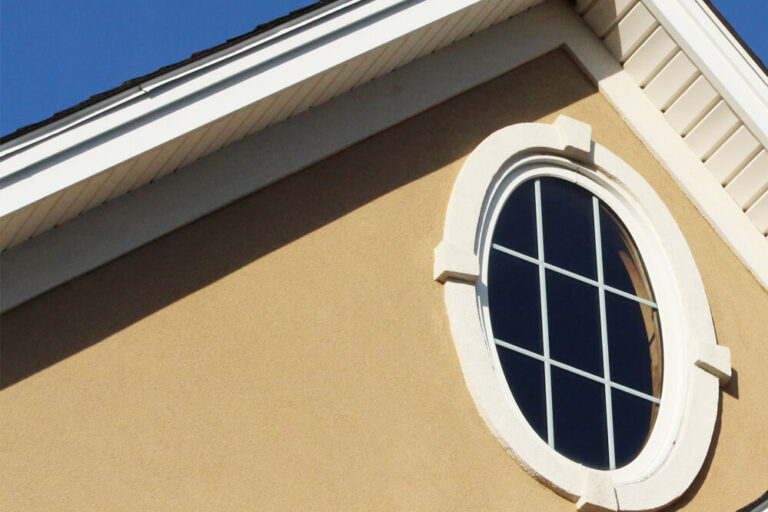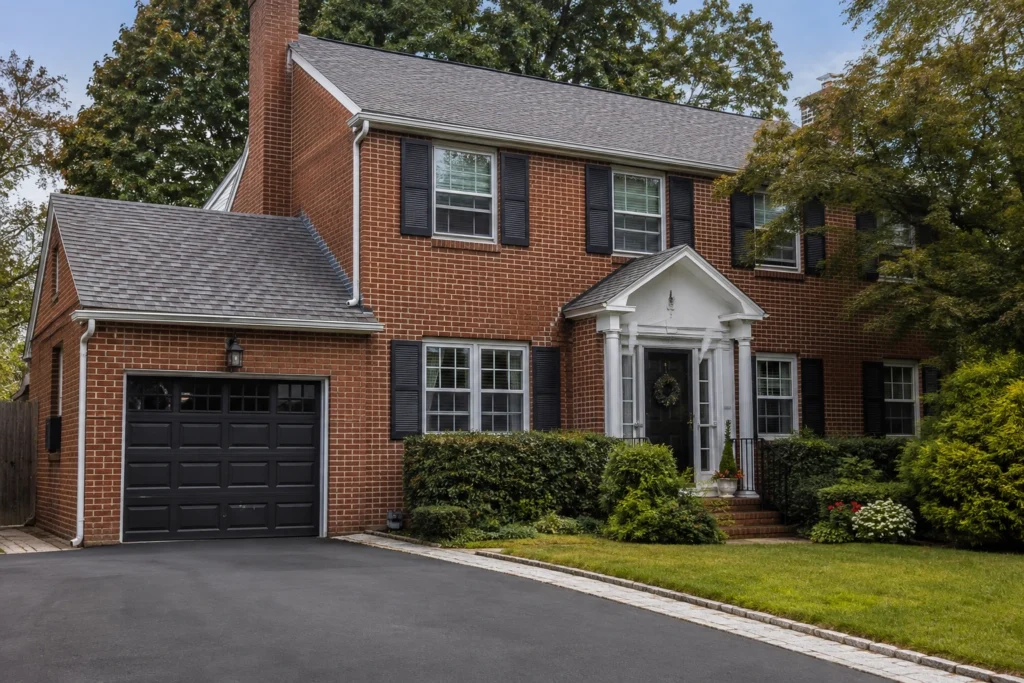
Yes, you can stucco over brick. A sound brick wall can serve as a masonry substrate for a properly selected stucco system, which means the brick does not always have to be demolished first.
The bigger question is how the new stucco should be installed on that particular wall. Some masonry walls can accept a direct-applied cement plaster system. Others call for mechanical attachment, lath, reinforcement, or an EIFS assembly. The condition of the brick, existing coatings, wall construction, drainage details, and desired finish all affect that decision.
ASTM C926-26 covers Portland cement plaster over solid bases such as masonry, and manufacturers such as QUIKRETE also produce stucco base coats intended for direct application to masonry in specific systems.
For homeowners comparing different masonry applications, our stucco on masonry guide provides additional background.
When Is Brick a Good Base for Stucco?
Not every brick exterior should be treated the same way. Before choosing a system, the wall needs to be evaluated as an existing building component, not simply as a surface that needs to be covered.
| Brick Condition | What It Means for the Project |
|---|---|
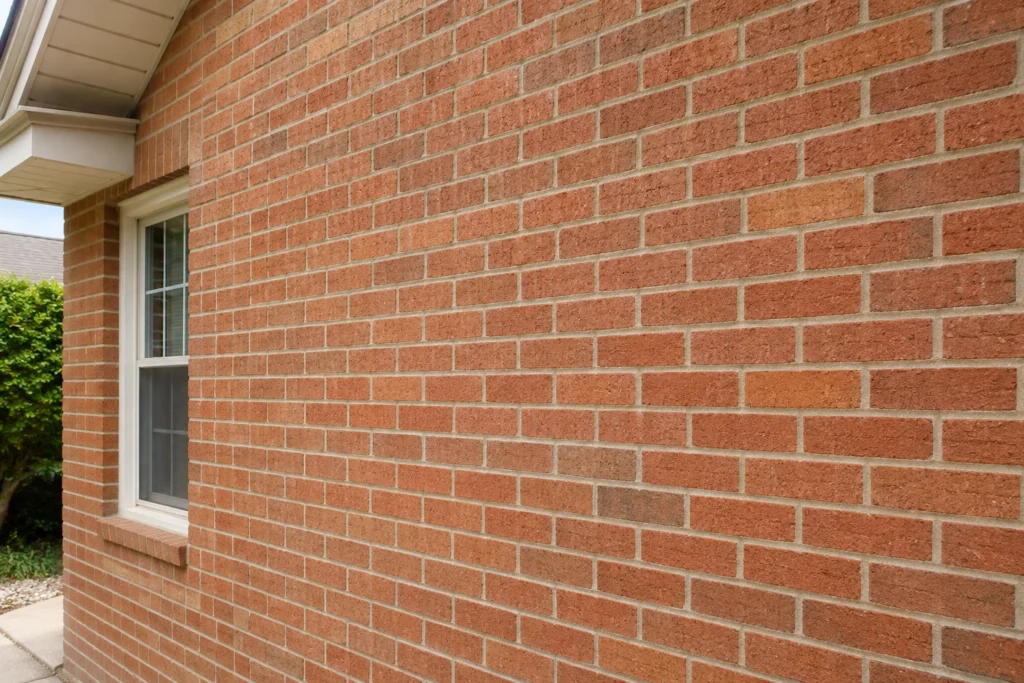
| Clean, solid, unpainted masonry | May be suitable for a direct-bond stucco system |
| Sound brick with uneven mortar joints | May require leveling before the finish system |
| Painted or sealed brick | Needs a system that does not depend on bonding to an unreliable coating |
| Loose or badly deteriorated mortar | Masonry repair or repointing should come first |
| Spalling or crumbling brick | Damaged masonry needs to be corrected before covering it |
| Bowing or moving wall | The cause of movement must be identified before adding a rigid finish |
| Historic brick facade | Appearance, masonry type, and reversibility should be considered before covering it |
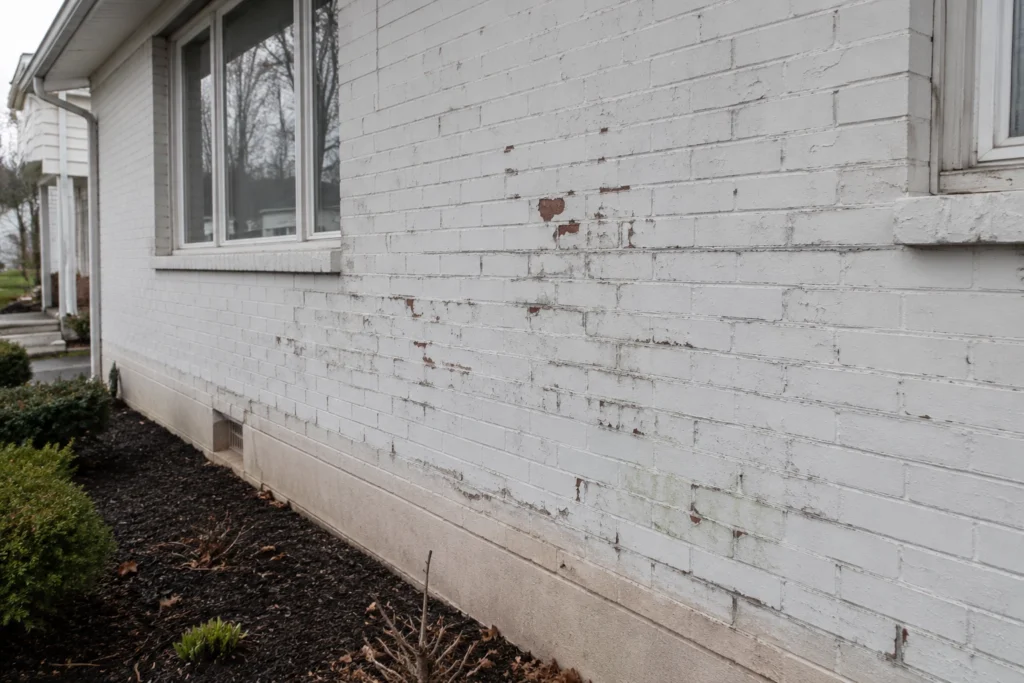
New Jersey homes also see rain, snow, humidity, and repeated winter freeze-thaw cycles. Those conditions make the condition of the existing masonry and exterior details especially important before a new finish is installed.
Why Put Stucco Over a Brick House?
For many homeowners, the reason is visual.
A red or brown brick house can be changed into a cleaner contemporary exterior without making every wall look newly constructed. Stucco also gives homeowners far more control over color and texture than the original brick facade.
Covering brick can work particularly well when a renovation is already changing windows, roofing, entry doors, trim, or stone accents. Instead of trying to make several older exterior materials work together, a continuous stucco finish can tie the facade together.
Another reason is demolition. If the brick is stable and the proposed wall system allows it to remain, removing tons of masonry may be unnecessary. That does not mean covering the brick is always cheaper, but it can remove demolition and disposal from the scope.
How to Stucco Over Brick
There is no single correct installation sequence for every brick house. A contractor first needs to determine which wall assembly fits the existing building.
Step 1: Evaluate the Existing Wall
The first step is documenting what is already there.
That includes the type of brick, mortar condition, existing coatings, previous repairs, wall flatness, window and door details, roof-to-wall intersections, and visible signs of movement or deterioration.
This is also when the contractor determines whether the brick is structural masonry, veneer, or part of another wall assembly. That distinction can affect how the new finish is attached and detailed.
Step 2: Select the Attachment Method
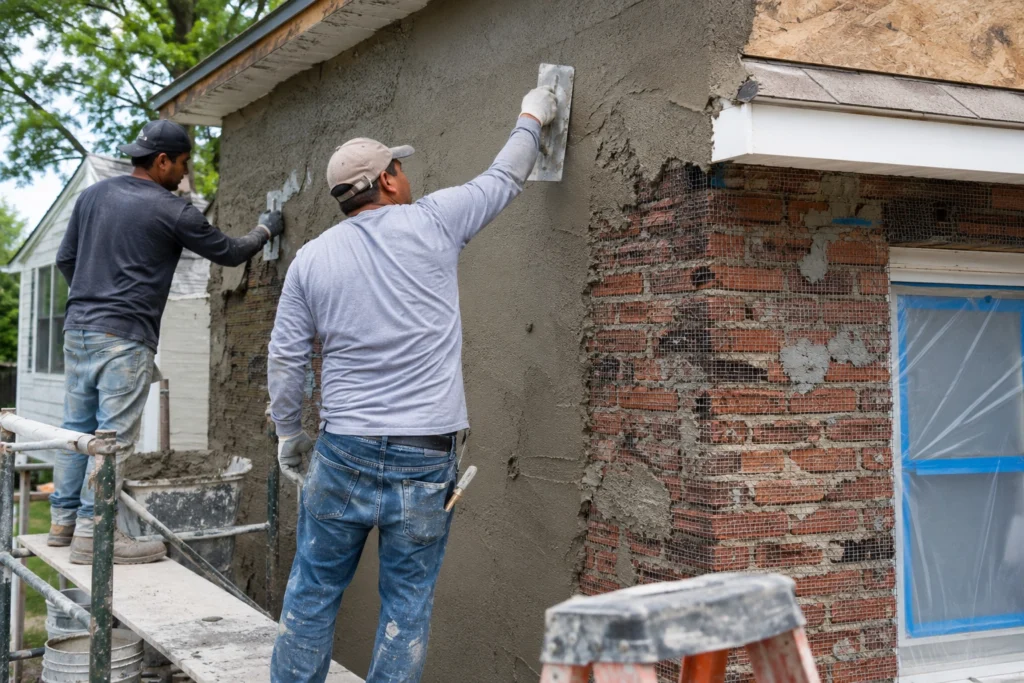
For compatible solid masonry, an approved cement plaster base coat may be applied directly to the prepared masonry.
Another project may use mechanically attached lath and a plaster system that is less dependent on the brick face for its bond. EIFS over masonry uses yet another assembly, typically involving insulation board, reinforced base coat, mesh, and an acrylic finish.
The method should follow the selected product and wall-system requirements rather than a universal rule such as “brick always needs lath” or “stucco should always go directly on brick.”
ZD Stucco Repair installs both traditional cement plaster and EIFS systems as part of our professional stucco installation services in New Jersey.
Direct-Bond Stucco vs. a Lath-Based System
This is one of the most useful distinctions for a homeowner planning to put stucco over brick.
| Direct-Bond System | Lath or Mechanically Attached System |
|---|---|
| Uses suitable masonry as the plaster base | Creates a separate plaster base over the existing wall |
| Requires a surface capable of receiving the selected material | Can be considered when direct adhesion is not the preferred approach |
| Usually changes the wall thickness less | Adds more thickness around openings and trim |
| Preparation of the masonry face directly affects the bond | Fastener placement and attachment details become important |
| Best determined from the actual substrate and product specifications | Best determined from the wall assembly and selected stucco system |
Neither approach is automatically better.
A good specification starts with the wall, then chooses the material and attachment method. Doing it in the reverse order can create unnecessary work or an assembly that does not fit the house.
Step 3: Prepare the Surface and Exterior Details
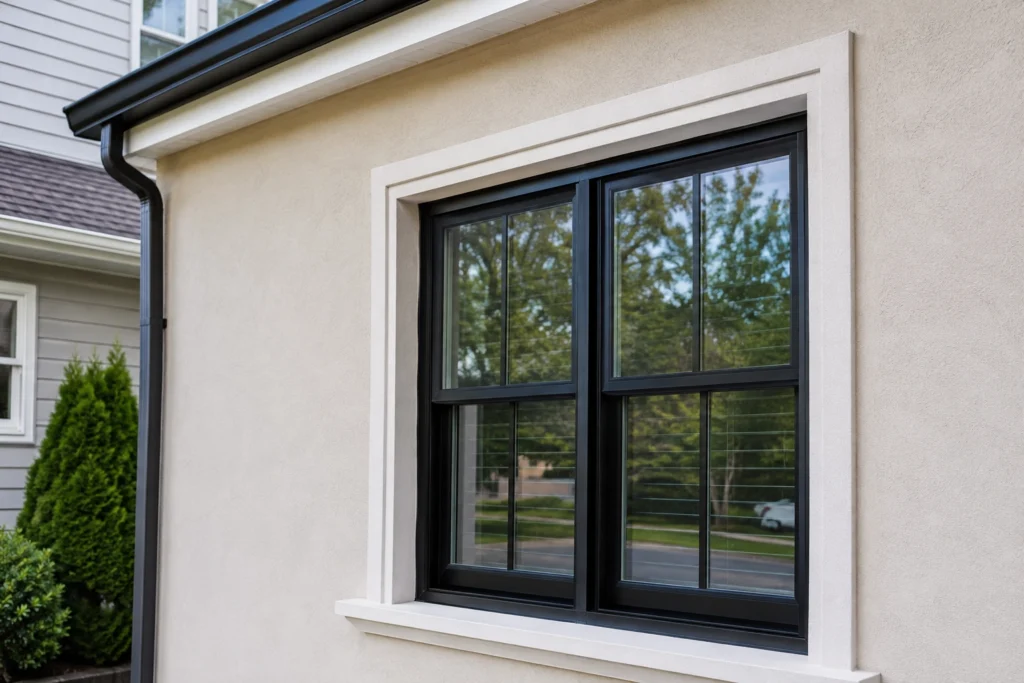
Once the system is chosen, the masonry is prepared as required by that system.
Loose material and contaminants are removed, damaged areas included in the project scope are repaired, and the wall is brought to the condition required for the new base coat or attachment system.
Windows, doors, roof intersections, penetrations, trim, and lower wall terminations also need to be planned before the finish changes the thickness of the facade.
This is where a brick-to-stucco conversion differs from simply painting brick. The renovation creates a new exterior surface, so transitions to the rest of the building need to look intentional and function correctly.
Step 4: Build the Stucco Base
Traditional Portland cement plaster may use multiple coats to create the required base and final surface.
Depending on the assembly, the work may include a scratch coat, brown coat, reinforcing components, leveling work, and a finish coat. Direct-applied masonry systems may use a different coat configuration.
The installer also has to account for curing requirements. Cement plaster gains strength as it cures, so rushing from one stage to the next can affect the completed work.
Step 5: Apply the Final Texture and Color
Once the base is ready, the finish determines what the homeowner actually sees.
A fine sand finish can soften the exterior without looking perfectly flat. A heavier texture can work well on more traditional homes. Smooth finishes create a more modern appearance but also make surface irregularities easier to notice.
Color should be selected with the whole house in mind, including the roof, windows, doors, stone, metal details, and any brick that will remain exposed.
Stucco Over Brick Before and After: What Changes?
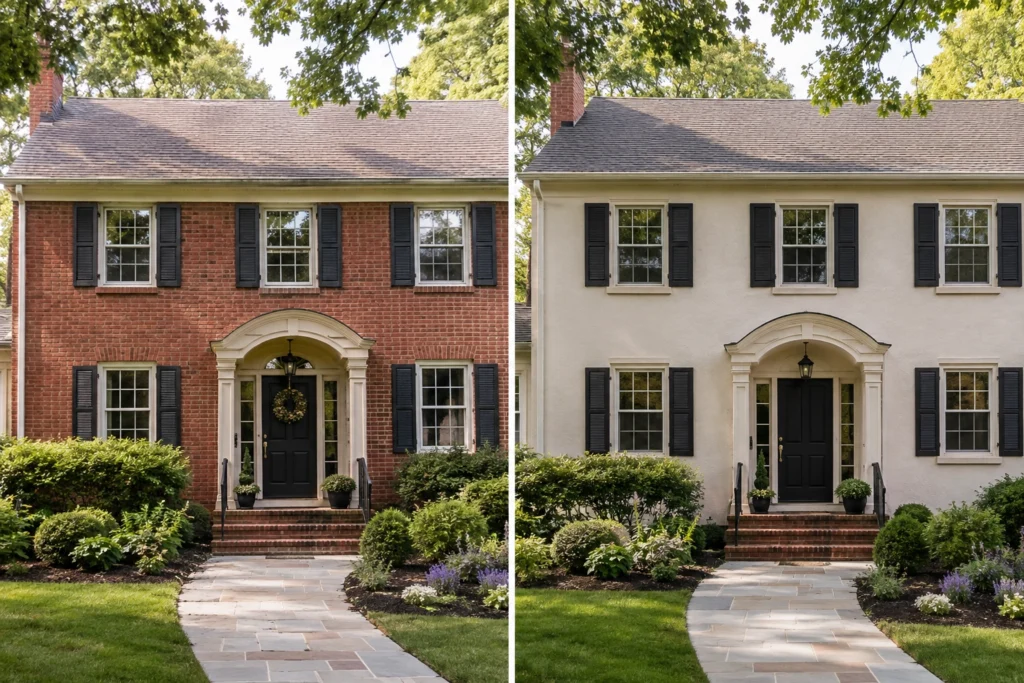
A stucco over brick before and after project can change the architecture more than homeowners initially expect.
Brick creates a strong pattern because every unit and mortar joint remains visible. Stucco removes that grid and turns the wall into a larger uninterrupted surface. As a result, windows, rooflines, entryways, trim, and other architectural elements become more noticeable.
That means the most successful conversions are not necessarily the ones that cover every piece of brick.
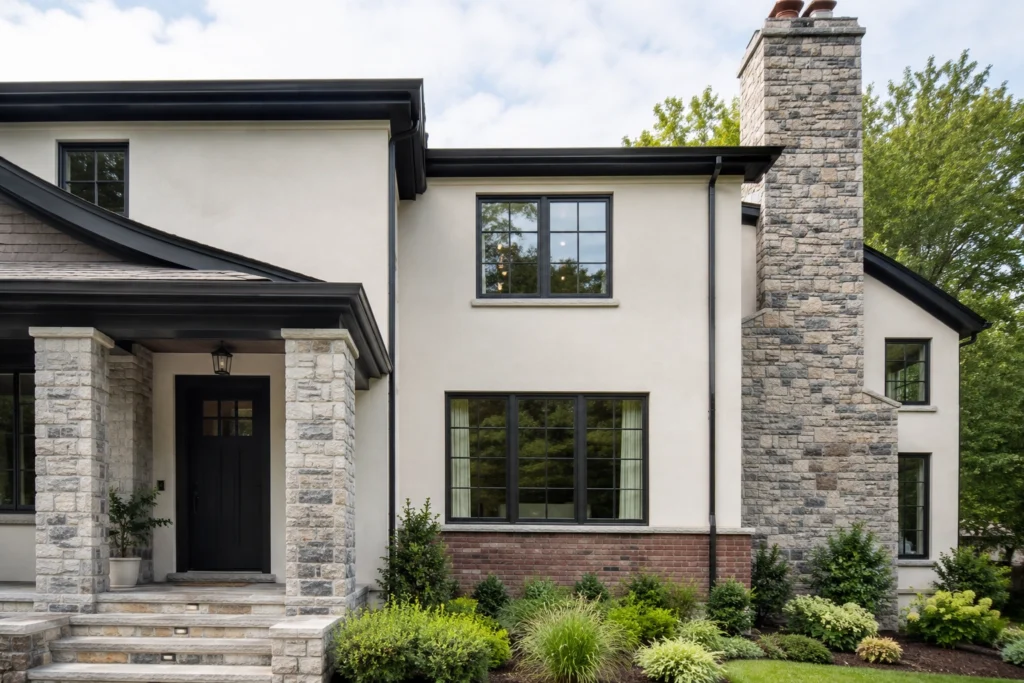
For example, a homeowner may use stucco on the main walls but keep brick around an entrance or chimney. Another house may pair light stucco with stone at the foundation. A modern renovation may use white or warm gray stucco with dark windows and simple trim.
Before choosing a finish, review real completed projects rather than relying only on small color samples. Our stucco project gallery shows finished homes and restoration work across New Jersey.
How Much Does Stucco Over Brick Cost in New Jersey?
There is no useful single price for every stucco-over-brick exterior because the amount of work before the finish goes on can vary greatly.
As a planning reference, our published New Jersey stucco cost guide lists new stucco installation projects at roughly $7,000 to $13,000 for a smaller home, $10,000 to $19,000 for a mid-size home, and $13,000 to $24,000 for a larger home. A stucco-over-brick project can fall above or below general installation ranges depending on the existing wall and scope.
For a brick conversion, the price is usually affected by five main items: wall area, masonry preparation, access and scaffolding, the selected wall system, and the final texture or architectural details.
A tall house with multiple rooflines and detailed window surrounds will normally require more labor than a simple one-story brick facade of the same square footage.
For this reason, the quote should describe what is being installed over the brick, not just give a price per square foot.
Stucco Over Brick Problems to Watch For
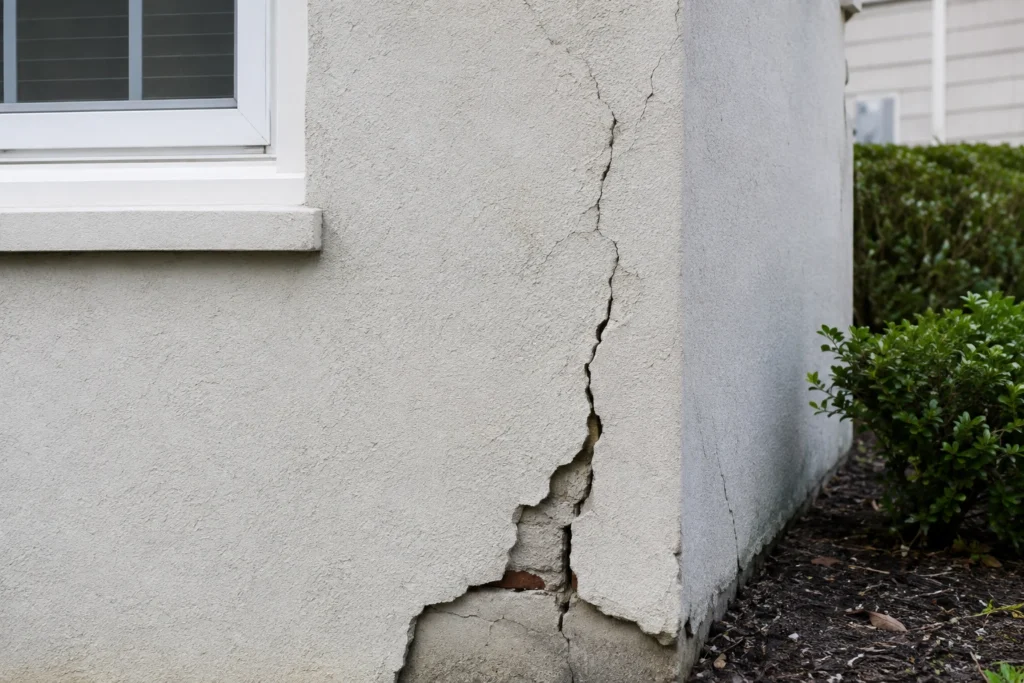
Problems with stucco over brick usually show up in a few recognizable ways.
Delamination means part of the new plaster separates from its base. This can happen when a direct-bond system does not establish the required bond or when the substrate is not suitable for that approach.
Telegraphing occurs when features of the masonry underneath become visible through the finished surface. Mortar joint patterns or uneven brickwork may become noticeable when the base is too thin, or the wall was not leveled correctly.
Cracks at transitions can form where the new finish meets windows, doors, different cladding materials, additions, or areas of the building that move differently.
Drainage-related failures can develop when a renovation changes how water is handled around the wall. Existing drainage, flashing, roof intersections, and terminations should therefore be considered as part of the new assembly rather than treated as cosmetic details.
Poor finish uniformity is another common issue on conversions. A brick wall that looks reasonably flat from the street may contain enough variation to show through a fine or smooth finish.
If an existing cement stucco system has already developed cracking or separation over masonry, our cement stucco system repair service covers diagnosis and repair of traditional hard-coat systems.
Traditional Stucco or EIFS Over Brick?
Traditional cement stucco and EIFS can both create a stucco appearance, but they are different exterior wall systems.
Traditional stucco uses Portland cement plaster to create the exterior surface. It works particularly well when the goal is a masonry-based finish and additional exterior insulation is not the main reason for the renovation.
EIFS includes insulation board and a reinforced finish system. It can therefore make sense when a project is intended to change both the appearance and thermal layer of the exterior.
ZD Stucco Repair provides EIFS installation and repair in New Jersey as well as traditional cement stucco work.
The decision should be made before details around windows, doors, roofs, and trim are finalized because EIFS and cement plaster can create different wall thicknesses.
Frequently Asked Questions About Stucco Over Brick
Can you put stucco directly over brick?
Yes, certain Portland cement plaster products and systems can be applied directly to suitable masonry. The brick surface and selected product must meet the requirements of that system.
Can you stucco over painted brick?
Sometimes, but the contractor should not assume the new plaster will bond reliably to existing paint. The coating may need to be removed or a different attachment system may be selected.
Can you stucco over old brick?
Yes. Age by itself does not determine whether brick can be covered. The condition and construction of the wall matter more than the year it was built.
Do you always need metal lath over brick?
No. Some stucco systems can use masonry as a solid plaster base, while other assemblies use lath or mechanical attachment. The installation method should match the substrate and product specifications.
Can stucco over brick be removed later?
It may be possible, but homeowners should not treat the conversion as easily reversible. Removal can leave bonding material, fastener holes, mortar repairs, staining, or damaged brick faces. If preserving the original brick is important, discuss that before work begins.
Considering Stucco Over Brick in New Jersey?
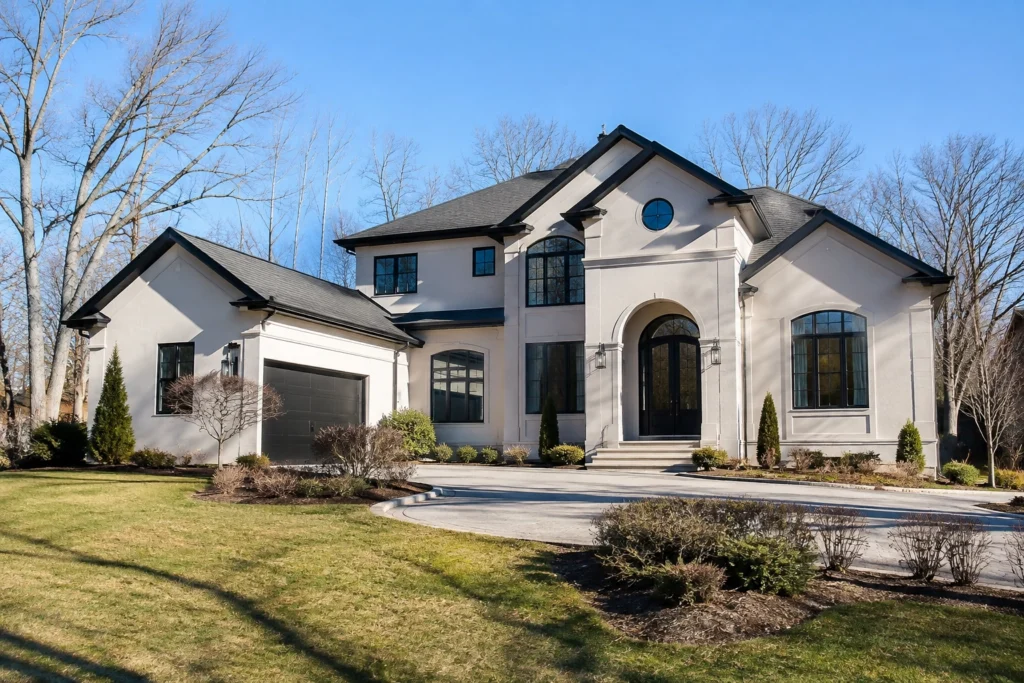
A brick-to-stucco conversion can give a home a completely different appearance without automatically requiring removal of the existing masonry.
The key is choosing the wall system based on the house you actually have rather than assuming every brick exterior should be treated the same way.
ZD Stucco Repair works with traditional stucco, EIFS, masonry substrates, restoration projects, and exterior repairs throughout New Jersey and the Greater New York area. If you are considering putting stucco over brick, we can review the existing facade and explain which installation approach makes sense for the property.
You can start by scheduling a free stucco inspection in New Jersey and discussing the brick-to-stucco conversion with our team.