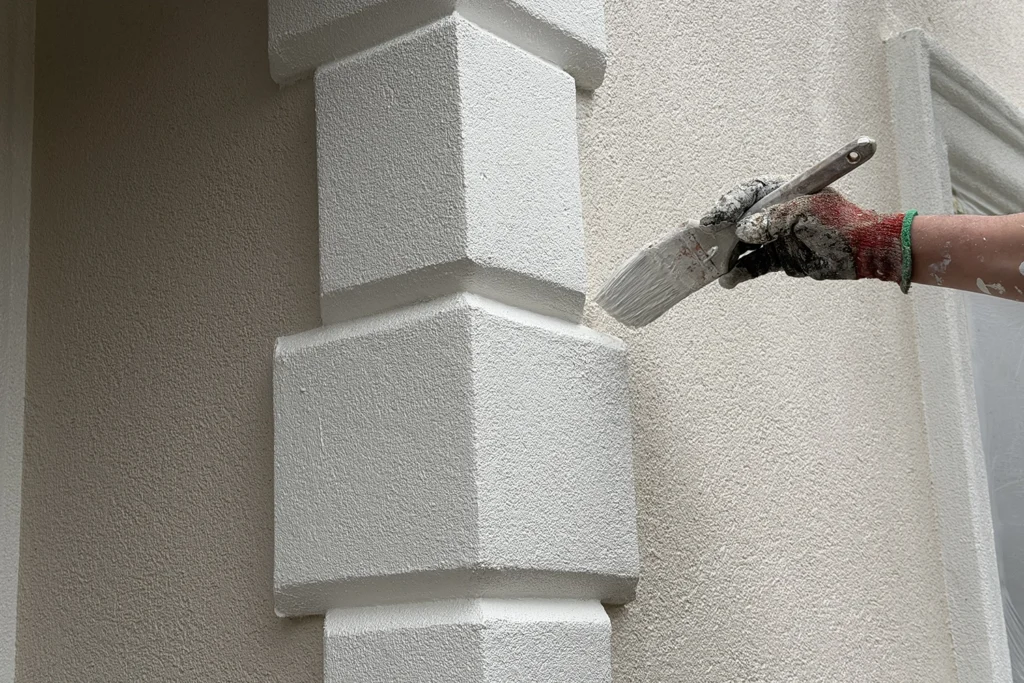
Stucco color fades when sunlight, weather, moisture, and surface wear break down exterior pigments or coatings. The best prevention plan is to repair defects first, clean the wall gently, and apply a breathable, UV-resistant coating made for stucco. Annual inspections and timely touch-ups help the finish stay even and delay a full repaint.
Quick answer
- South- and west-facing walls usually fade first because they receive the strongest sunlight.
- High-quality 100% acrylic masonry coatings generally hold color better than low-grade exterior paint.
- Clear water-repellent sealers may reduce moisture staining, but they do not replace a pigmented UV-resistant coating when color loss is the main concern.
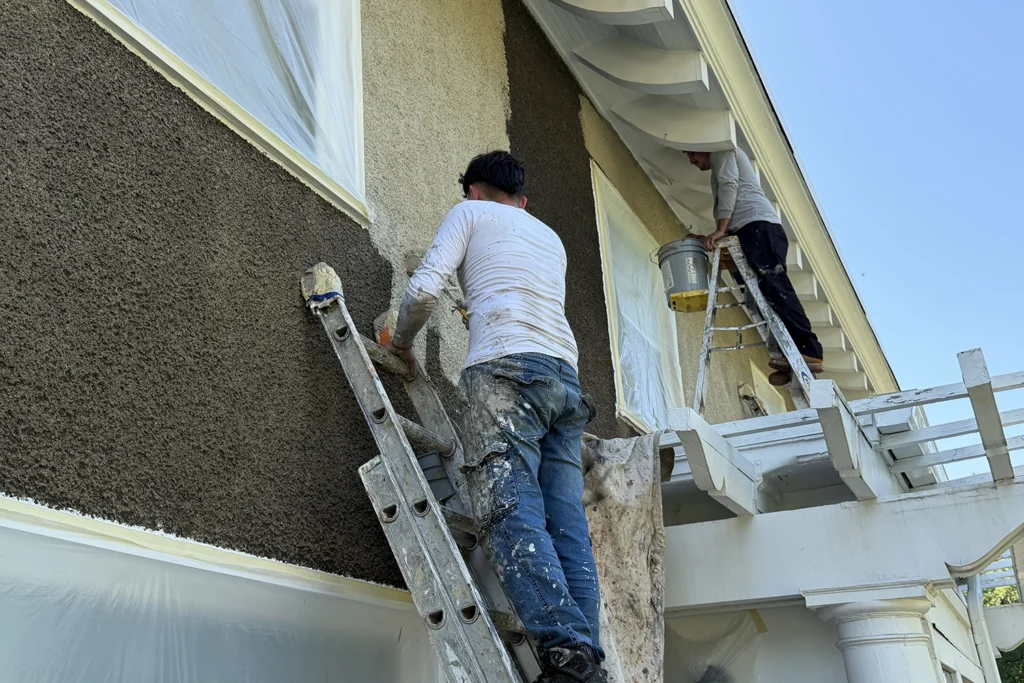
Why Does Stucco Color Fade?
Ultraviolet radiation slowly changes pigments and weakens the binder that holds a coating together. The change may be gradual across the facade or far more visible on walls that receive long periods of afternoon sun.
Chalking can also make stucco look faded. It leaves a fine powder as an aging coating wears down. Sherwin-Williams identifies sunny exposure and chalking as common causes of poor color retention and recommends cleaning and repainting with a fade-resistant product when the wall remains sound.
Not every light or uneven area is UV damage. Dirt, mildew, efflorescence, and water stains can change the appearance and require different treatment.
Is It Fading, Chalking, or Discoloration?
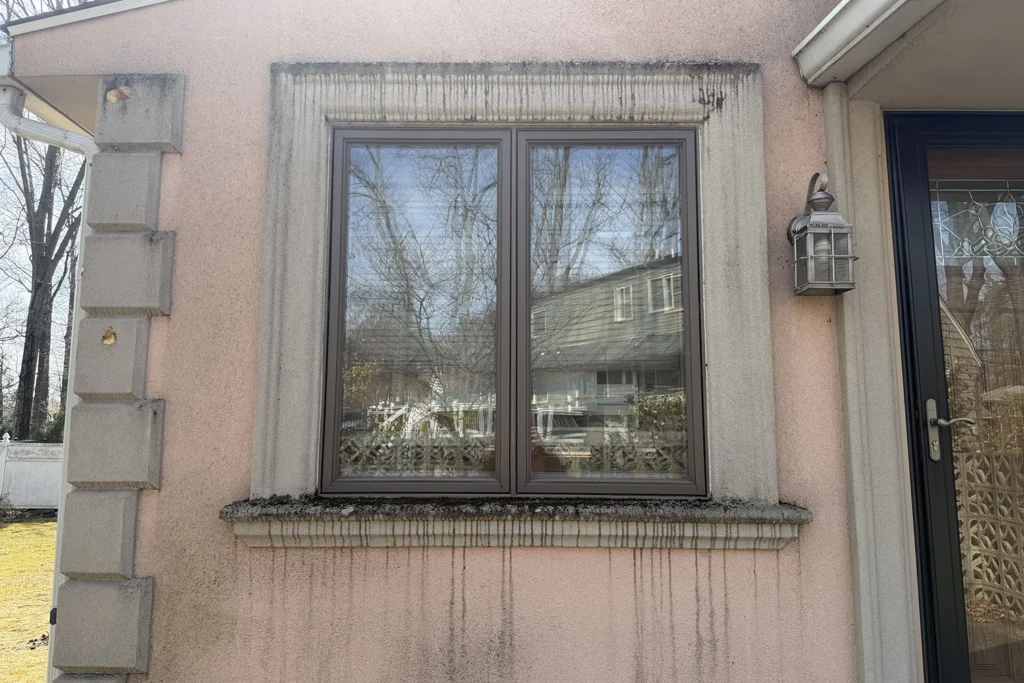
True fading is usually strongest on sun-exposed walls. Areas under eaves may retain more of the original color.
Chalking leaves powder on your hand or a dark cloth. New paint will not bond well until loose material is removed.
Efflorescence appears as white mineral deposits. It forms when moisture carries salts to the surface.
Mildew or algae creates dark or green patches, often in damp, shaded areas.
Water staining often follows window corners, roof intersections, penetrations, or damaged gutters. Our guide to addressing water damage quickly explains why the source should be corrected before cosmetic work begins.
Which Stucco Walls Fade Fastest?
South- and west-facing elevations often change first because they receive longer periods of direct sun and hotter afternoon conditions. Deep reds, blues, greens, and very dark colors may show a more noticeable shift than many earth tones and light neutrals.
Upper stories and walls without shade from eaves, porches, trees, or nearby buildings receive more UV and weather exposure. Color can also look uneven when one elevation was patched, cleaned, or painted differently from the rest of the house.
What Is the Best UV Protection for Stucco?
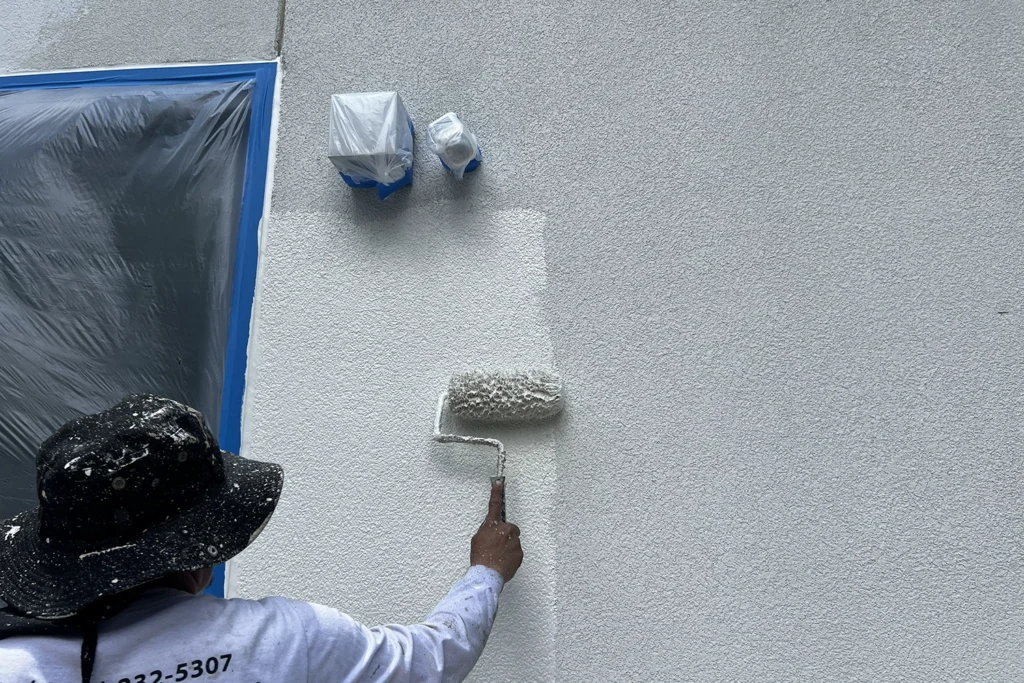
The best exterior paint for stucco is not one universal product. A durable exterior stucco paint system must match the wall, since traditional cement stucco, painted stucco, and EIFS synthetic stucco do not always need the same materials.
For many sound exteriors, high-quality acrylic latex paint for stucco offers good color retention, adhesion, and vapor permeability. Breathability matters because trapped water vapor can contribute to blistering and peeling. Dryvit describes its acrylic StucCoat finish as vapor permeable and made for Portland cement plaster and masonry.
Elastomeric stucco paint can bridge some hairline cracks and add a thicker weather-resistant layer. It still must be applied at the correct thickness and should never be used to hide active leaks, open joints, loose stucco, or structural movement.
EIFS requires compatible breathable paint for stucco so the system can manage vapor as designed. Our stucco painting services in New Jersey include surface evaluation, repairs, primer selection, and finish coats for traditional stucco and EIFS.
Does a Stucco Sealer Prevent Fading?
Clear penetrating sealers mainly reduce water absorption and related staining on suitable mineral surfaces. They do not restore lost pigment or usually provide the same color protection as a quality pigmented coating.
A clear sealer may also be unsuitable over painted stucco or EIFS. Compatibility, vapor transmission, sheen change, and future recoat options should be checked first.
When UV fading is the main problem, a pigmented fade-resistant coating is usually the more direct solution. When moisture is involved, the work may also require joint sealants, flashing corrections, crack repair, or drainage changes.
What Is the Best Way to Paint Stucco and Prevent Fading?
1. Repair Cracks and Water Entry First
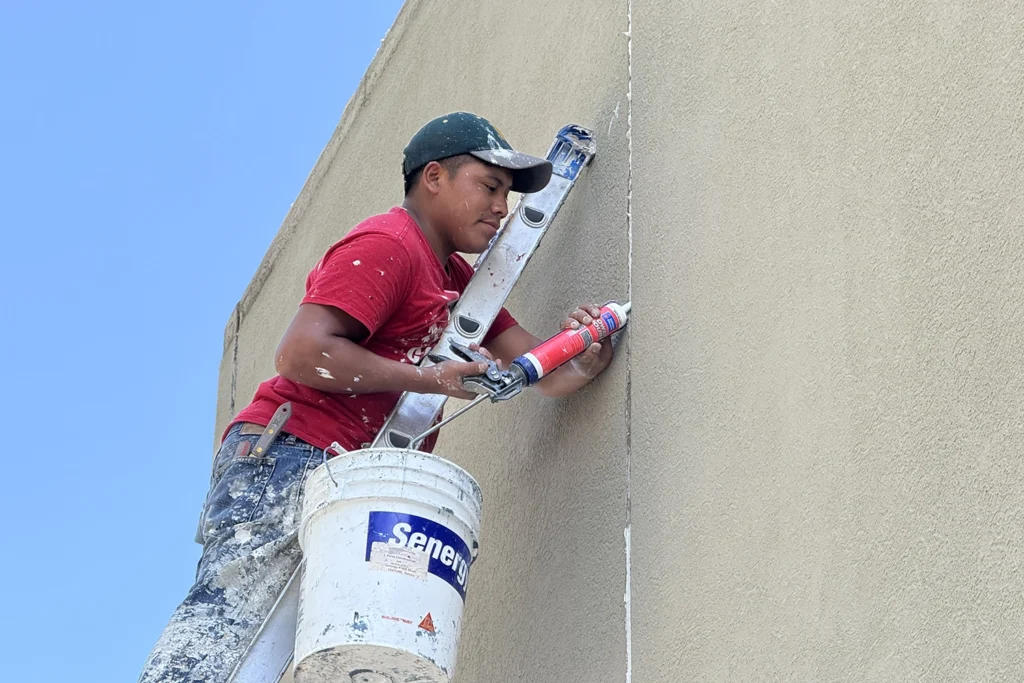
Inspect windows, doors, utility penetrations, roof intersections, gutters, downspouts, and visible cracks. Paint cannot stop water already entering behind the wall.
Loose, bulging, soft, or crumbling areas should be evaluated before coating. Our stucco repair service addresses damaged material and conditions that can cause a new finish to fail early.
2. Clean Without Damaging the Texture
Dust, pollen, mildew, pollution, and chalk reduce adhesion and make color appear dull. Use a garden hose, soft brush, and a mild cleaner suitable for stucco. High pressure held too close can scar the texture or force water into cracks.
3. Use a Compatible Primer
Primer helps create even absorption and adhesion, especially on repaired areas, porous cement stucco, or cleaned chalky walls. Painting chalky stucco before this residue is removed can cause early adhesion failure.
The primer must match both the substrate and the finish coat.
4. Use a Complete System When Painting Stucco House Exteriors
Coverage rate, film thickness, temperature, drying time, and weather all affect performance. One thin coat rarely gives the same protection as a properly specified system.
Our guide to the professional stucco paint process shows why inspection, cleaning, repair, priming, and finish coats should be treated as one job.
5. Choose Color for the Actual Exposure
Test samples on more than one wall and view them in morning, midday, and afternoon light. Ask for exterior-grade colorants and a coating line known for color retention.
Light and medium neutrals often show less obvious change than highly saturated or very dark colors.
6. Control Water Around the Facade
Clean gutters, extend downspouts, adjust sprinklers, and trim plants away from the wall. Repeated wetting causes stains and biological growth that can make the finish look older before the pigment has truly faded.
7. Make Exterior Stucco Maintenance Annual
Routine stucco house maintenance and stucco upkeep should include checking caulk joints, cracks, chalking, stains, and localized wear each spring and fall.
Use our year-round stucco maintenance checklist to organize seasonal tasks.
Can Faded Stucco Be Restored Without Replacement?
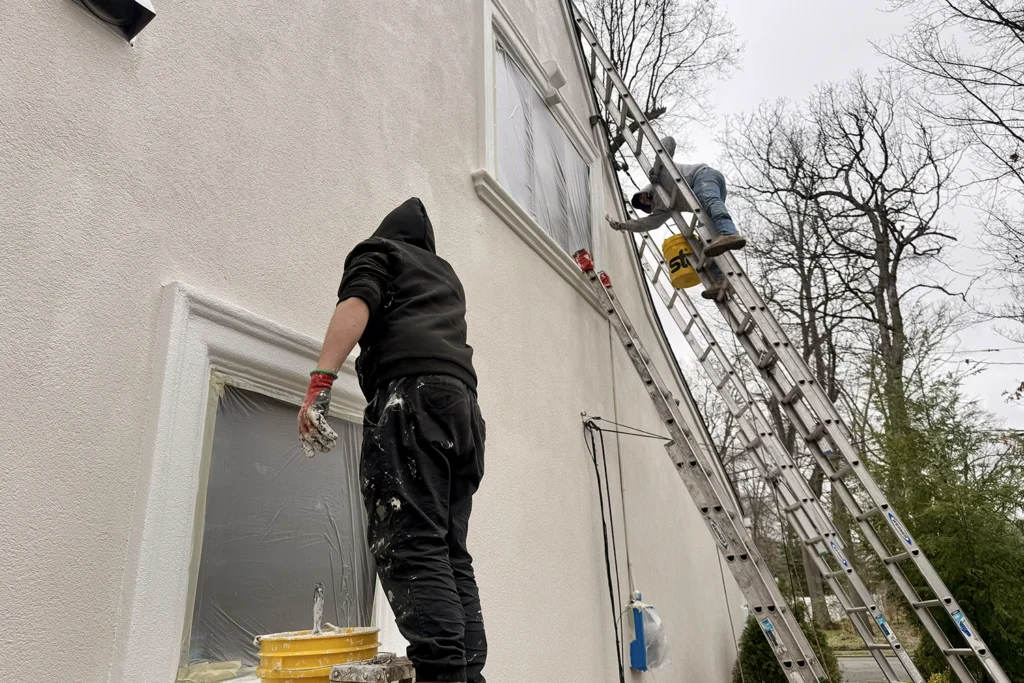
Usually, yes. If the stucco is firmly bonded and dry, its color can often be renewed through cleaning, localized repair, primer, and a new finish coat. Replacement is normally reserved for loose, badly cracked, water-damaged, or incorrectly installed areas.
Unpainted cement stucco may sometimes be refreshed with a compatible fog coat. Fog coat is generally not used over painted stucco or acrylic EIFS, and it does not repair cracks or stop water intrusion.
Small spot repairs rarely match an aged façade perfectly. Recoating one complete architectural section from corner to corner usually gives a more even result.
How Often Should Stucco Be Repainted?
A well-prepared coating may last about 7 to 10 years, but exposure and wall condition matter more than the calendar. Strong sun, dark colors, wind-driven rain, coastal air, poor drainage, or an older coating may shorten that interval.
Repaint when you see persistent chalking, widespread fading, loss of adhesion, or coating wear after the underlying causes have been corrected. See how often stucco needs painting for a fuller maintenance timeline.
When Should a Professional Inspect Faded Stucco?
Call a stucco contractor when fading appears with cracks, bulging, soft areas, recurring stains, interior moisture, peeling paint, or failed sealant joints. These symptoms may point to more than normal weathering.
An inspection is also useful when the existing coating is unknown, the house has EIFS, several patch colors are visible, or only one elevation is failing.
Frequently Asked Questions
Does All Stucco Eventually Fade?
Most exterior finishes change somewhat with age and sunlight. The rate depends on pigment, coating quality, exposure, moisture, cleaning, and preparation. Rapid or patchy change should be checked.
Can I Paint Only the Faded Side?
Yes, but the fresh color may not match the other walls exactly. Painting one complete elevation from corner to corner normally looks better than blending a small central area.
Is Elastomeric Paint Always Best?
No. It is useful in some conditions, but the contractor must review cracks, moisture, vapor movement, existing coatings, and wall type before choosing it.
Will Power Washing Restore Faded Stucco?
Cleaning can remove dirt, mildew, and chalk. It cannot replace pigment damaged by UV exposure. Excess pressure can also damage the finish.
Are Dark Stucco Colors More Likely to Fade?
Dark and highly saturated colors can show change more clearly on intense sun exposure. Coating quality and pigment choice also affect long-term appearance.
Can Sealer Be Applied Over Painted Stucco?
Only when the product is approved for the existing coating and wall system. Many penetrating sealers are made for bare mineral surfaces.
What Should I Do First When Stucco Looks Faded?
Rub the surface with a dark cloth, compare protected areas under eaves, and look for stains, cracks, or moisture sources. This helps separate chalking and dirt from true fading.
Protect the Color Before Surface Wear Becomes Wall Damage
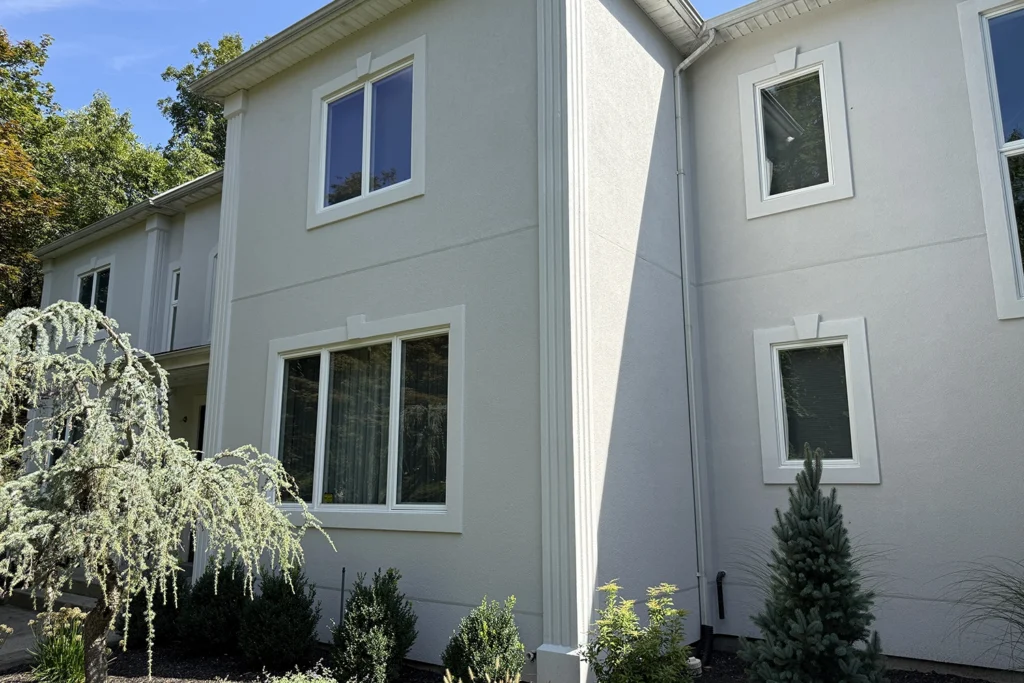
Fading is often an early maintenance warning, not only a cosmetic issue. A worn coating may also come with chalking, open joints, hairline cracks, or water staining.
ZD Stucco Repair provides stucco repair and painting for homeowners across New Jersey and the Greater New York area, including inspection and recoating of stucco and EIFS exteriors. We use wall-compatible materials and prepare the surface before applying a protective finish.
Contact ZD Stucco Repair to request an exterior evaluation and a plan based on your home’s condition.