Introduction
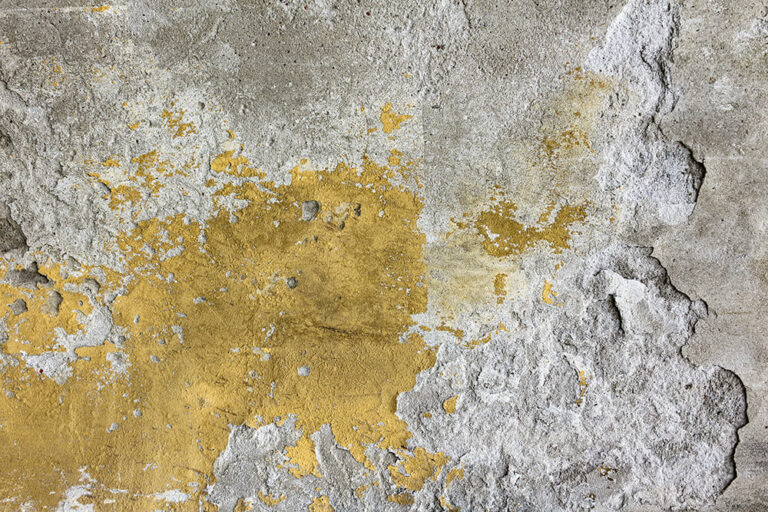
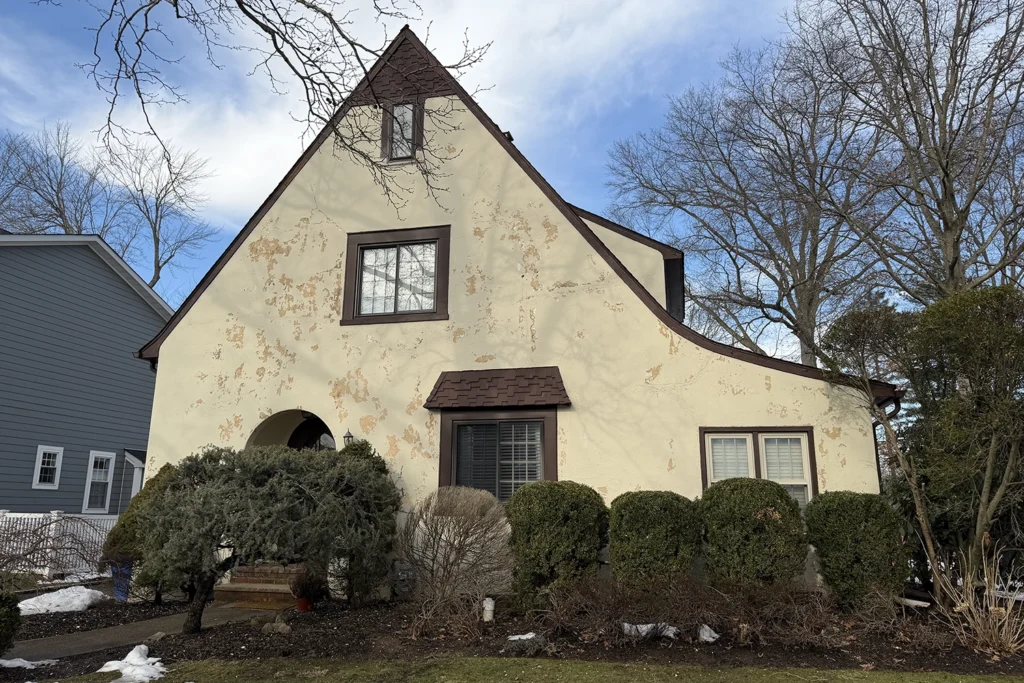
Peeling stucco paint is a clear warning sign that moisture has breached your exterior walls and is compromising the bond between the coating and the substrate. When you see large patches of paint flaking off your stucco walls, it is never just a cosmetic issue. The underlying cause is almost always water intrusion, failed coatings, improper surface preparation, or structural damage beneath the surface.
Homeowners often notice rough blotchy spots spreading across their facade and assume it is something they can fix eventually. However, ignoring peeling stucco allows moisture to remain trapped against the wood framing of your home. This trapped moisture leads to wood rot, mold growth, and structural deterioration that can increase repair costs from a few hundred dollars to several thousand dollars if left unaddressed.
This guide explains what causes stucco paint to peel, why you cannot ignore it, and how professional contractors permanently fix the problem.
What Causes Stucco Paint to Peel?
Stucco paint peels when the adhesion between the paint layer and the stucco surface fails. This failure occurs for four primary reasons, each requiring different solutions.
Moisture Intrusion
Moisture intrusion is the most common culprit behind peeling stucco paint. Stucco is a porous material that absorbs water if it is not properly sealed. When water gets behind the surface layer, it destroys the bond of the paint from the inside out. As temperatures fluctuate, the trapped moisture expands and contracts, literally pushing the paint off the wall.
In climates with freeze-thaw cycles, this problem accelerates dramatically. Water enters through small cracks, freezes, expands, and creates pressure that forces the paint away from the stucco. This cycle repeats every winter, causing increasingly severe peeling.
Failed Coatings
Using the wrong type of paint on stucco traps moisture inside the wall system. Stucco needs to breathe. If a contractor applies a non-breathable elastomeric or acrylic paint without addressing underlying moisture issues, the water vapor cannot escape. The resulting pressure causes the coating to bubble and peel in large sheets.
Many homeowners choose the cheapest paint option available, not realizing that standard exterior paint is incompatible with stucco. The paint fails within a year or two, and the homeowner is left thinking the stucco itself is defective when the real problem was the wrong coating choice.
Poor Surface Preparation
Poor surface preparation guarantees paint failure. Before applying any coating to stucco, the surface must be meticulously cleaned. Dirt, dust, efflorescence, and loose particles prevent the new paint from adhering properly. If a painter simply sprays over a dirty wall, the new coat will begin flaking off within a year or two.
Professional contractors spend significant time preparing the surface because they know that 80 percent of a successful paint job happens before the first coat goes on. Homeowners attempting DIY repairs often skip this critical step and end up with the same peeling problem.
Substrate Damage
Substrate damage forces paint off the exterior. If the actual stucco layer beneath the paint is cracking, crumbling, or separating from the lath, the paint has nothing solid to hold onto. In these cases, the peeling paint is just a symptom of a much deeper structural failure.
When the substrate is compromised, simply repainting is not a solution. The underlying stucco must be repaired or replaced before any new coating can be applied successfully.
Why You Cannot Afford to Ignore Peeling Stucco
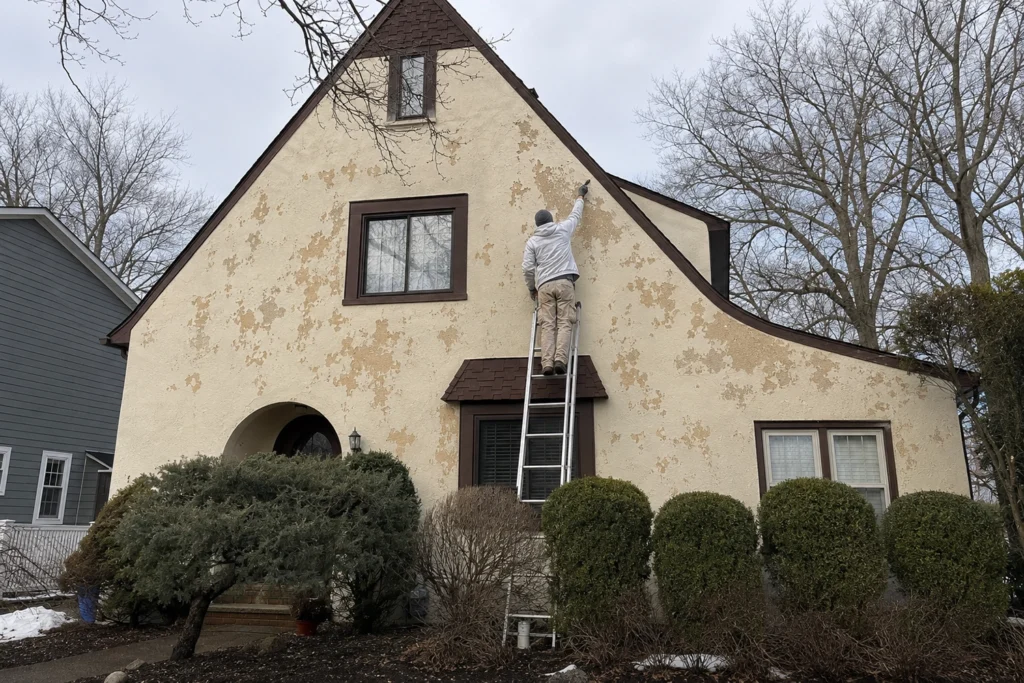
Ignoring peeling stucco is dangerous because it allows continuous water infiltration that rots the structural framing of your home and promotes toxic mold growth. The exterior coating of your house is its first line of defense against the elements. When that defense fails, the damage spreads rapidly out of sight.
Wood Rot and Structural Damage
Wood rot is the silent destroyer of homes with damaged stucco. When moisture bypasses the protective coating and reaches the wooden sheathing and framing, it begins to break down the structural integrity of the building. This rot weakens load-bearing beams and can lead to sagging walls and soft flooring. By the time wood rot becomes visible from the inside, the damage is already extensive and requires major remediation.
Structural damage caused by wood rot can compromise the safety of your home. In severe cases, rotted beams and compromised supports can cause walls to collapse, creating a dangerous living environment for your family.
Mold Growth and Health Hazards
Mold growth presents a serious health hazard for your family. Trapped moisture creates the perfect dark, damp environment for mold spores to multiply behind your walls. Unlike surface mold that you can clean with bleach, mold hidden behind stucco goes unnoticed until it causes respiratory issues, allergic reactions, or a persistent musty smell inside the home.
Mold exposure can lead to throat irritation, coughing, eye irritation, and even long-term lung problems. For families with young children, elderly members, or individuals with asthma or respiratory conditions, hidden mold can be particularly dangerous.
Removing this hidden mold is a complicated process that requires stripping away the damaged exterior, replacing rotted materials, and ensuring proper ventilation and waterproofing. The cost of mold remediation can be high, but it pales in comparison to the health risks of leaving the problem unaddressed.
Reduced Property Value
Property value decreases significantly when exterior damage is visible. Real estate professionals note that peeling stucco destroys curb appeal and makes a home look neglected. Buyers and appraisers notice these issues immediately.
Visible exterior damage can reduce your property value by 10 to 15 percent, as potential buyers factor in the unknown costs of repairing what might be lurking beneath the surface. For a home valued at $400,000, this represents a potential loss of $40,000 to $60,000 in market value.
Peeling Stucco Repair Costs: Early Action vs. Delayed Response
The cost to fix peeling stucco ranges dramatically depending on when you address the problem. Early intervention is significantly more affordable than waiting until structural damage occurs.
Early Repair Costs
When you catch peeling paint early, professionals can scrape away the loose material, address the minor moisture issue, properly prep the surface, and apply a breathable coating. This targeted repair protects your home without breaking the bank. Early patch repairs typically cost between $300 and $800.
Delayed Repair Costs
If water has been entering the wall system for months or years, simply painting over the problem is no longer an option. Contractors must remove the damaged stucco, replace rotted plywood sheathing, treat any mold, install new weather-resistive barriers, and then reapply the stucco system. This full remediation process is labor-intensive and expensive, typically ranging from $3,000 to $8,000 or more.
The financial difference between acting now versus waiting is staggering. A simple inspection today can save you thousands of dollars tomorrow.
How Professional Contractors Repair Peeling Stucco Permanently
Professional contractors repair peeling stucco permanently by identifying and fixing the root cause of the moisture intrusion before applying any new coatings. This systematic approach ensures your home looks beautiful and remains protected for decades.
Step 1: Professional Inspection
Professionals begin with a comprehensive inspection of the surface and the layers beneath to identify the true root cause. Whether the issue is moisture intrusion, a failed coating, substrate damage, or poor preparation by a previous contractor, they find the source of the problem before proceeding.
Step 2: Full Surface Preparation
All loose, peeling, and damaged material is completely removed. Professional contractors never take shortcuts or paint over existing problems. A clean, solid base is absolutely non-negotiable for a lasting repair. This step includes pressure washing, scraping, and sometimes grinding to ensure a pristine surface.
Step 3: Root Cause Repair
The contractor fixes what caused the peeling in the first place. This might involve repairing a moisture intrusion point, correcting a drainage issue, replacing damaged substrate, or installing proper ventilation systems. They treat the cause, not just the symptom.
Step 4: Surface Restoration
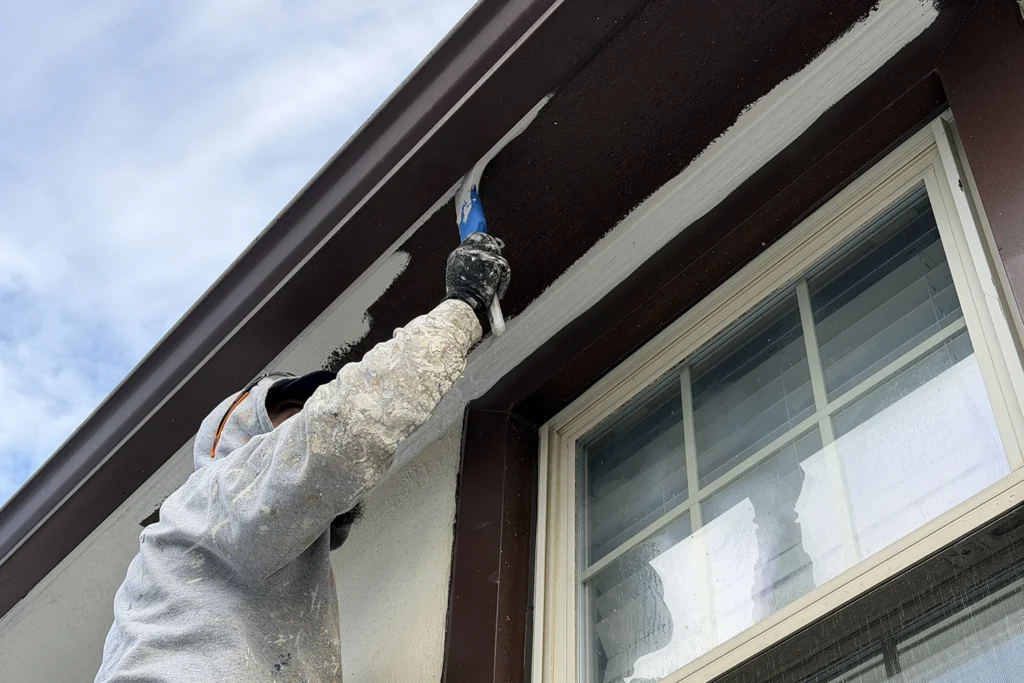
Your home receives a clean, smooth, beautiful finish that matches the original texture and color. The result is a solid, sealed exterior that is built to last and enhances your curb appeal.
Frequently Asked Questions About Stucco Paint Peeling
Can I just paint over peeling stucco?
No, you should never just paint over peeling stucco. The new paint will not adhere to the failing layers beneath it, and it will quickly peel off again. Furthermore, painting over the problem traps the underlying moisture, which accelerates wood rot and mold growth inside your walls.
How long should stucco paint last?
High-quality stucco paint applied correctly over a properly prepared surface should last between 10 and 15 years. Elastomeric coatings can sometimes last up to 20 years. However, if the stucco is exposed to excessive moisture without proper drainage, the coating can fail much sooner.
Does homeowners insurance cover peeling stucco?
Homeowners insurance typically does not cover peeling stucco if it is caused by normal wear and tear, lack of maintenance, or poor workmanship. Insurance usually only covers stucco damage if it is the direct result of a sudden, covered peril, such as a severe storm or a fallen tree.
How do I know if my stucco has water damage underneath?
Signs of water damage beneath stucco include dark stains or discoloration on the exterior, a chalky white substance called efflorescence, bulging or soft spots on the wall, and a musty smell or water stains on your interior drywall. If you notice any of these signs, you need a professional inspection immediately.
Is it better to repair or replace damaged stucco?
It is better to repair stucco if the damage is localized and the underlying structure is sound. However, if the stucco is old, the damage is widespread, or there is significant wood rot beneath the surface, a full replacement is the safer and more cost-effective long-term solution.
What is the difference between elastomeric and acrylic stucco paint?
Elastomeric paint is more flexible and can accommodate stucco expansion and contraction caused by temperature and moisture changes. Acrylic paint is less expensive but more rigid and prone to cracking. For stucco, elastomeric coatings are generally the better choice because they bridge small cracks and provide superior water protection.
How often should I inspect my stucco?
You should inspect your stucco at least twice per year, typically in spring and fall. After severe weather events, inspect your stucco immediately for new cracks or damage. Early detection of problems prevents small issues from becoming expensive repairs.
Can I prevent stucco paint from peeling?
Yes, you can prevent peeling by maintaining proper drainage around your home, ensuring your gutters are clean and functioning, sealing any cracks promptly, using the correct type of paint for stucco, and having your stucco professionally inspected every few years. Regular maintenance is far less expensive than dealing with peeling paint and water damage.
Protect Your Home Investment Today
Your home is telling you something is wrong. Peeling paint is its way of asking for help. The longer you wait, the louder that request gets, and the more expensive the answer becomes.
Do not let a minor repair turn into a major structural disaster. If your home is showing signs of peeling or flaking stucco, contact ZD Stucco Repair today. We will identify the problem, explain the fix, and give you a clear, honest assessment. Bring your home back to its original glory and protect your most valuable asset.
Schedule your free professional inspection now. Call (862) 232-5307 or visit our website to book an appointment.
About the Author
The ZD Stucco Repair Production Team brings decades of combined experience in stucco repair, restoration, and maintenance. Our team has completed hundreds of residential and commercial stucco projects throughout New Jersey, identifying and fixing the root causes of stucco failure rather than applying temporary cosmetic solutions.