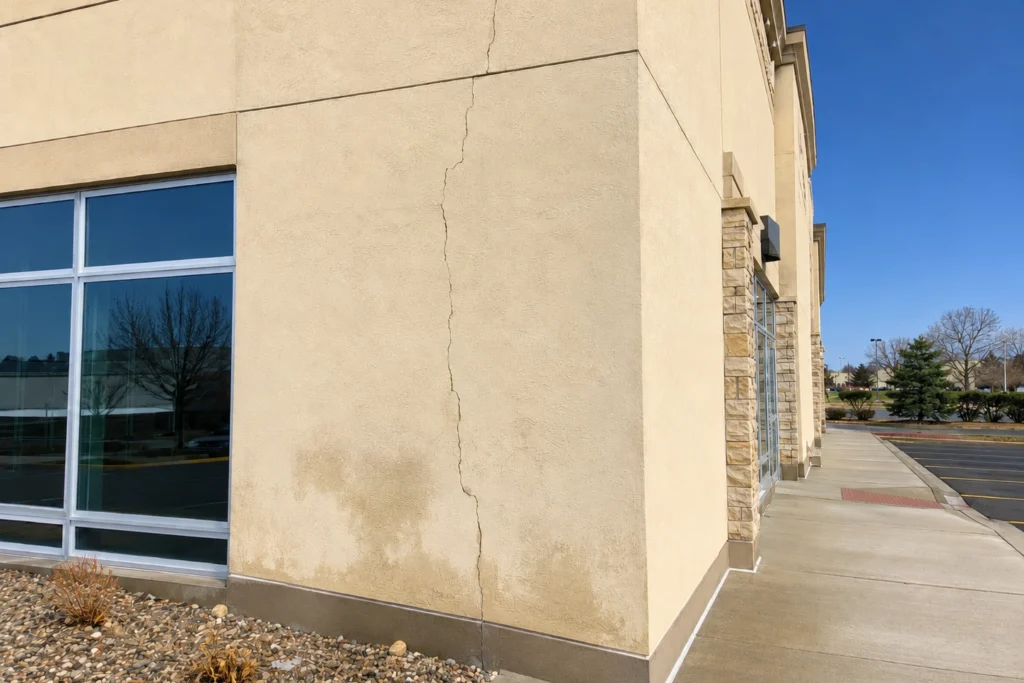
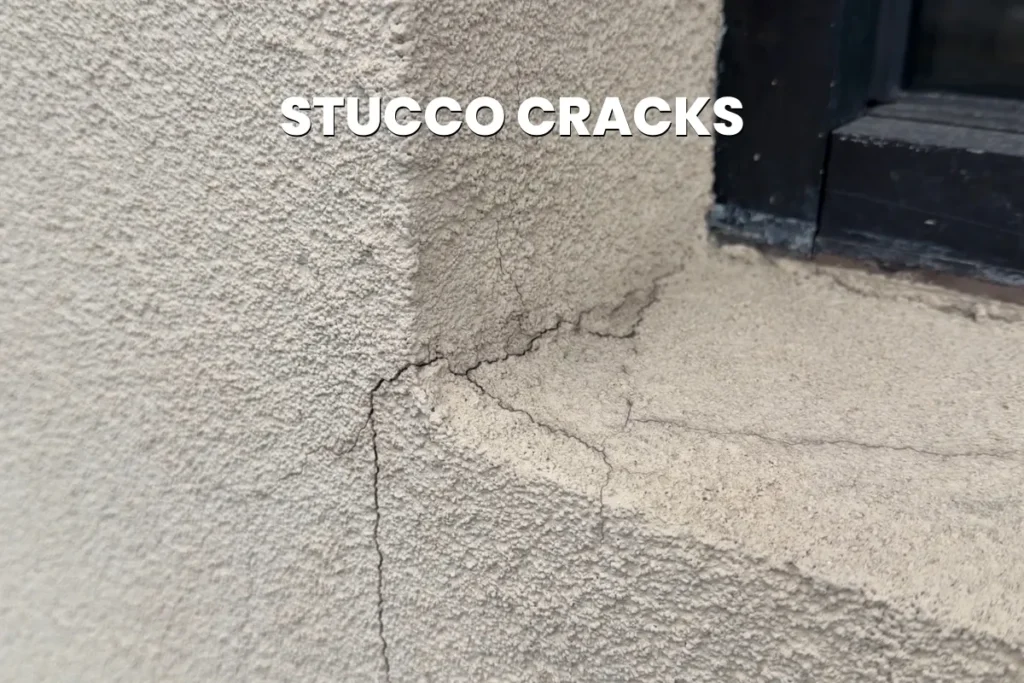
A hairline crack in stucco does not look like an emergency. To many property owners, it looks like paint prep, a small patch, or something that can wait until the next maintenance cycle. That is exactly why commercial stucco damage gets expensive. The visible crack is often just the first clue that water is already getting behind the finish and moving into the wall assembly.
In one recent commercial inspection, ZD Stucco Repair found that a small visible crack had already turned into a roughly $7,000 to $8,000 repair once hidden moisture damage was factored in. That should not be read as a flat price for every crack. It should be read as a warning about how fast a cosmetic-looking issue can turn into substrate repair, access cost, and finish restoration on a commercial wall.
For commercial buildings in New Jersey, that risk is not abstract. State climate data shows annual precipitation in the 40 to 51 inch range, measurable precipitation on about 120 days a year, and winter conditions that bring snow and below-freezing temperatures to many parts of the state. If a wall system already has a moisture path, that wall is going to get tested again and again.
What is a small stucco crack really telling you?
Stucco is durable, but it is not waterproof in the way many owners assume. When the surface cracks, separates around joints, or loses adhesion at openings, water can get past the finish. If the wall has a sound weather-resistive barrier, flashing, drainage path, and proper terminations, incidental moisture has a way to get back out. If those details are missing, blocked, or poorly installed, the wall can stay wet much longer than it should.
That is the part that owners usually do not see. Building science guidance on stucco has pointed to the same issue for years: water that gets into a stucco assembly has to drain and dry. When there is no real drainage space or when materials bond in a way that slows drainage, moisture can stay trapped against sheathing and framing. Trade guidance also points to poor flashing and poor detailing as common ways moisture gets behind stucco in the first place.
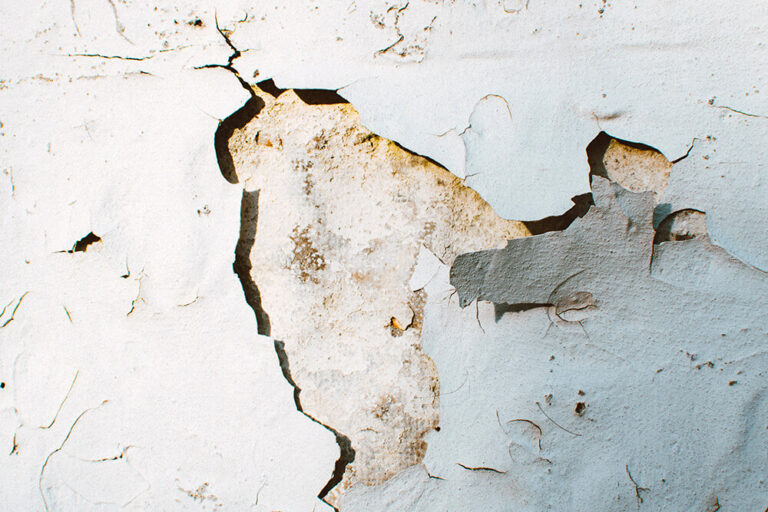
Once the wall stays wet, the damage moves past the finish coat. You can end up with staining, soft sheathing, rusted lath or fasteners, mold, and delamination. Inspection guidance for commercial stucco specifically calls out cracks, bulging, poor flashing, trapped moisture, staining, and separation from the substrate as signs that the problem may already be deeper than the finish layer.
Why does the damage get worse in New Jersey?
New Jersey puts real pressure on exterior walls. Rain is common. Snow is part of the winter cycle in many parts of the state. North Jersey, in particular, deals with colder winter conditions than coastal areas. When moisture gets into stucco and temperatures swing above and below freezing, the water expands as it freezes and stresses both the finish and the bond behind it. That is one reason walls often look worse by spring than they did in late fall.
This is not just theory. It matches what repair crews often see after winter: small cracks widen, moisture-damaged areas soften, and sections that looked stable in the fall can fail by spring. That tracks with trade and building-science guidance: once a stucco assembly stays wet, each weather cycle gives the damage another chance to grow.
So if you manage a retail center, office property, mixed-use building, multifamily exterior, or another commercial facade in New Jersey, waiting through one more winter is not a neutral choice. Every storm, freeze, and thaw gives the moisture another shot at widening the crack, weakening adhesion, and soaking the material behind the wall.
The hidden failure point: drainage
Owners often hear words like patching, coating, waterproofing, or sealing. Those can matter, but the deeper issue is drainage. Traditional stucco and EIFS do not work the same way, yet both depend on proper moisture management details. On framed stucco walls, guidance calls for a weep screed at the base so trapped water can drain out. On EIFS assemblies, starter track and drainage details are used to move incidental moisture away from the wall and out through the system.
The details matter. Stucco guidance for framed walls places the drainage termination above grade and above paved surfaces so water has a path out instead of being trapped at the wall base. EIFS guidance is just as direct: modern EIFS with drainage must be installed over a WRB and include a way for incidental moisture to escape, with minimum drainage performance requirements written into the standard. The core idea is simple: water needs a controlled exit path.
This is also why stucco that runs straight into soil, hardscape, or blocked termination points becomes such a problem. If the wall cannot breathe and drain, the moisture does not vanish. It sits. It wicks. It stays in contact with materials that were never meant to stay wet. Over time, that can turn one crack into swelling, bulging, hollow spots, a popped finish, and rot in the substrate behind the wall.
That is the difference between a cheap patch and a real commercial stucco repair. A patch closes the symptom. A proper repair looks for the water entry point, the drainage problem, and the condition of the material behind the surface.
What a proper commercial stucco repair should include
If you are hiring for commercial stucco repair in New Jersey, the first question should not be, “Can you patch this crack?” The better question is, “Why did this crack happen, where is the moisture going, and what is behind this wall right now?” That shift matters because the right scope depends on cause, not just appearance.
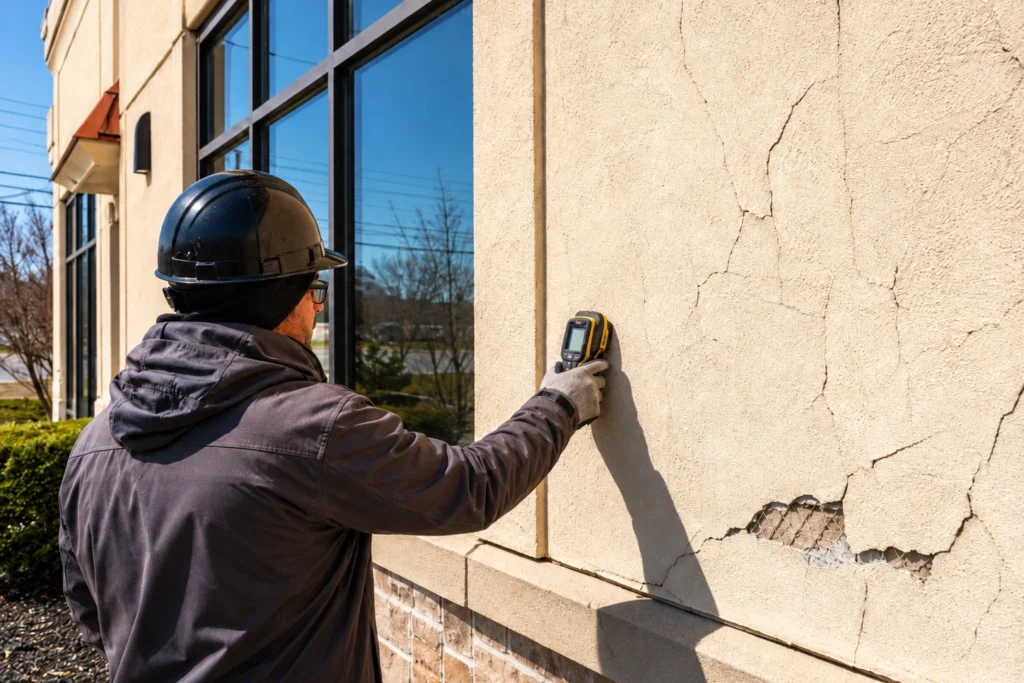
A solid repair process starts with inspection. That means looking at cracks, bulges, staining, sealant joints, flashing, roof intersections, parapets, windows, doors, and base terminations. Where needed, it also means moisture testing or selective opening. Commercial inspection guidance notes that cracks, bulging, delamination, poor flashing, trapped moisture, and visible damage often point to deeper trouble behind the wall surface.
From there, the repair scope should match the cause. If the issue is isolated and the substrate is sound, a localized repair may be enough. If moisture has damaged sheathing or framing, the wall has to be opened, the wet or rotten material removed, and the system rebuilt properly. Depending on the assembly, that may include WRB corrections, flashing fixes, drainage improvements, weep screed or starter-track work, new lath, new base materials, and finish matching.
For commercial owners, finish matching still matters, but performance matters more. A clean texture match looks good on day one. It does not help if the wall is still trapping water. The better contractor is the one who can make the repair look right and make the wall work better after the repair than it did before failure.
Signs your building needs a professional assessment now
Some warning signs are obvious: bulging stucco, missing sections, dark staining, peeling, gaps around penetrations, and cracked sealant. ZD’s own water infiltration page makes the point clearly. Water damage often goes unnoticed until cracks become visible, and those visible cracks can come with rot and mold.
Other signs are easier to miss. Hollow-sounding areas when tapped. Hairline cracks that keep coming back. Damage clustered below windows, at roof-to-wall intersections, near parapets, or at the base of the wall. Repainting the same section again and again. Those are all clues that the real issue may be moisture entry or failed drainage details, not a one-time surface defect.
Commercial properties also carry a business cost that residential properties often skip. Exterior failures can affect tenant perception, maintenance budgets, scheduling for coating work, and the timing of other repairs. Waiting usually makes the repair area larger, access more involved, and the final bill harder to control. That is why a small crack should be treated as an early warning sign, not just a surface blemish. It is not alarmist. It is how scope creep happens in real life.
The bottom line for New Jersey commercial owners
If your building has a stucco crack that looks minor, do not assume you are looking at a paint issue. You may be looking at the first visible sign of trapped moisture, damaged sheathing, failed flashing, blocked drainage, or early delamination. In a state like New Jersey, those problems rarely get better on their own.
The cheapest repair is usually the one you make before the wall opens up, before the finish bulges, and before the substrate has to be rebuilt. If you are seeing cracks, staining, bulging, or repeated failure on a commercial stucco or EIFS exterior, now is the time to get the wall checked the right way.
Schedule a commercial stucco assessment with ZD Stucco Repair and find out whether you are dealing with a surface patch, a drainage correction, or a larger wall repair before the cost jumps again.