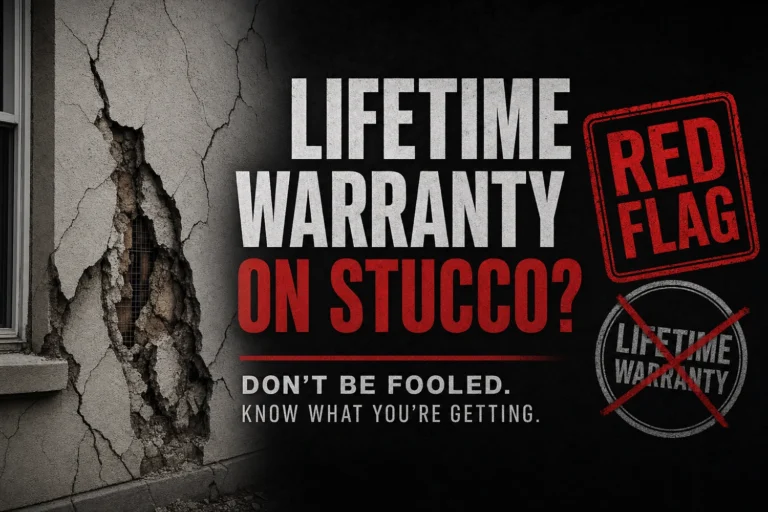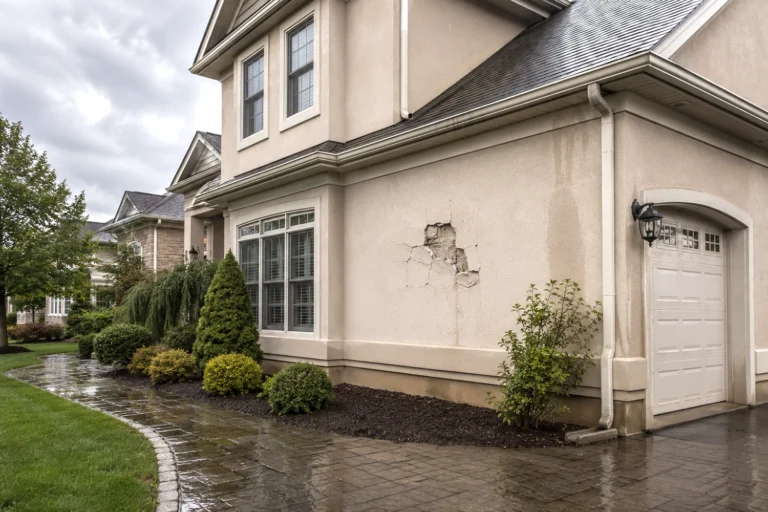
Yes, it can. When stucco cracks, fails around joints, or lets moisture move behind the wall, your home can get draftier, less comfortable, and more expensive to heat and cool. The U.S. Department of Energy says reducing drafts can save about 5% to 30% per year, and ENERGY STAR says air sealing plus insulation improvements can save the average homeowner about 15% on heating and cooling costs. That does not mean every hairline crack creates the same loss by itself, but it does show how expensive a leaky exterior can become when it is ignored.
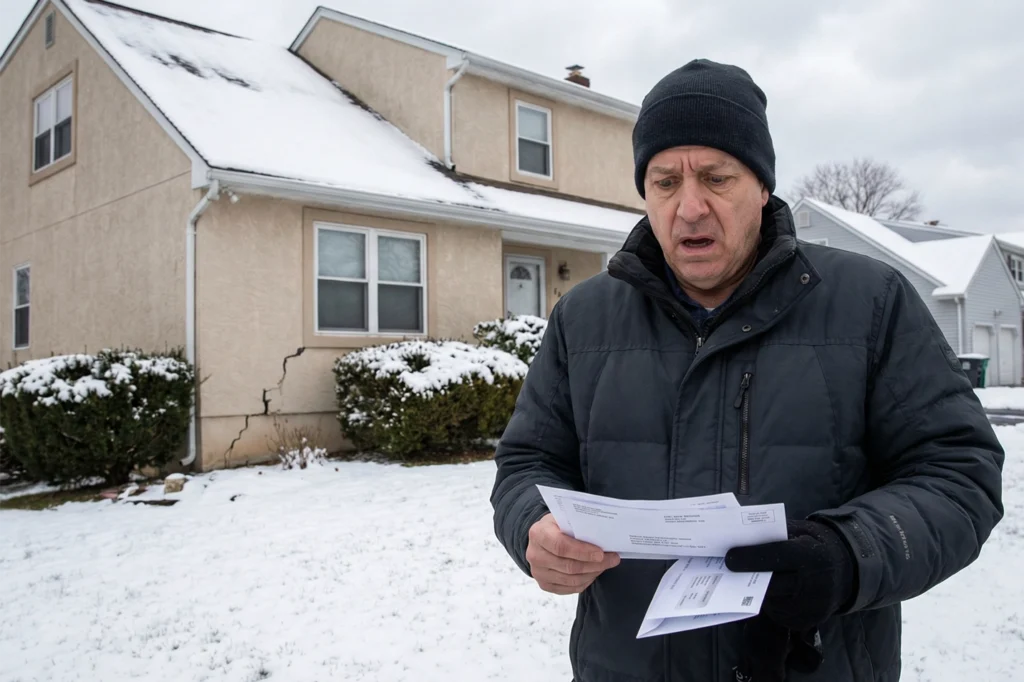
At ZD Stucco Repair, we see this pattern every winter across New Jersey and the greater New York area. A homeowner notices a crack near a window, some staining under a sill, or a cold draft along an exterior wall. A few months later, the heating system is running longer, one room feels colder than the others, and the crack looks wider after another round of freezing and thawing. What looked cosmetic starts acting like a building envelope problem.
Why does damaged stucco affect energy bills?

Stucco is not just there for curb appeal. It is part of the wall system that helps protect the structure from wind, rain, and temperature swings. When that outer shell is sound, it helps the rest of the assembly do its job. When cracks open up, or joints fail, outside air and water can start moving through places they should not. The National Park Service notes that air leakage through cracks in the outer shell makes heating systems work harder, while Building Science notes that traditional stucco systems crack and leak, which is why proper repair and moisture management matter.
That matters in markets like ours. In 2024, the average residential electricity bill was about $128 per month in New Jersey and about $140 per month in New York. Those figures do not include every home’s gas, oil, or other heating costs. So even a moderate increase in wasted heating and cooling energy can add up faster than most homeowners expect.
What happens after water gets behind the stucco?
Water changes the job. Once moisture gets into or behind stucco, it can affect insulation, sheathing, framing, sealants, and finishes. Sometimes the signs are obvious, such as bubbling, staining, efflorescence, or peeling paint. Sometimes the wall simply feels cold, and the HVAC runs too often. In other cases, the first clue is a musty smell near an exterior wall or a repair area that keeps failing.
This is why surface patching is not always enough. The National Park Service says sealants and caulks can reduce air infiltration and keep out moisture, but they may only be a temporary measure if the crack points to a larger issue. If the substrate is wet, if flashing details are wrong, or if moisture has already moved deeper into the wall, you need more than a cosmetic fix. You need a diagnosis that gets to the cause.
Why do small stucco cracks get worse in winter?
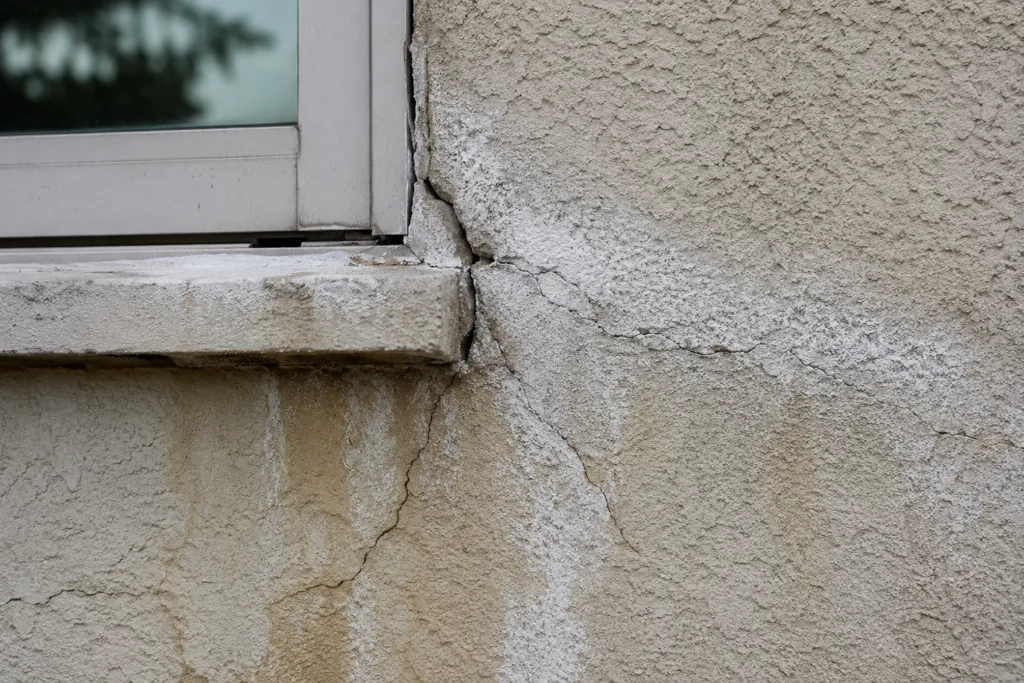
In the Northeast, small cracks rarely stay small forever. The National Park Service explains that moisture and freeze-thaw action can damage masonry materials, and its stucco brief notes that differing expansion and contraction rates in stucco materials can lead to cracking. The cycle is simple: moisture gets in, temperatures drop, materials expand and contract, and the opening gets wider. Then the next storm or cold snap hits, and the wall is even more exposed.
That is why we tell homeowners in NJ and NY not to wait until a crack looks dramatic. If you already feel cold drafts near exterior walls, see staining around windows, or notice that one room is harder to keep warm than the rest of the house, the wall is telling you something. Waiting until later does not usually save money. In many cases, it just gives moisture more time to move deeper into the system.
What warning signs should homeowners watch for?
Visible cracking is the most obvious sign, whether it is hairline cracking, wider gaps, or movement around windows, doors, and penetrations. White residue on the surface can point to moisture movement. Bubbling finishes, soft spots, staining, recurring mold smells, and drafty exterior rooms are also worth attention. Choice Exteriors even lists high energy bills among the signs that hidden stucco trouble may be present.
We also tell homeowners to watch for comfort changes, not just visual damage. If your heating bill feels out of line with what your neighbors are paying, if your thermostat is set normally but the room still feels chilly, or if your HVAC seems to run constantly, the problem may not be your equipment. It may be the wall assembly losing air control and moisture control.
How do we at ZD Stucco Repair find the real problem?
We do not like guessing, and homeowners should not have to guess either. On more complex projects, we use moisture detection tools, including diagnostic equipment, to help find hidden trouble areas. That matters because air leaks and moisture entry points are often not visible from the ground. A crack you can see may not be the only place the wall is failing.
Thermal imaging does not replace hands-on inspection, but it helps us show homeowners where colder wall areas and likely leakage points are showing up. From there, we can tell whether the issue is a straightforward stucco repair, a sealant and flashing correction, an EIFS repair, or a larger remediation job. That honest diagnosis matters. Not every wall needs a full tear-off, and not every crack is harmless.
When is repair enough, and when is remediation needed?
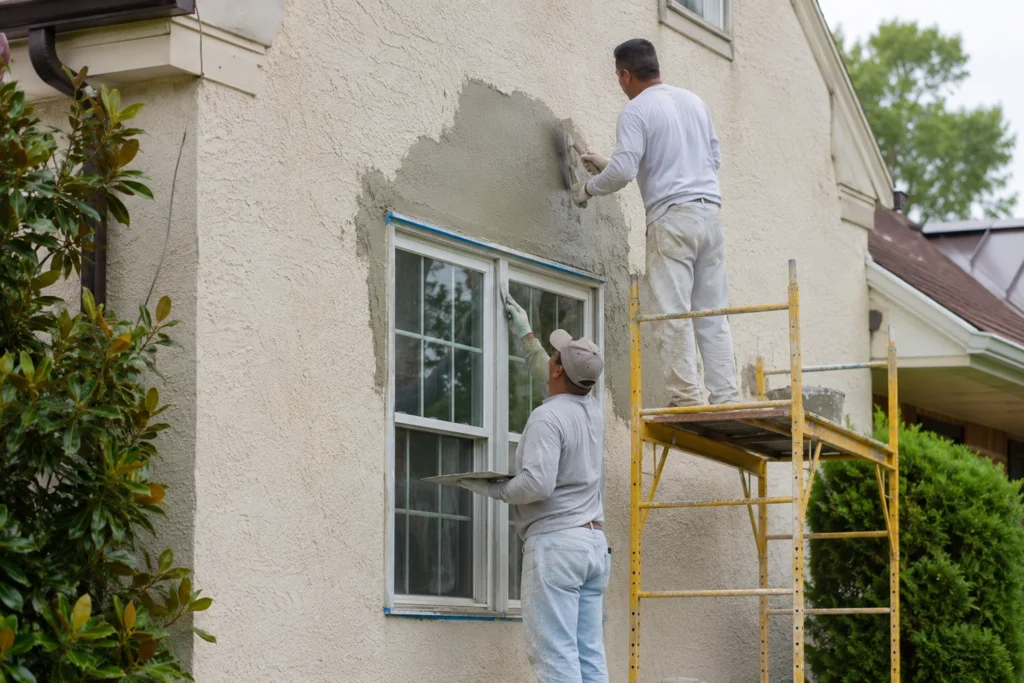
If damage is limited to the finish coat or a localized area, targeted stucco repair is often the right answer. That can include crack repair, patching, resealing around windows and doors, texture matching, and coating work. ZD’s own repair-vs-remediation guidance explains that minor cosmetic damage can often be addressed without major wall removal.
But when moisture has moved behind the surface, the scope changes. Brickface describes stucco remediation as removing affected stucco, inspecting and repairing the underlying structure, and installing proper moisture-management details before new stucco goes back on. Gold Leaf also points to insulation and ventilation-gap details when replacement is needed. In plain language, if the wall is wet behind the face, you need to fix the wall system, not just the finish.
Why fixing stucco now usually costs less than waiting
The cheapest stucco problem is usually the one you catch early. A small crack repaired before moisture spreads is a very different job from wet sheathing, damaged framing, or mold cleanup. Delaying can also keep your home in an expensive cycle: more drafts, more HVAC runtime, more wear on heating and cooling equipment, and more winter damage after every freeze-thaw swing.
There is also a resale angle. ZD already talks on its site about how solid, well-maintained stucco supports comfort, curb appeal, and home value. Buyers notice cracked exteriors, staining, and signs of deferred maintenance. A clean, well-repaired exterior reads as a cared-for property. A cracked, drafty one raises questions long before the home inspection ever begins.
Why this matters for homeowners in NJ and NY
This region puts real stress on exterior walls. Repeated winter exposure, moisture movement, and temperature swings are not friendly to neglected stucco. That is one reason we built our process around careful inspection first. We have worked on homes and buildings across New Jersey and the greater New York area, and our site reflects the trust of more than 1,000 homeowners. On our more demanding repair jobs, we also rely on advanced diagnostic tools because the visible crack is often only part of the story.
If your stucco is cracked, stained, or making your home less comfortable, now is the time to check it. In many cases, the right repair is smaller and less expensive when the problem is found early. The longer the wall stays exposed, the greater the chance that a simple fix turns into a bigger remediation project.
The bottom line
Damaged stucco can cost you money in two ways: in repairs later, and in comfort and energy use right now. Air leakage and moisture movement can make your heating and cooling system work harder. Freeze-thaw weather can widen small failures. And the longer the wall stays exposed, the more likely you are to move from a simple repair into a deeper wall problem.
At ZD Stucco Repair, we help homeowners figure out what is really going on behind the surface. If it is a targeted repair, we will tell you. If it is a deeper moisture issue, we will show you why. Either way, you get a clear next step, not a sales pitch built on guesswork. Our team serves New Jersey and the greater New York area, and we offer free assessments to help homeowners understand where they stand.
If you have cracked stucco, cold drafts near exterior walls, staining, or a heating bill that keeps climbing without a clear reason, contact ZD Stucco Repair for a free inspection. We will take a close look, explain what we see, and help you decide the smartest next move for your home.
FAQ
Can cracked stucco really raise heating and cooling costs?
It can. Cracks and failed joints can allow air leakage and moisture movement that make the wall assembly less effective and force HVAC equipment to run longer.
Is every stucco crack a major problem?
No. Some cracks are surface-level and can be repaired locally. The real issue is whether the crack is letting water in or points to failed sealants, movement, or hidden wall damage.
What is the difference between stucco repair and stucco remediation?
Repair usually fixes localized visible damage. Remediation goes deeper and addresses hidden moisture, sheathing, framing, insulation, flashing, and drainage details when the wall system has failed.
How do you find hidden stucco leaks?
We use visual inspection, moisture detection, and on many complex projects, thermal imaging and other professional tools to locate likely leakage points and colder wall areas.