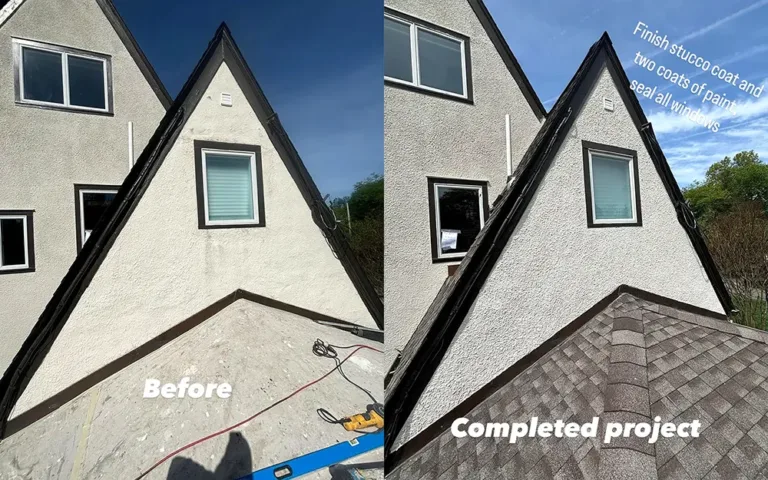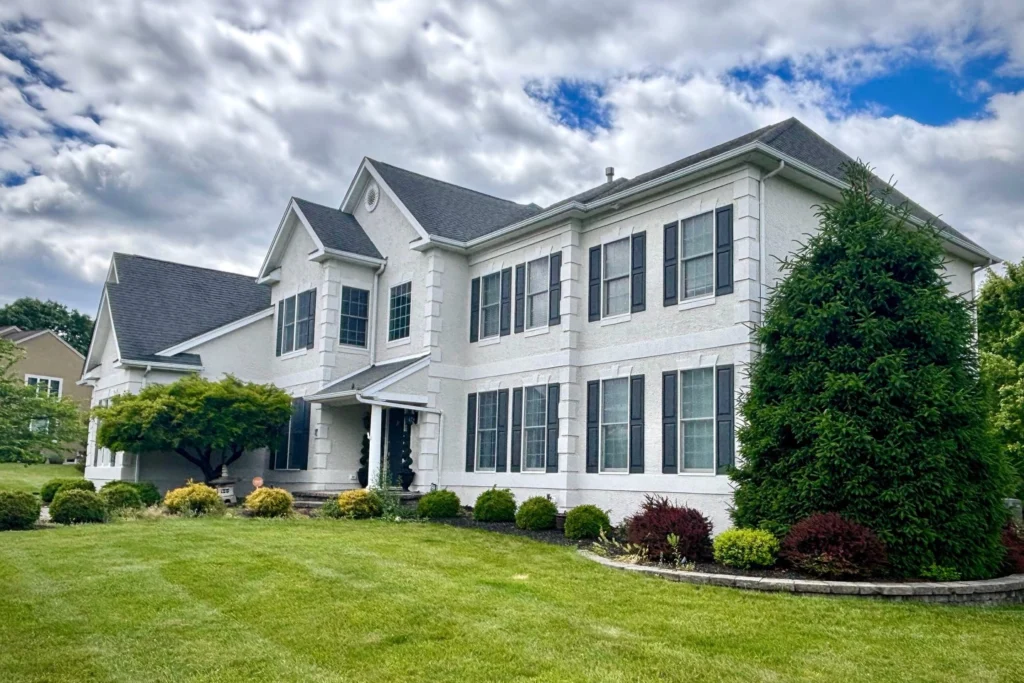
If you are looking for professional stucco repair in Flemington, NJ, ZD Stucco Repair provides complete restoration services. A full house stucco restoration typically involves removing damaged systems, installing new moisture barriers, applying cement board and mesh, and finishing with an elastomeric coating to prevent future water damage.
Water infiltration is the silent destroyer of stucco homes. When a homeowner in Flemington, New Jersey, noticed visible cracking and moisture penetration around their windows and garage walls, they knew it was time for professional help. They called ZD Stucco Repair for a comprehensive assessment.
What started as a concern about a few cracks evolved into a complete house stucco restoration project. This case study breaks down exactly how we tackled the water damage, the 10-step restoration process we used, and why proper stucco repair is critical for homes in Hunterdon County.
What causes stucco damage in New Jersey homes?
Stucco damage in New Jersey is primarily caused by a combination of harsh weather cycles, improper initial installation, and failing sealants around windows and doors. The freeze-thaw cycles common in Hunterdon County cause trapped moisture to expand and contract, leading to cracking and delamination.
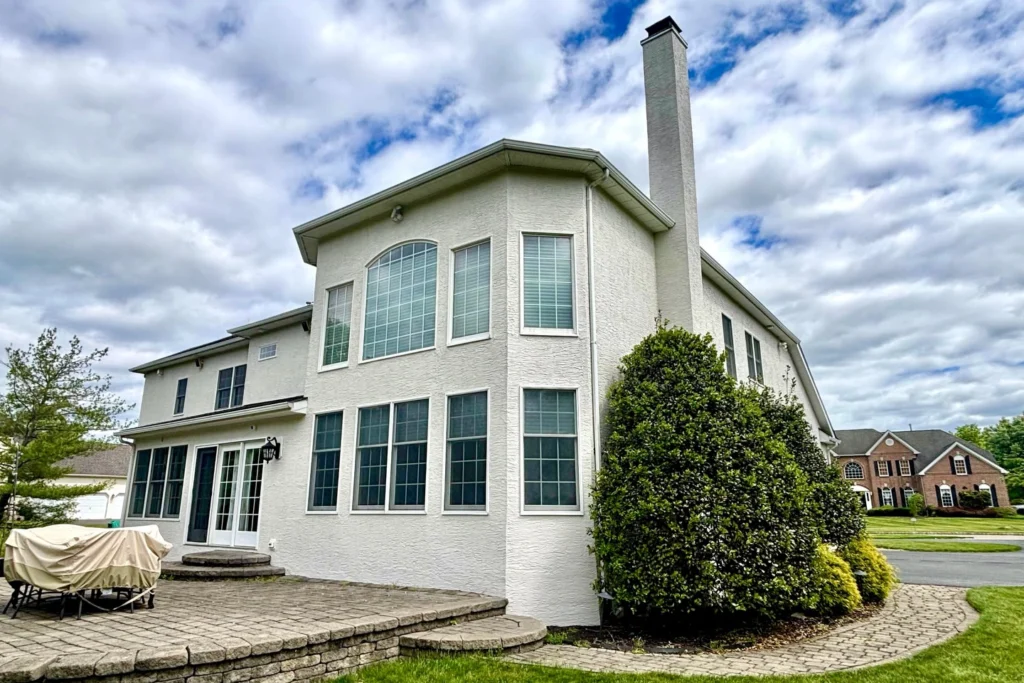
In this Flemington project, the primary culprit was unsealed windows. The existing windows were not currently sealed, which presented a high risk for ongoing moisture penetration behind the stucco system. When water gets behind the stucco surface, it compromises the substrate and can lead to extensive wood rot and structural damage if left unaddressed.
Other wall sections on the front elevation showed visible cracking. These cracks act as pathways for water intrusion, leading to more extensive and costly repairs over time. Proper sealing is critical to prevent future damage.
How do we perform a complete stucco restoration?
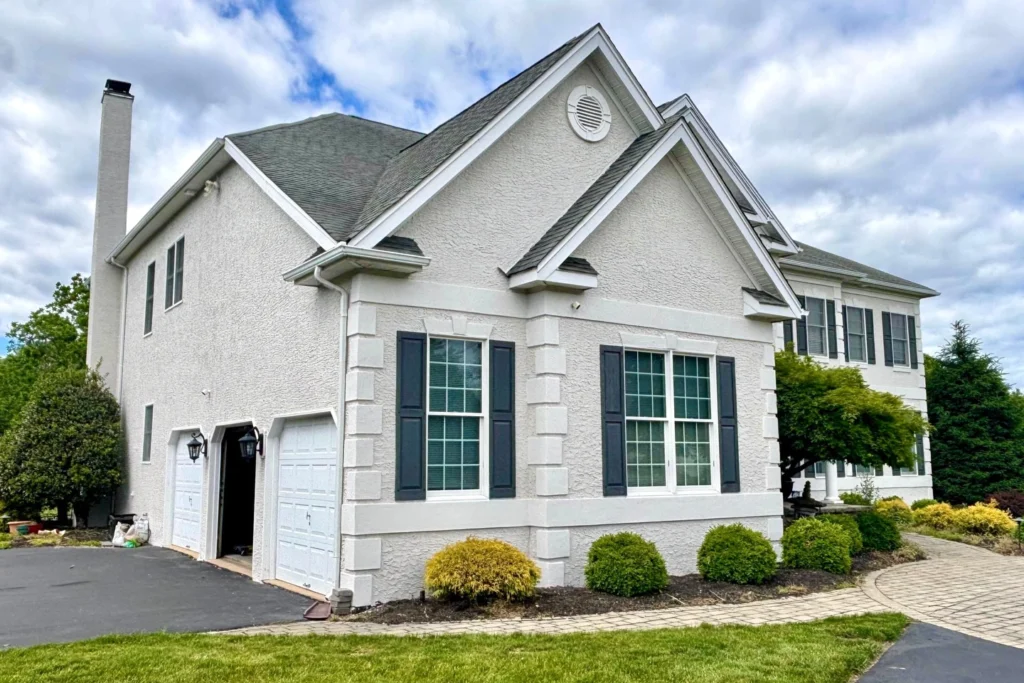
At ZD Stucco Repair, we do not believe in superficial fixes. For this Flemington home, we developed a comprehensive 10-step restoration plan to ensure long-lasting protection.
1. Removing the damaged system
The first step is always removing the compromised materials. We carefully remove the stucco system below the window down to the sheathing. This exposes the underlying structure so we can assess the true extent of the water damage.
2. Inspecting the substrate
Once exposed, we inspect the substrate condition upon exposure. If the water has caused wood rot or structural damage, substrate replacement is required. This is a crucial step that many budget contractors skip, leading to recurring problems.
3. Installing a new moisture barrier
Water management is the key to lasting stucco. We install a new, high-quality moisture barrier system over the clean substrate. This secondary defense line ensures that even if moisture penetrates the outer layer, it cannot reach the wood framing.
4. Applying the cement board
Next, we install cement board over the moisture barrier system. This provides a solid, durable foundation for the new stucco layers and adds structural integrity to the wall assembly.
5. Adding the base coat and mesh
To prevent future cracking, we apply a base coat with embedded fiberglass mesh over the cement board. The mesh acts like rebar in concrete, giving the stucco tensile strength to withstand temperature fluctuations.
6. Matching the existing texture
One of the most challenging aspects of partial restoration is blending the new work with the old. Our skilled craftsmen apply a stucco finish coat, matching the existing texture as closely as possible for a seamless look.
7. Managing the fixtures
We carefully remove and reattach shutters and other exterior fixtures to ensure the stucco system is continuous and properly sealed behind these elements.
8. Sealing the perimeter
We seal the window perimeter at restored wall sections with a high-performance exterior sealant. This addresses the root cause of the original water infiltration and protects the home for years to come.
9. Preparing the surface
Before applying the final coating, we perform a light surface cleaning of the existing stucco. This removes dirt, dust, and surface contaminants to ensure proper coating adhesion.
10. Applying the elastomeric coating
Finally, we paint the entire garage wall and remaining front elevation with an elastomeric coating system. This specialized, flexible paint bridges hairline cracks and provides a waterproof seal over the entire surface.
Why is elastomeric coating important for stucco?
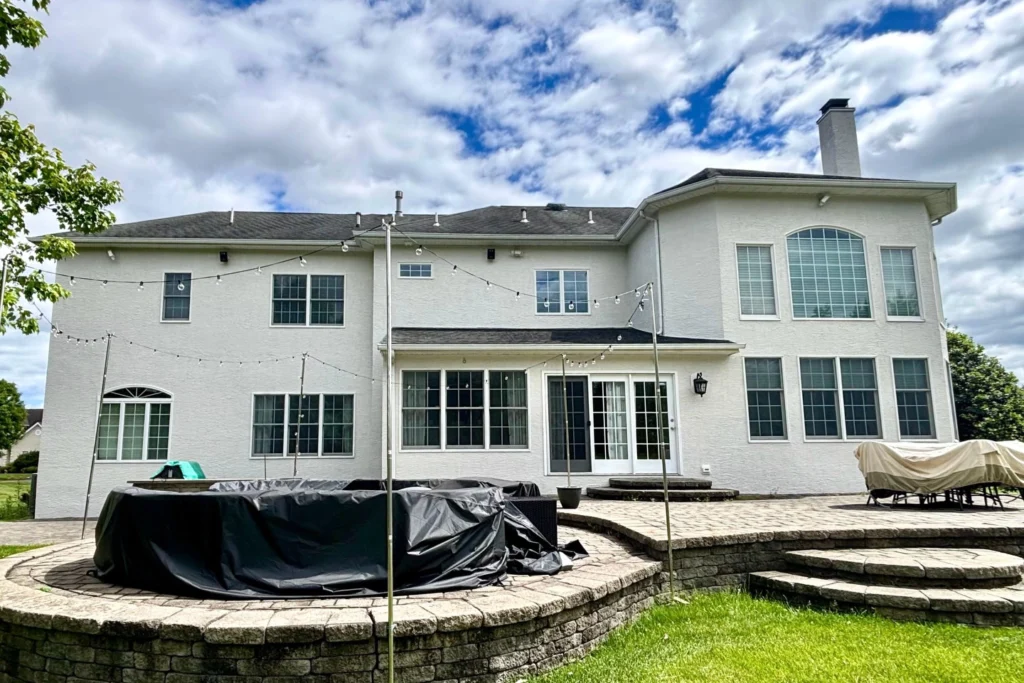
Elastomeric coating is a high-build, flexible paint specifically designed for masonry and stucco surfaces. Unlike standard exterior paint, it can stretch up to 300 percent to bridge hairline cracks that naturally occur as a house settles.
For the Flemington project, we highly recommend painting the entire front elevation. Color differences will be noticeable between painted and non-painted surfaces if only partial areas are coated. More importantly, the elastomeric coating seals the remaining wall sections that showed visible cracking, preventing moisture intrusion and saving the homeowner from more extensive and costly repairs down the line.
According to the Stucco Manufacturers Association, proper maintenance and coating can extend the life of a stucco exterior by decades, making it a critical investment for homeowners.
Frequently Asked Questions About Stucco Repair
How much does stucco repair cost in New Jersey?
The cost of stucco repair varies widely based on the extent of the damage. Minor crack repairs might cost a few hundred dollars, while a complete house stucco restoration can range from $8,000 to $20,000 or more. We provide detailed, itemized estimates so you know exactly what you are paying for.
Can you repair stucco in the winter?
Yes, but it requires special precautions. Stucco needs specific temperature ranges to cure properly. During New Jersey winters, we use specialized additives and temporary heated enclosures to ensure the materials set correctly.
How long does a stucco restoration take?
A complete front elevation restoration like the one in Flemington typically takes one to two weeks, depending on weather conditions and the extent of underlying substrate damage discovered upon removal.
Will the new stucco match my old stucco?
Our team specializes in texture matching. While it is impossible to perfectly match the color of aged, faded stucco, we match the physical texture as closely as possible. We then recommend an elastomeric coating over the entire elevation to ensure a uniform, flawless appearance.
What happens if I ignore stucco cracks?
Ignoring stucco cracks leads to water infiltration. Over time, this water rots the wood framing, damages insulation, and can cause hazardous mold growth inside your walls. A $1,000 repair today can easily become a $15,000 structural nightmare if left unaddressed.
Trust the experts for your stucco restoration
If you own a stucco home in Flemington, Hunterdon County, or anywhere in New Jersey, do not wait for water damage to compromise your investment. The project detailed above shows how a thorough, professional approach can save a home from structural deterioration.
At ZD Stucco Repair, we protect adjacent surfaces, fixtures, and landscaping to maintain a clean and controlled work environment. We handle everything from minor repairs to complete exterior transformations.
Are you noticing cracks, stains, or bulges on your stucco walls? Contact ZD Stucco Repair today for a comprehensive inspection and a detailed restoration plan. We will help you protect your home for decades to come.