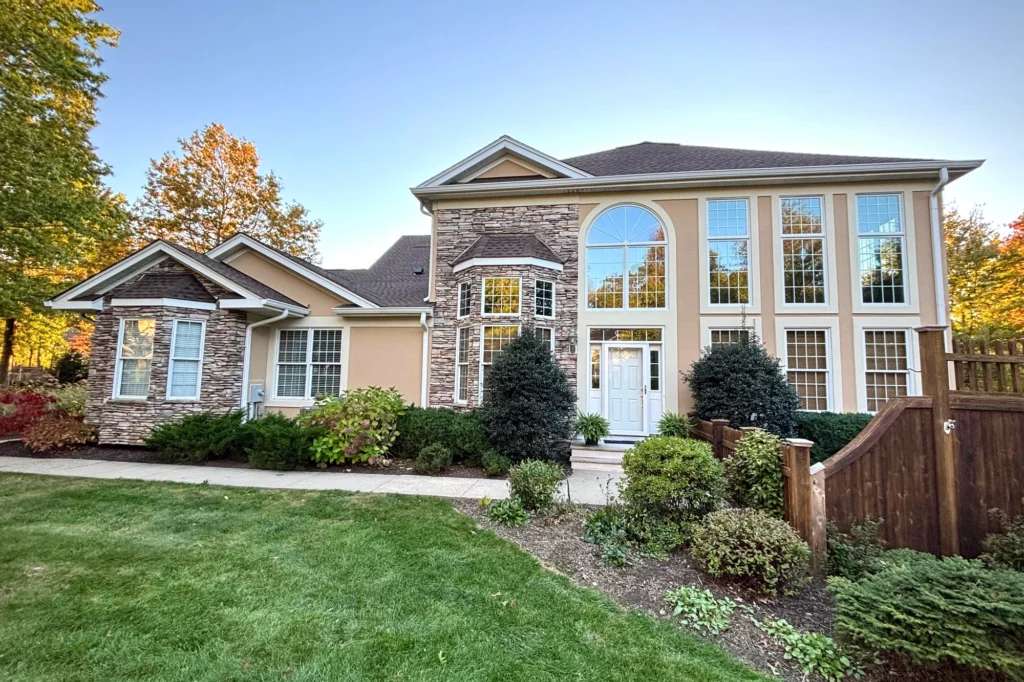
A stucco and stone exterior works because the materials bring different qualities to the same facade. Stucco creates clean wall areas, while stone adds texture, weight, and a natural focal point. The best stucco and stone exteriors use stone at architectural features such as the base, entry, chimney, columns, garage, or one accent wall rather than in small scattered patches. That approach works especially well for New Jersey and New York homes.
Color matters too. White or light stucco pairs well with gray, charcoal, cream, buff, and taupe stone. Warmer stucco colors usually work better with beige, brown, or soft gold undertones. The transition between stucco and stone also needs correct flashing, drainage, and water-resistive detailing behind the finishes.
Quick answer
Best placement: Use stone where the architecture creates a natural break.
Best color rule: Match undertones first, then choose soft coordination or stronger contrast.
Best construction rule: Plan flashing, drainage, and cladding transitions before the finish materials go on.
Does Stone Look Good With Stucco?
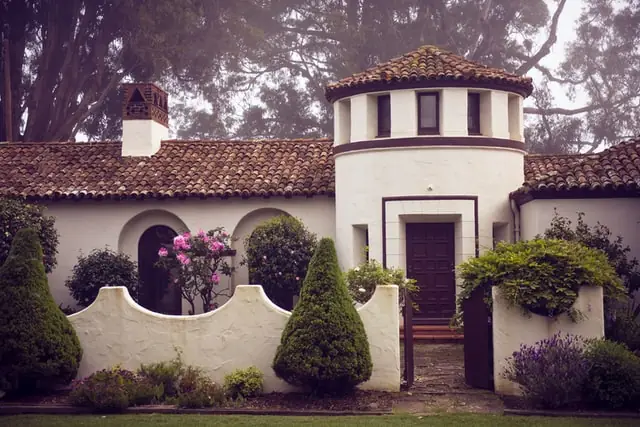
Yes. Stone and stucco work well together because a smooth or lightly textured stucco field gives stone a quieter background. The combination suits modern, transitional, Tudor, Mediterranean, French country, and many traditional homes.
The key is restraint. One material should remain dominant, while the other supports the architecture instead of looking added on later. This is especially true for stucco with stone accents, where a few deliberate stone areas usually look better than many small patches.
15 Stucco and Stone Exterior Ideas
1. White Stucco With Charcoal Gray Stone
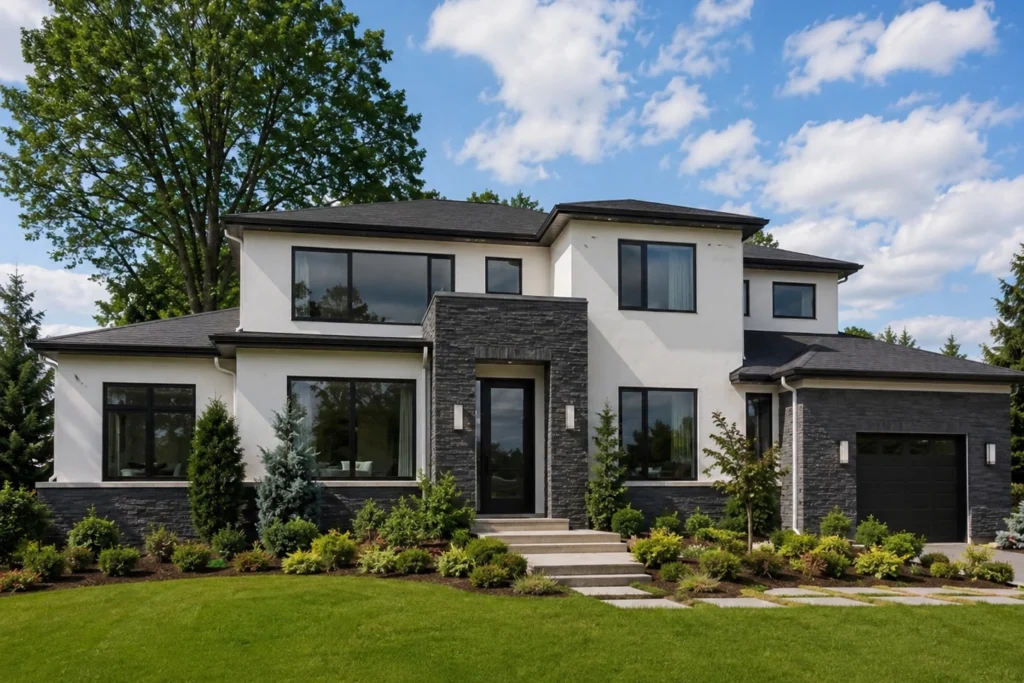
For a white stucco and stone house, pair white stucco with medium or charcoal gray stone for crisp contrast. Use the stone along the lower facade, around the entry, or on one projecting section. Black windows and a dark roof can tie the combination together.
2. Warm White Stucco With Cream or Buff Stone
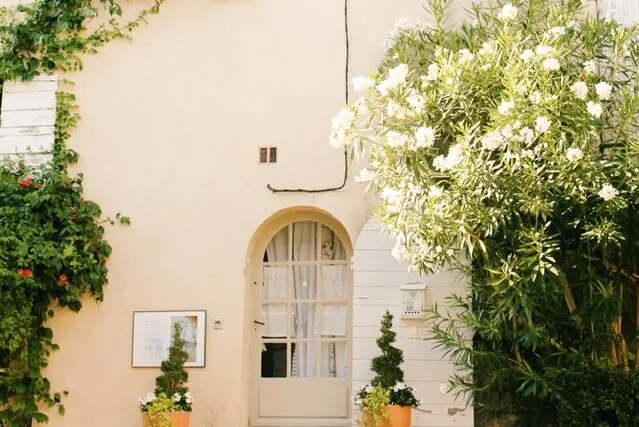
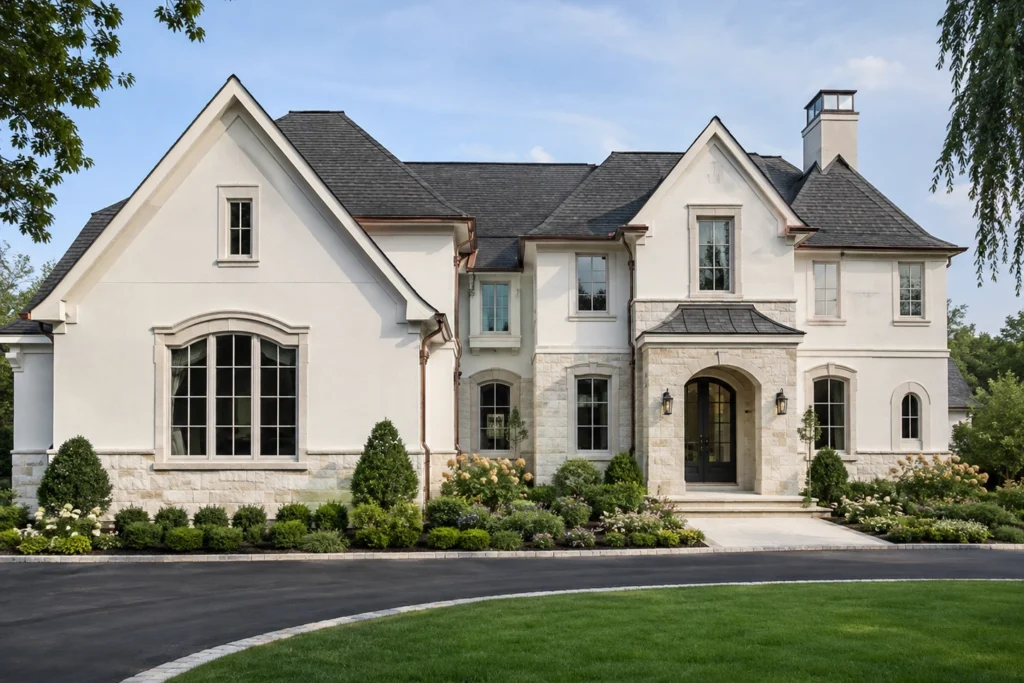
Warm white stucco with cream, buff, or pale beige stone creates a softer exterior. It suits traditional New Jersey homes and French country-inspired designs. Look for stone with a similar warm undertone so the materials feel connected.
3. Stone Wainscoting With Stucco Above
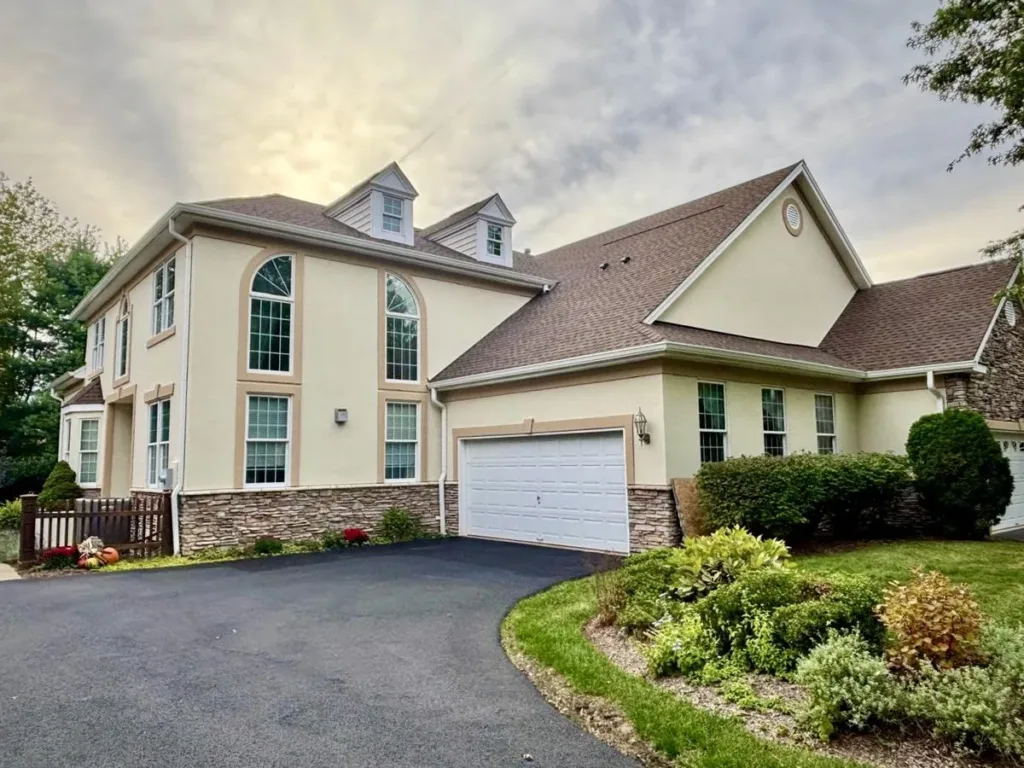
Stone wainscoting gives the house a strong visual base while keeping stucco as the main wall finish. It works on ranches, two-story homes, and transitional designs. Wrapping the stone around corners makes it look more intentional.
4. A Stone Chimney as the Focal Point
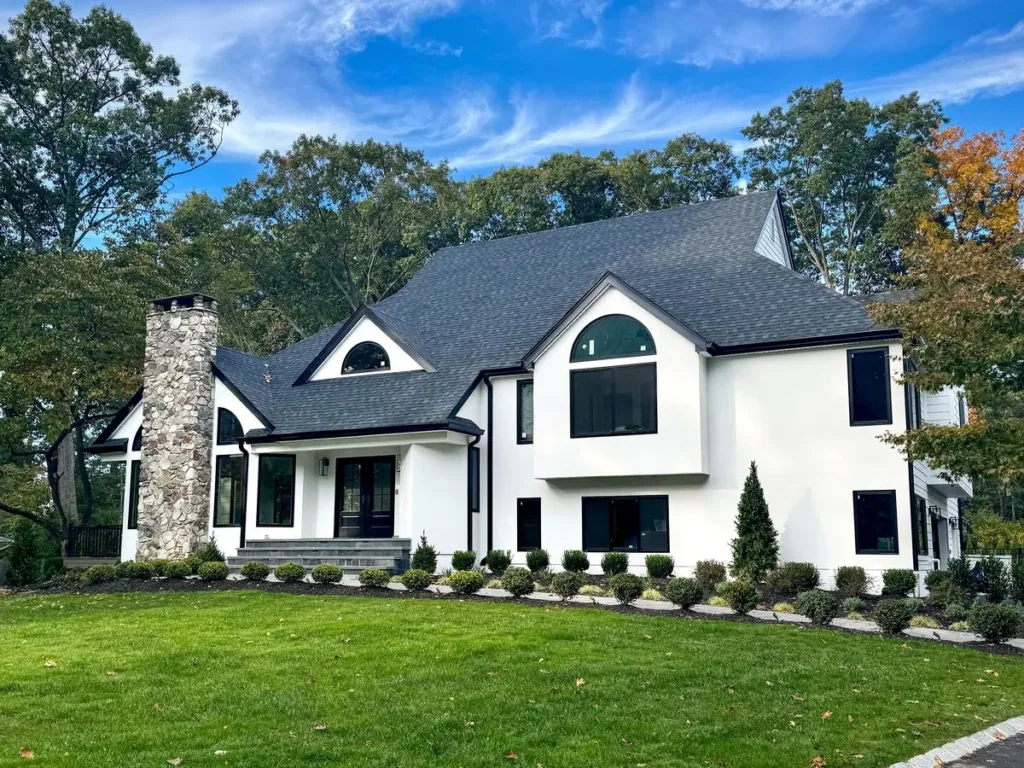
A full-height stone chimney can break up a broad stucco elevation and create a strong vertical feature. Our Upper Saddle River exterior makeover shows how stone, stucco, dark trim, and the roofline can work together.
5. Stone Around the Front Entry
Use stone around the front door or entry projection to guide attention toward the entrance. Irregular stone fits more traditional homes, while linear ledgestone works well on a modern stucco and stone house.
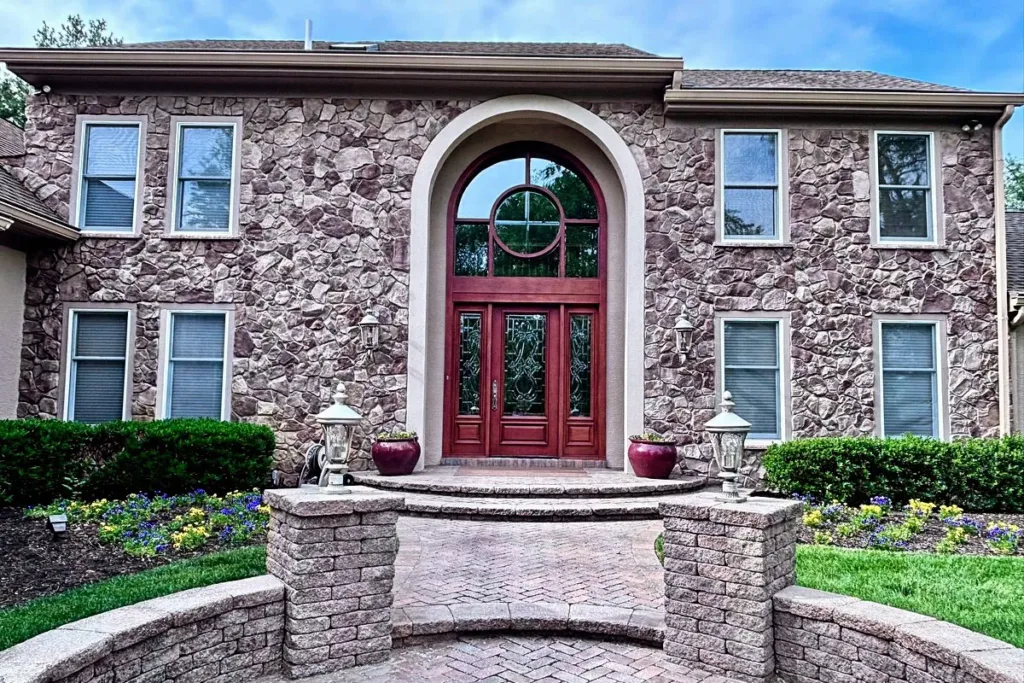
6. Stone on the Garage, Stucco on the Main House
A stone garage wall can reduce the visual weight of large garage doors and divide a wide facade into clearer sections. Keep the stone colors connected to the roof, doors, or trim so the garage still belongs to the same exterior.
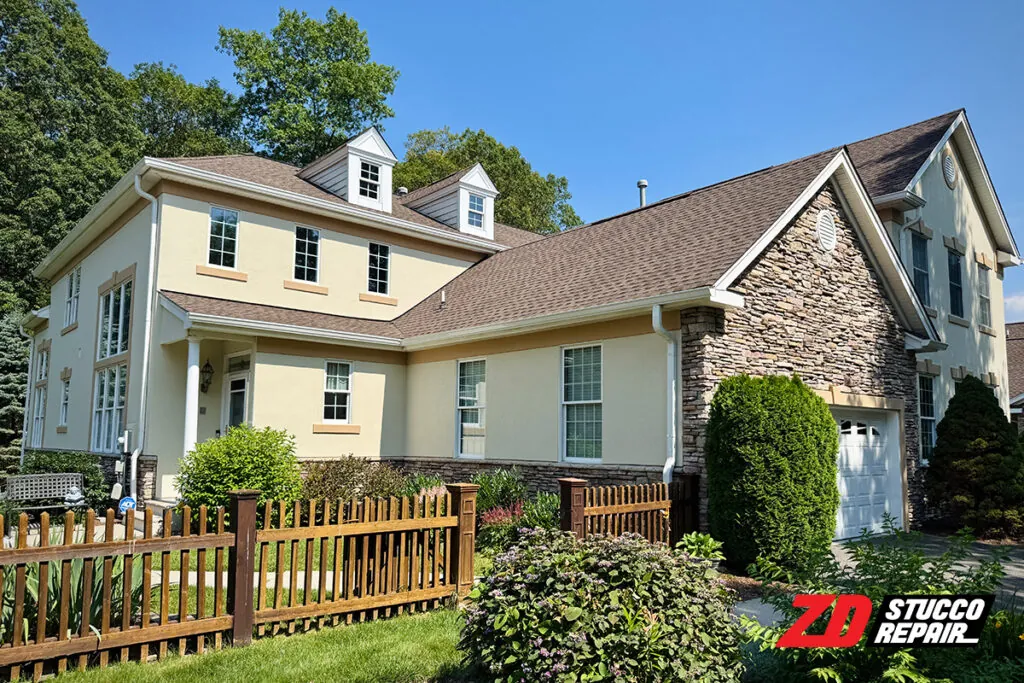
7. Stone Column Bases With Stucco Above
Porch columns are a natural place to mix materials. Stone bases add weight, while stucco above connects the columns to the rest of the house. Repeating the same stone at the entry or foundation can make the design feel consistent.
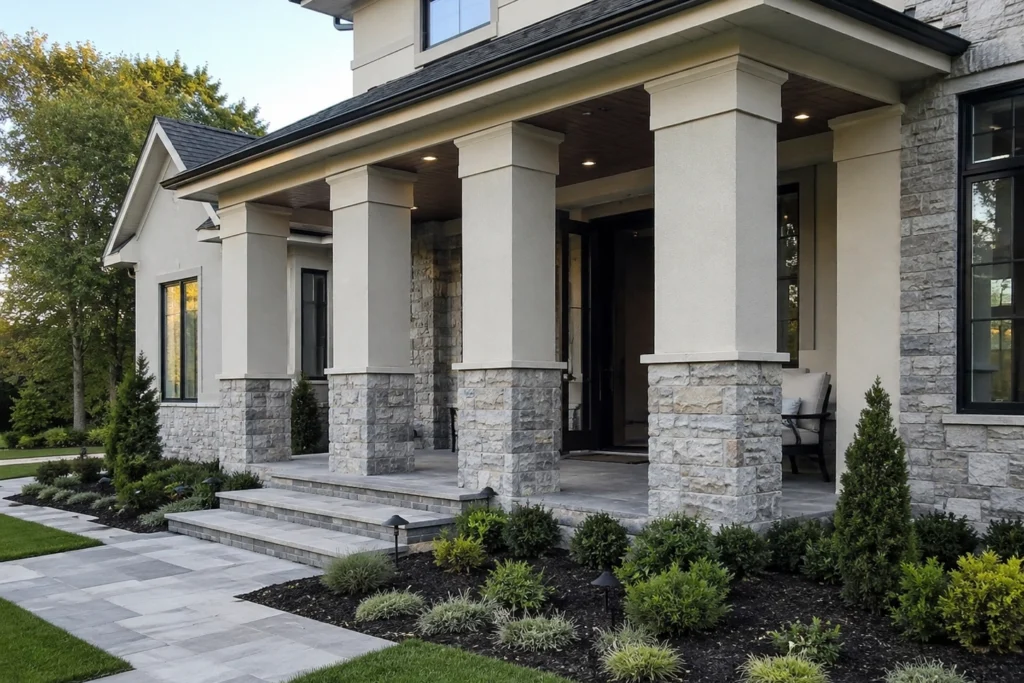
8. Full-Height Stone on One Accent Wall
Among modern stucco and stone combinations, a full-height stone wall can work especially well on a projecting wall, stair tower, or entry volume that already reads as a separate form. Keep the surrounding stucco simple so the stone becomes the focal material rather than competing with several textures.
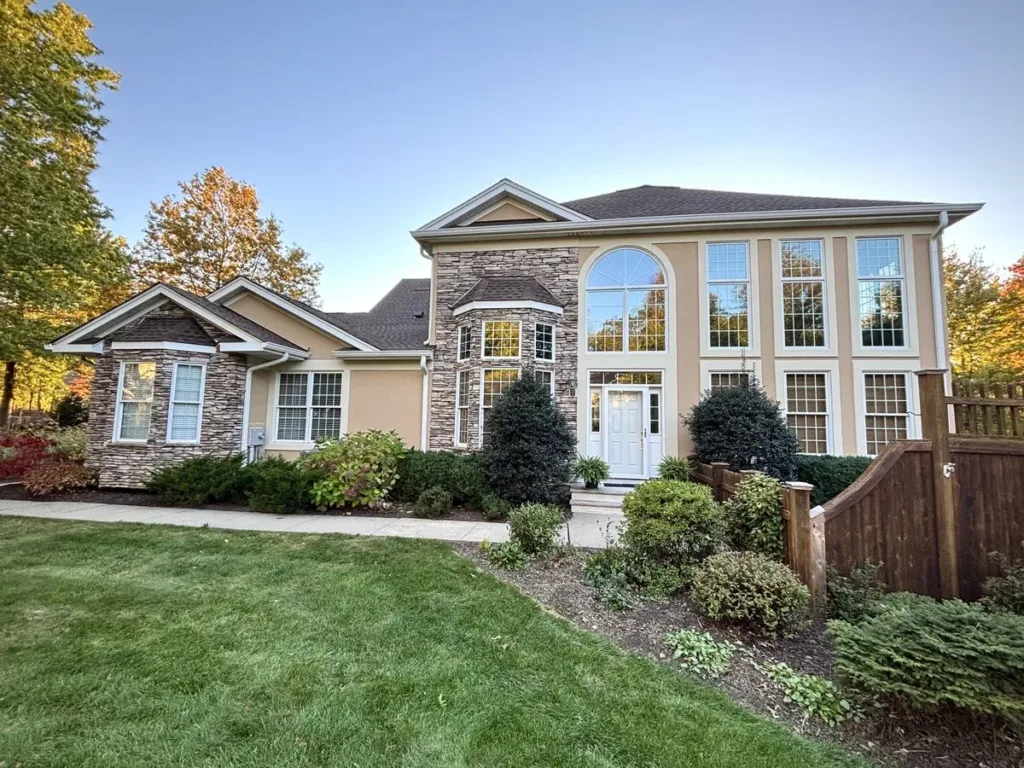
9. Greige Stucco With Mixed Fieldstone
Greige stucco bridges gray and beige tones, making it a good partner for fieldstone with muted gray, taupe, and brown colors. This combination works especially well on traditional homes where bright white would feel too stark.
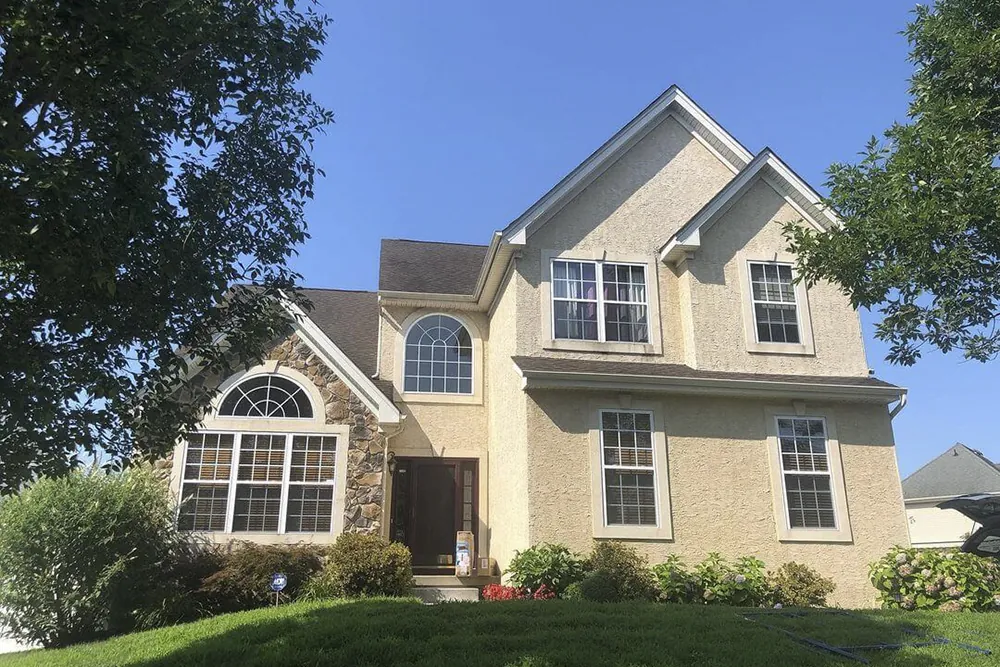
10. Smooth Stucco With Linear Ledgestone
A modern stone and stucco exterior can pair smooth stucco with narrow ledgestone for a clean contemporary look. Light stucco with medium-gray stone is an easy direction, while dark stucco with lighter stone creates more contrast without adding another exterior material.
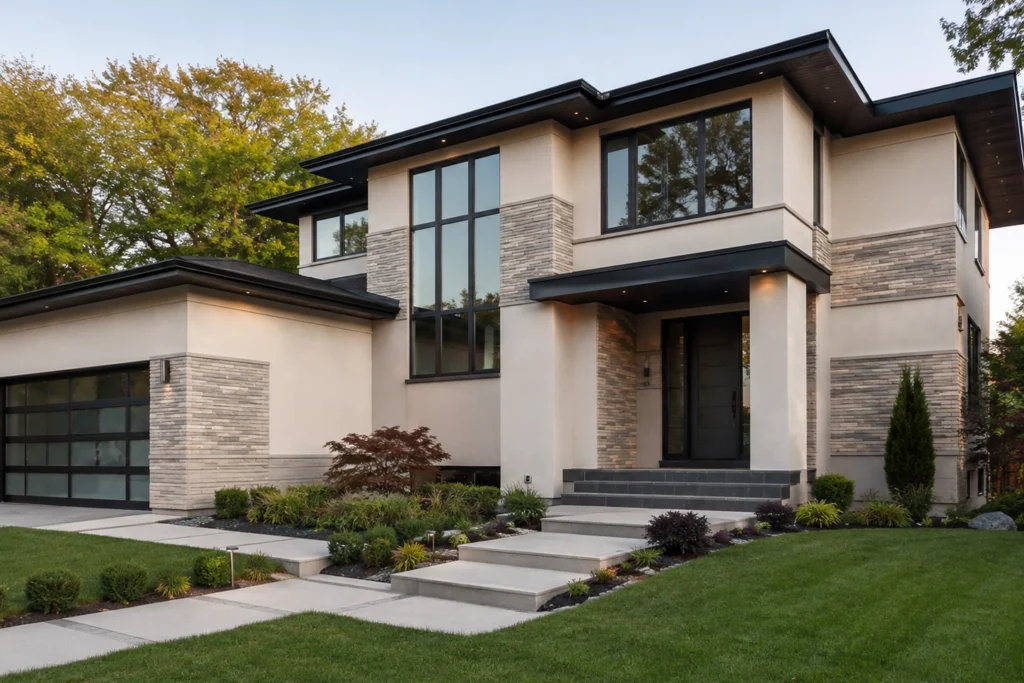
11. Textured Stucco With Quieter Stone
If the stucco has a strong texture, choose larger stone pieces with a limited color range. Two busy surfaces can make a facade feel restless. A calmer stone lets the existing stucco texture remain visible without fighting for attention.
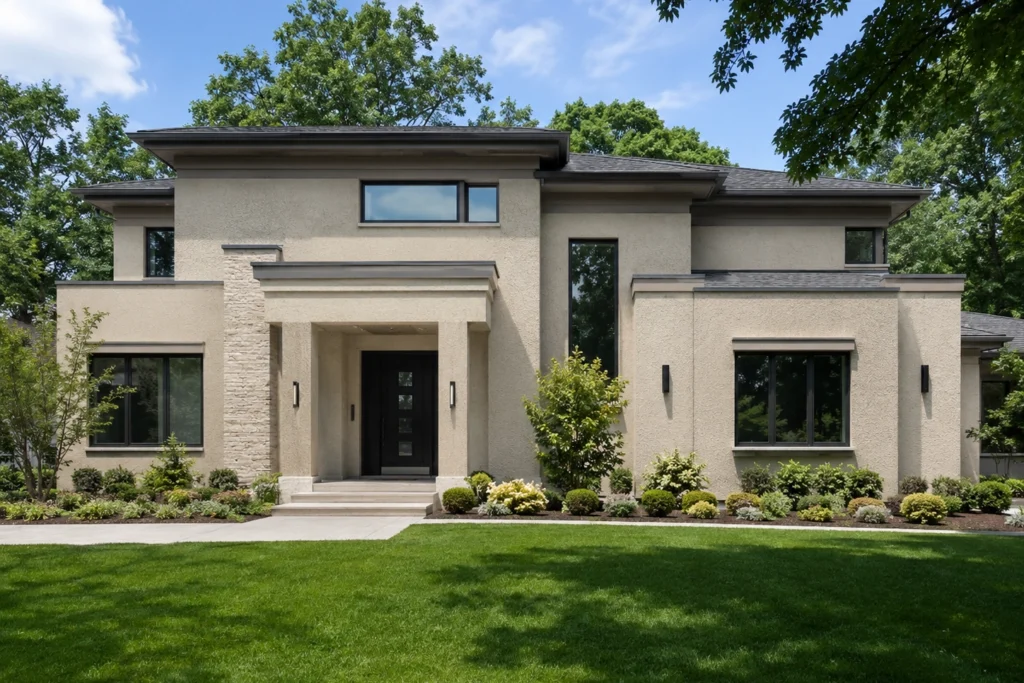
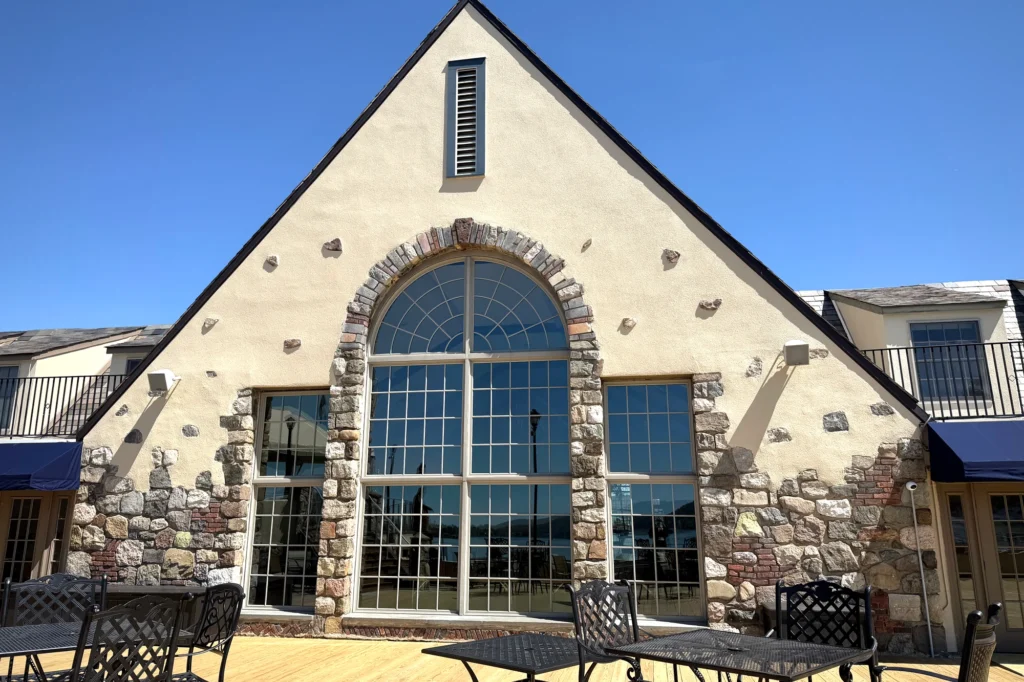
12. Tudor-Inspired Stucco With Irregular Stone
Light stucco, dark trim, and irregular gray-brown stone fit Tudor-influenced homes naturally. Use stone at the base, chimney, or entry rather than on every wall. The dark trim can visually connect the lighter stucco and heavier stone.
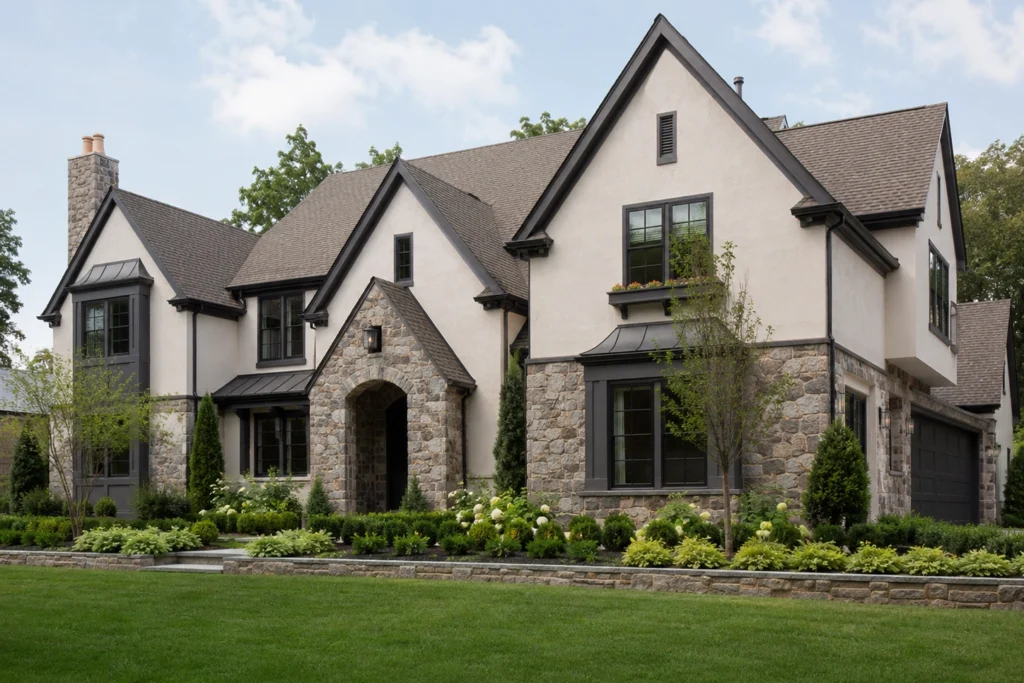
13. Mediterranean Stucco With Warm Stone
Cream, sand, and light beige stucco pair naturally with buff, tan, and muted brown stone. This works well on Mediterranean and Old World-inspired homes, especially when the roof has warm clay, brown, or weathered tones.
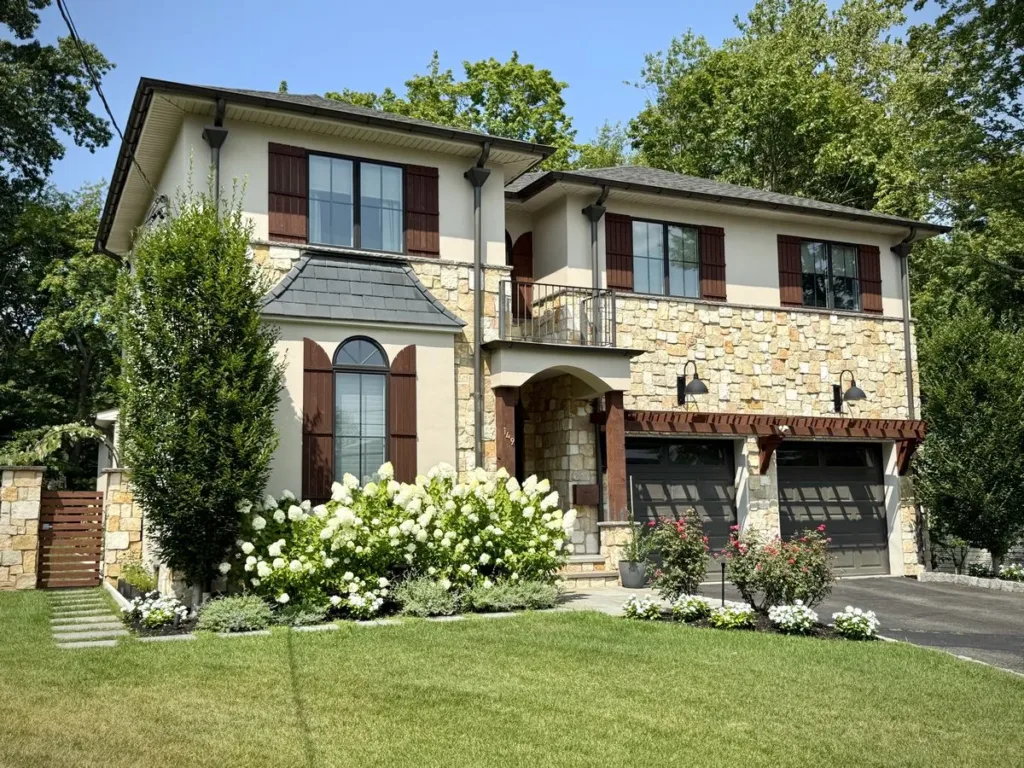
14. Stone That Wraps the Corners
Avoid stopping stone as a thin patch on the front face when the architecture allows a better transition. Continuing stone around a corner to a logical stopping point makes it read as part of the building rather than surface decoration.
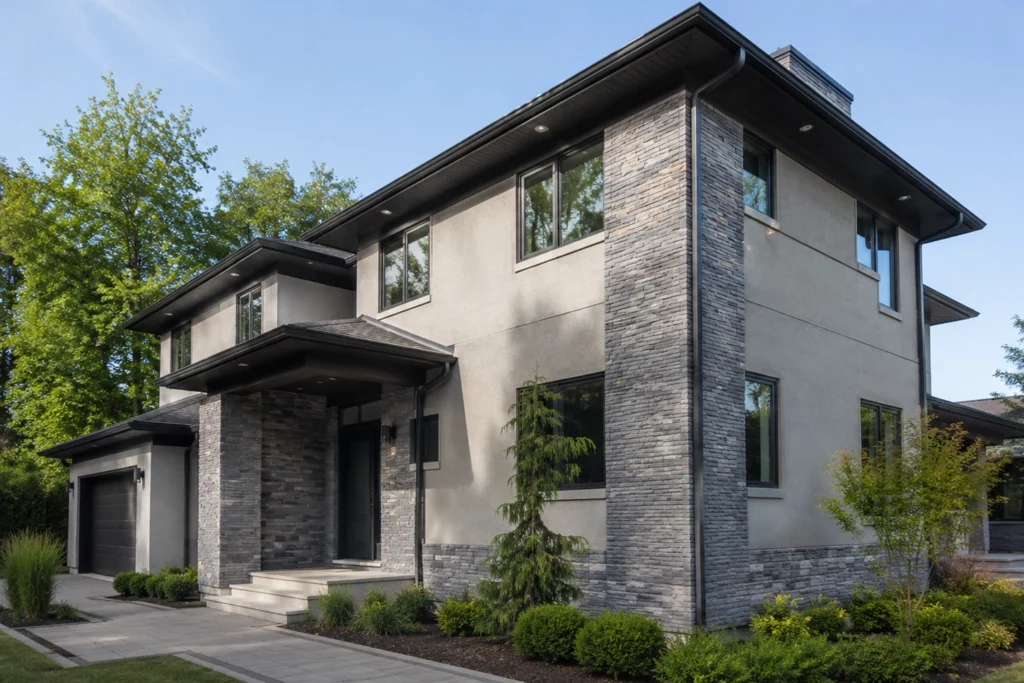
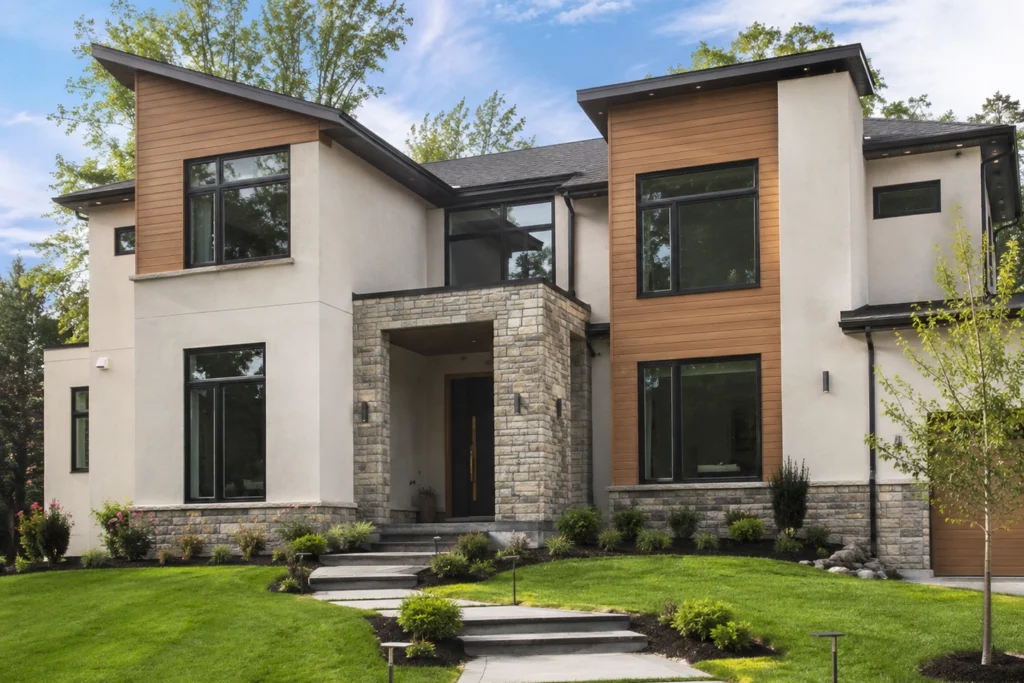
15. Stucco, Stone, and One Third Material
A three-material exterior can work when each material has a clear role. Keep stucco dominant, use stone at the base or focal areas, and limit wood-look siding or another material to a gable, entry, or upper-story accent.
What Stone Colors Work With White Stucco?
Among stucco and stone exterior color combinations, white stucco works with several stone families:
Gray or charcoal: Stronger contrast for modern and transitional homes.
Cream or buff: Softer and warmer with off-white stucco.
Taupe or gray-brown: A flexible bridge between cool and warm colors.
Light limestone tones: Bright and understated with subtle material contrast.
Match undertones before comparing light and dark values. Pure bright white can make yellow or orange tones in stone appear stronger, while creamy white usually pairs more naturally with warm stone. For related finish choices, see our stucco painting service and stucco finishes guide.
Is Stone Veneer Installed Before or After Stucco?
For a stucco and stone veneer wall, there is no universal rule that stone veneer must always be installed before stucco, or vice versa. On a new mixed-cladding wall, the correct sequence starts behind both finishes. The water-resistive barrier, flashing, drainage details, weep screeds, casing beads, and transition between the two claddings need to be planned first.
The visible finish sequence then depends on the wall assembly and manufacturer requirements. The CMHA Manufactured Stone Veneer Installation Guide focuses on water-resistive barriers, flashing, drainage, and transitions at adjacent claddings.
If stone veneer is being added to existing stucco, inspect the wall first. Cracked, loose, water-damaged, or poorly detailed stucco should not simply be covered. Our stucco repair service addresses damaged areas before a new finish is considered.
How Should You Plan a Stucco and Stone Exterior in New Jersey?
When comparing exterior stucco and stone combinations, start with the architecture. Identify the entry, chimney, porch, foundation line, garage projection, or full-height wall that naturally deserves emphasis. Those locations usually work better for stone than random decorative sections.
Compare real samples outdoors with the roof, windows, doors, and trim in view. Stone contains several undertones, and stucco colors shift with sun and shade.
Finally, treat the stucco-to-stone transition as a water-management detail, not only a design choice. New Jersey and New York homes see rain, snow, seasonal temperature changes, and wind-driven moisture. If you are building or replacing the stucco portion, our stucco installation service covers traditional three-coat cement stucco, EIFS, and replacement systems. You can also browse our completed stucco projects for real exterior examples.
Frequently Asked Questions
Can Stone Veneer Be Installed Over Existing Stucco?
Sometimes, but the wall should be evaluated first. The stucco needs to be sound, and the proposed stone system must be compatible with the substrate and water-management details. Existing cracks, loose areas, or moisture problems should be addressed first.
What Stucco Texture Works Best With Stone?
Smooth and fine stucco finishes make stone stand out clearly, which suits many modern homes. Medium textures work well on traditional exteriors. If the stucco is heavily textured, choose a quieter stone with fewer colors.
How Much Stone Should Be Used on a Stucco House?
There is no fixed percentage for every house. Let the architecture decide. A base, chimney, entry, columns, garage section, or one full-height wall gives stone a clear purpose while keeping stucco as the main material.
Should the Stone Match the Roof Color?
It does not need to match exactly. Repeating an undertone is usually enough. Gray roofing can connect with gray or charcoal stone, while brown or weathered roofs often pair well with buff, taupe, or mixed brown-gray stone.
Planning a Stucco and Stone Exterior?
A good house with stucco and stone should look balanced from the street and be built correctly behind the finish. Color, texture, placement, flashing, drainage, and transitions all need to work together.
ZD Stucco Repair works on stucco installation, repair, and restoration throughout New Jersey and Greater New York. If you are updating an existing facade or planning a new exterior, contact ZD Stucco Repair to discuss the stucco portion of the project and the details where stucco meets stone.