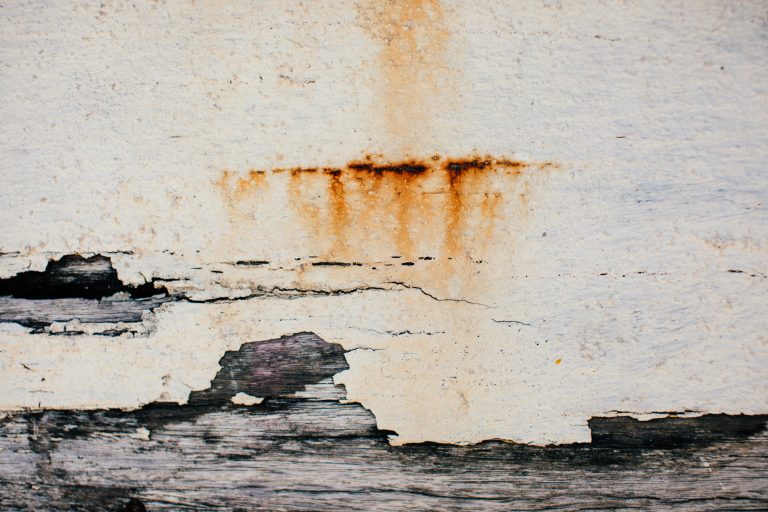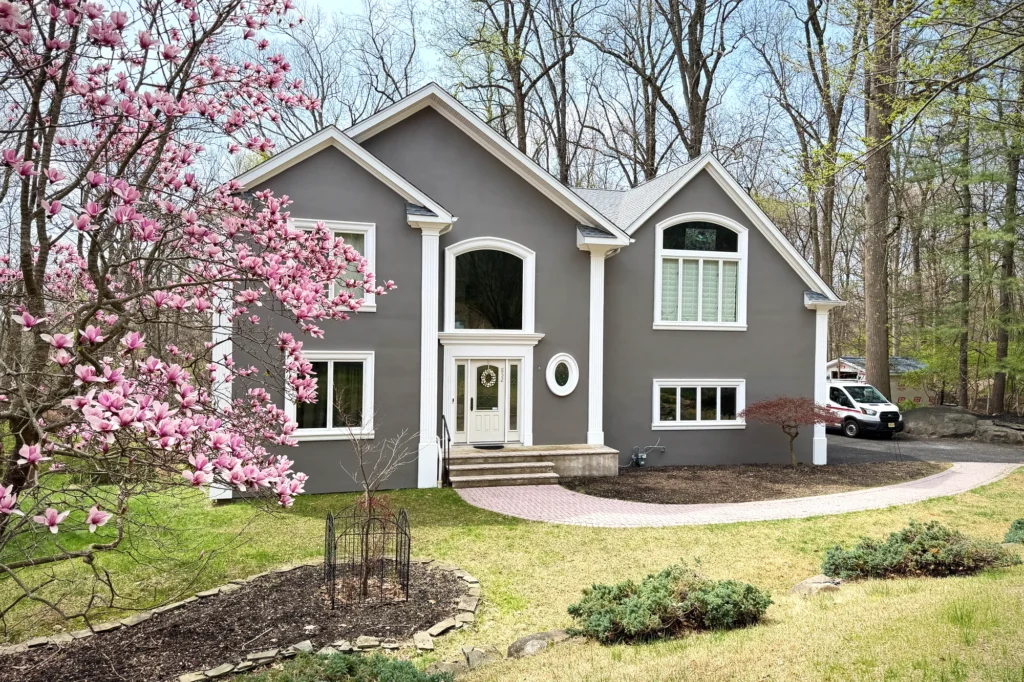
A smooth stucco finish is a hand-troweled exterior finish with very little visible texture. It gives a home a clean, modern appearance, but it also requires a flatter wall surface and more careful finish work than most textured stucco. Hairline cracks, wall waves, trowel marks, and future patches are usually easier to see on a smooth wall.
For New Jersey homeowners, smooth stucco can be an excellent choice when the underlying wall is sound and the style fits the home. It is not automatically better than sand, lace, or other textured finishes. The right choice depends on the condition of the wall, budget, architecture, and how much natural variation you are comfortable seeing over time.
What Is a Smooth Stucco Finish?
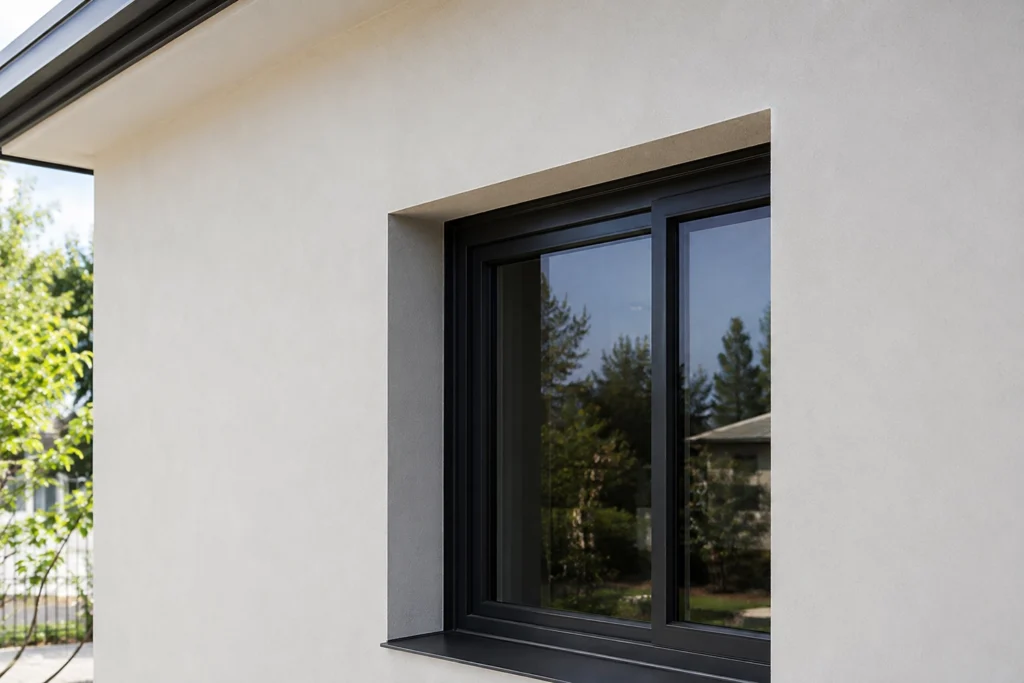
Smooth stucco is created by working the finish coat with a steel trowel to produce a flat or nearly flat appearance. Unlike lace, dash, or heavier sand textures, there are few deep ridges or patterns to hide small differences in the wall surface.
The clean surface is one of the main reasons homeowners choose it. Smooth stucco works especially well with modern and contemporary architecture, but it can also fit Mediterranean, Spanish, and transitional homes.
A smooth finish should not be confused with simply painting rough stucco. Paint can change the color, but the existing texture remains. Turning a rough stucco exterior into a smooth one normally requires surface preparation and additional material before the new finish coat is applied.
Smooth Stucco vs. Santa Barbara Finish
Smooth stucco and Santa Barbara stucco are related, but they are not identical.
A standard smooth finish aims for a more uniform wall surface. Santa Barbara, often called Santa Barbara Mission Finish, usually has a semi-smooth appearance with intentional trowel movement and subtle variations.
If you want clean wall planes and a more modern appearance, traditional smooth stucco is usually the better match. If you prefer a softer, handmade appearance with more visible variation, Santa Barbara may be a better choice.
Pros of a Smooth Stucco Finish
Clean, Modern Appearance
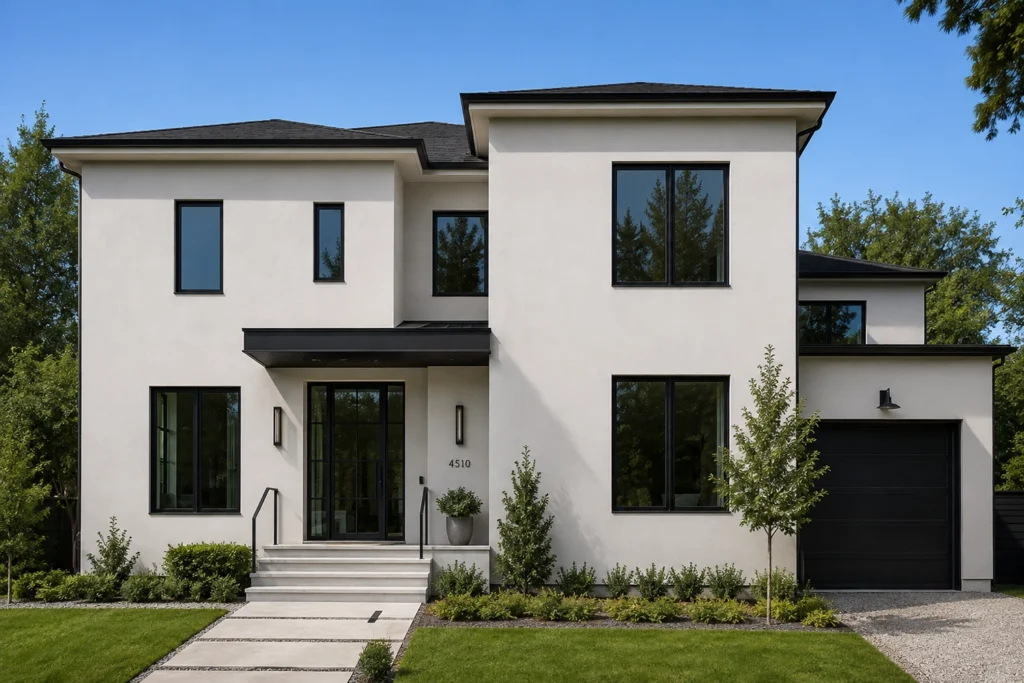
The biggest benefit is the look. Smooth stucco creates simple wall planes that pair well with large windows, dark trim, stone, wood, metal accents, and modern rooflines.
It can also give an older stucco home a more current appearance without changing the basic character of the exterior.
Easier to Keep Clean
A heavily textured wall has more recesses where dirt and debris can collect. Smooth stucco has fewer deep areas, which can make routine exterior cleaning easier. StuccoBoy also identifies smooth stucco as one of the easier finish styles to clean.
Fits Several Architectural Styles
Smooth stucco is not limited to ultra-modern houses. White and neutral smooth finishes work well with Mediterranean and Spanish-inspired architecture, while gray, beige, and darker tones can work with contemporary homes.
Architectural Details Stand Out
Because there is less texture competing for attention, window surrounds, trim lines, stonework, bands, and other exterior details can become more noticeable.
Cons and Common Smooth Stucco Problems
A smooth wall may look simple, but producing that appearance takes careful preparation. The main disadvantages come from one basic fact: smooth stucco hides very little.
Hairline Cracks Are More Visible
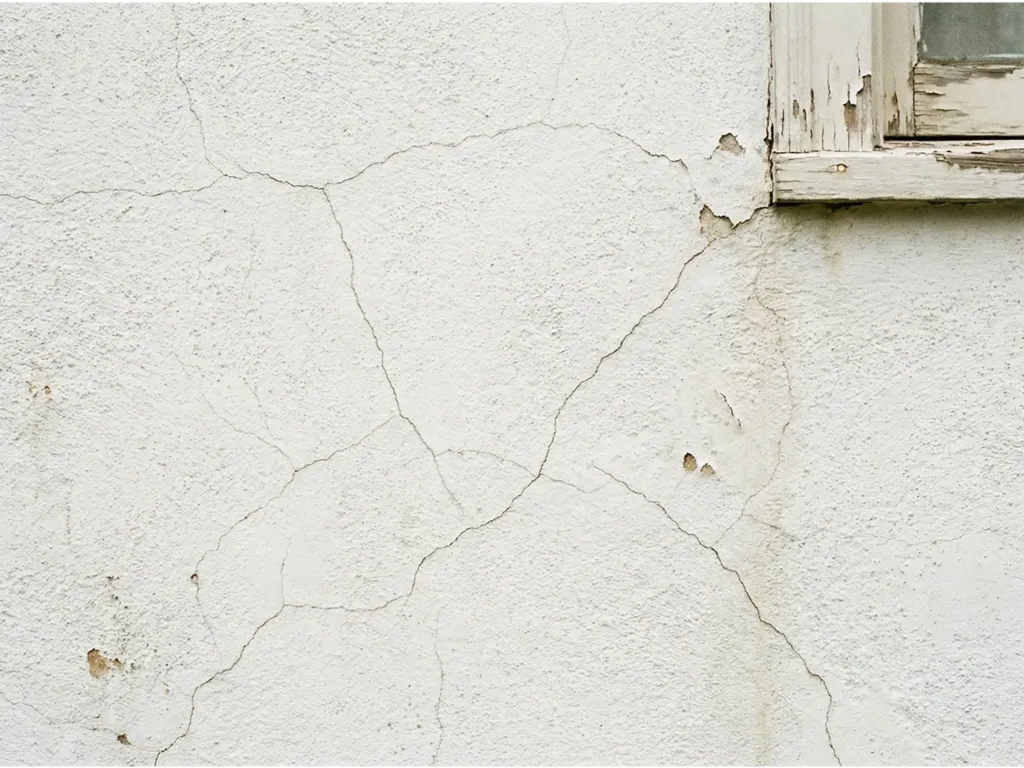
Stucco can develop small cracks due to curing, building movement, temperature changes, or movement around transitions and openings.
A textured wall can visually hide some of those lines. Smooth stucco cannot, which is why a small hairline crack may appear more obvious even when the same crack would be difficult to notice on a lace or sand finish.
That does not mean every hairline crack signals major damage. The width, location, pattern, recurrence, staining, and surrounding wall condition all matter.
If cracking is spreading, repeatedly reopening, or appearing with loose stucco or staining, it should be evaluated before cosmetic work begins. Our stucco repair team can inspect the damaged area and determine whether local repair or broader restoration is needed.
Wall Waves and Trowel Marks Can Show
Smooth stucco follows the surface underneath it. If the base coat is uneven, the finished wall may appear wavy, especially when sunlight hits the wall at a low angle.
This is one reason smooth finishes demand better substrate preparation. Sto notes that an ultra-smooth substrate is needed to produce this type of finish, while Stucco Champions also points out that smooth walls reveal more imperfections.
Applying a thin finish coat over a wavy wall does not automatically make it flat.
Repairs Are Harder to Hide
Smooth stucco can be more difficult to patch without leaving a visible repair.
The contractor has to match more than color. Wall plane, material, age, trowel movement, surrounding weathering, and the edges of the repair can all affect the final appearance.
Our guide to stucco texture matching explains why existing material and finish conditions need to be examined before patching.
Smooth Stucco Usually Requires More Labor
Smooth work typically requires more preparation and hand-troweling than a forgiving textured finish. A contractor cannot rely on heavy texture to hide small variations in the wall.
That added work is one reason smooth finishes can cost more than standard textured finishes.
How Much Does a Smooth Stucco Finish Cost in New Jersey?
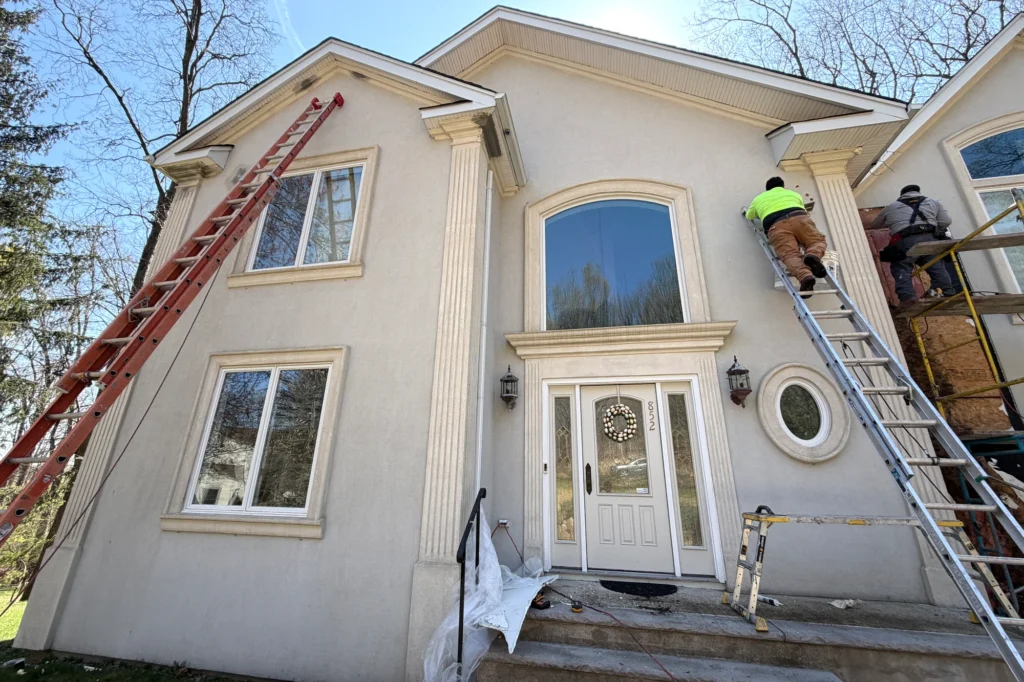
For a complete traditional stucco installation in New Jersey, our current 2026 comparison guide places typical installation at about $10 to $18 per square foot.
Smooth stucco often falls toward the higher side of a project’s price range because the wall generally needs more preparation and finish labor. The actual price, however, depends heavily on what is underneath the finish.
Factors that can change the cost include the condition and flatness of the existing wall, cracks or delamination that require repair, building height, access, scaffolding, window and trim details, finish material, color, and whether the job involves a complete new system or resurfacing existing stucco.
If you are replacing an exterior or starting with new construction, our new stucco system installation page explains the stucco systems we install in New Jersey.
The best way to price a smooth stucco project is to inspect the wall first. A square-foot number without knowing the condition of the existing system can give homeowners the wrong budget.
Can You Put Smooth Stucco Over Rough or Existing Stucco?
Yes, in some cases.
If existing stucco is properly bonded, dry, and structurally suitable, a contractor may be able to prepare the surface and create a new base that can receive a smooth finish.
The answer changes when the existing stucco is loose, bulging, badly cracked, stained, or affected by moisture. Those conditions should not simply be covered with another finish coat.
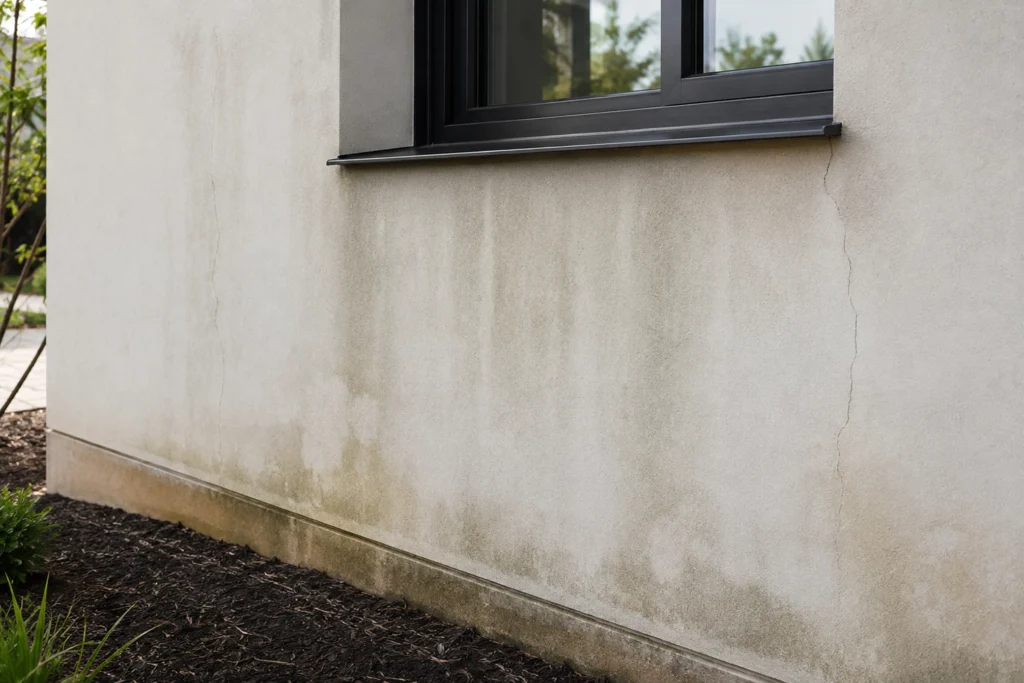
Areas around windows, doors, roof-to-wall connections, decks, penetrations, and other transitions also need attention because water can enter at failed exterior details.
If there are signs of leaking or trapped moisture, our water infiltration and stucco leak repair service should be the starting point rather than cosmetic resurfacing.
Sanding can sometimes be part of surface preparation, but sanding alone normally will not convert a heavily textured exterior into a properly built smooth stucco finish.
Smooth Stucco vs. Textured Stucco
| Factor | Smooth Stucco | Textured Stucco |
|---|---|---|
| Appearance | Clean, flat, modern | More visible pattern and depth |
| Wall Preparation | Requires a flatter base | More forgiving |
| Hairline Cracks | Easier to notice | Often less noticeable |
| Patch Blending | More difficult | Usually easier to disguise |
| Cleaning | Fewer deep recesses | Heavy textures can hold more dirt |
| Labor | Usually higher | Often lower |
| Best Fit | Modern and clean architectural styles | Broad range of homes and repair situations |
Textured finishes are generally better at hiding small wall variations and future repairs, while smooth finishes put more attention on the wall plane itself. Neither option is automatically better.
If appearance is your first priority and you are comfortable paying for added preparation, smooth stucco may be the right choice. If easier patch blending and hiding small surface variations matter more, a textured finish may be more practical.
Our guide to choosing the right stucco finish covers additional finish styles you can compare.
Is Smooth Stucco a Good Choice for New Jersey Homes?
Yes, provided the complete wall system is installed and maintained correctly.
New Jersey homes experience rain, humidity, freezing temperatures, summer heat, and seasonal movement. The visible finish coat is only one part of the exterior wall.
A smooth finish does not make a wall waterproof, and smooth texture itself does not cause a leak. Water problems usually involve cracks, failed sealants, flashing, openings, penetrations, drainage details, or other defects in the wall assembly.
That is why we recommend looking beyond color and texture when choosing a finish.
It is also smart to review a sample panel in natural light before finishing an entire home. Smooth walls can look very different in direct sunlight, shade, and low-angle morning or evening light. Sample panels are also recommended by finish contractors because application technique and site conditions affect the final appearance.
How ZD Stucco Repair Approaches Smooth Stucco Projects
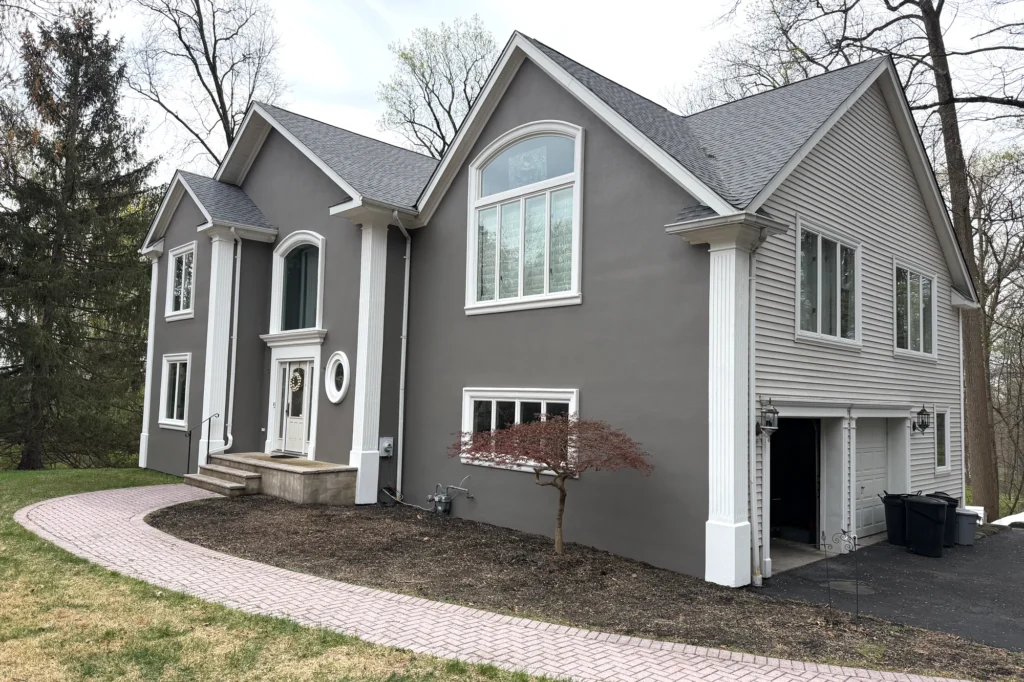
Before recommending a smooth finish, we look at the wall that will support it.
We check visible cracking, loose areas, staining, previous repairs, wall flatness, and locations where water may be entering. Depending on what we find, the home may need localized repairs, resurfacing, or complete stucco replacement before a new finish is applied.
The goal is not to cover an existing problem with a cleaner-looking surface. The goal is to create a sound base that gives the smooth finish the best chance to look consistent and perform properly.
For homeowners changing from rough stucco to smooth stucco, a sample section also helps show the actual color, trowel movement, and natural surface variation before work continues across the entire home.
Smooth Stucco Finish FAQs
Does smooth stucco crack more than textured stucco?
Not necessarily because of the texture alone. However, hairline cracks tend to be much easier to see on smooth walls. The underlying wall, curing, joints, building movement, and installation conditions also affect cracking.
Is smooth stucco more expensive?
Usually. Smooth work often requires additional wall preparation and hand-troweling. For complete traditional stucco installation in New Jersey, our current 2026 planning range is about $10 to $18 per square foot, with the actual smooth-finish quote depending on wall condition and project scope.
Can you make rough stucco smooth?
Often, yes, if the existing stucco is a suitable base. Loose material, moisture damage, major cracks, or poor bonding should be corrected before resurfacing.
Is Santa Barbara stucco the same as smooth stucco?
No. Santa Barbara is generally a semi-smooth finish with intentional trowel movement and variation. A standard smooth finish aims for a more uniform wall surface.
Is smooth stucco harder to repair?
Yes, from a visual matching standpoint. The repair has to blend with the surrounding color, wall plane, material, and trowel appearance, and patches can remain visible from certain angles.
Is smooth stucco worth it?
It can be if you want the clean appearance and the wall is prepared correctly. Homeowners should simply account for the added finish work and understand that cracks, patches, and small wall variations can be easier to see.
Thinking About a Smooth Stucco Exterior?
A smooth stucco finish can give a New Jersey home a clean, updated appearance, but good results begin below the finish coat. The wall needs to be sound, moisture problems need to be addressed, and the base needs to be suitable for a finish that hides very little.
ZD Stucco Repair works with homeowners across New Jersey and Greater New York on stucco repair, restoration, resurfacing, and new stucco systems.
If you are deciding between smooth and textured stucco, request a stucco consultation, and we can review the wall condition, finish options, and project scope.