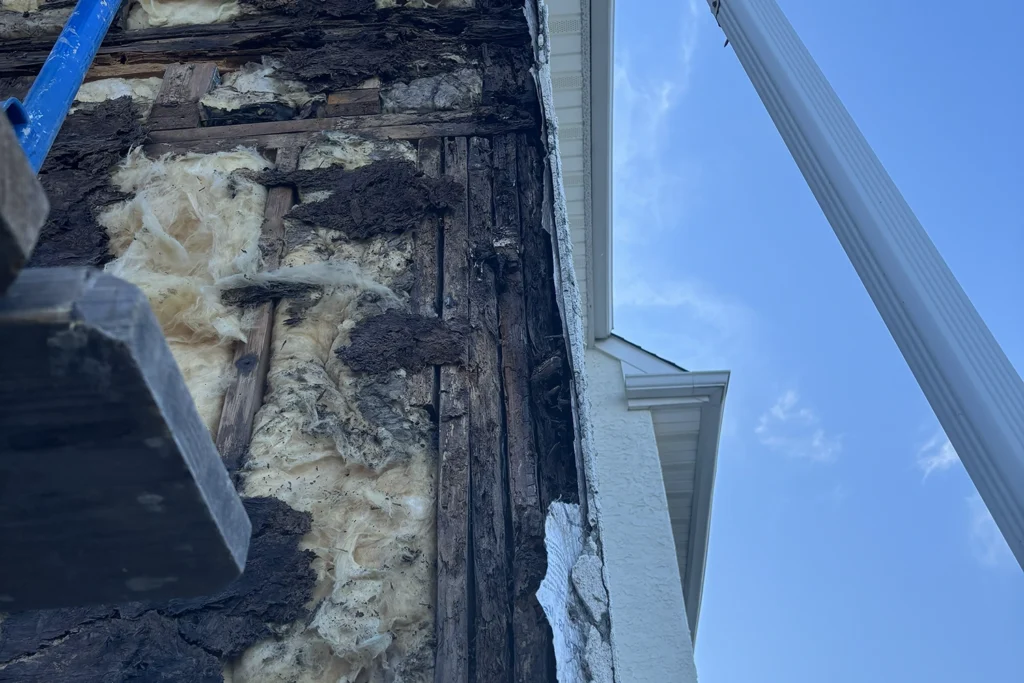
When homeowners discover rotting wood behind stucco, the immediate fear is often that the entire facade needs replacement. However, wood rot behind stucco can frequently be fixed with targeted, localized repair if detected early. Stucco lasts between 50 and 80 years with proper maintenance, but the wooden framing and sheathing beneath it are highly vulnerable to moisture.
If you suspect stucco water damage and wood rot, understanding the signs and knowing your repair options can save you thousands of dollars. This guide explains how to detect wood rot stucco damage, when a localized stucco wood rot fix is possible, and how to protect your home’s structural integrity.
Can rotting wood behind stucco be fixed without full replacement?
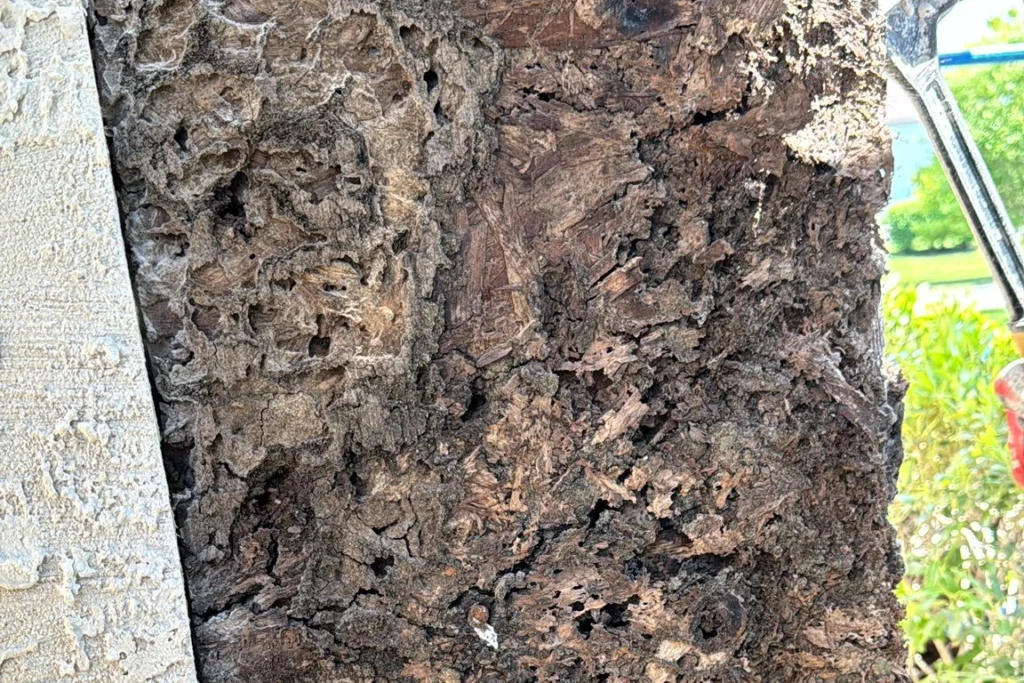
Yes, rotting wood behind stucco can often be repaired without a full facade replacement, provided the damage is localized. If water intrusion is caught early, a targeted stucco wood rot replacement is highly effective.
Our team at ZD Stucco Repair frequently performs targeted repairs. We carefully cut away the damaged stucco, replace the rotted OSB board or plywood sheathing, install a new moisture barrier, and seamlessly patch the stucco. A complete tear-off is only necessary if the stucco moisture wood decay has spread extensively across the building envelope or if the structural framing studs and load-bearing walls are severely compromised.
What causes wood deterioration behind stucco?
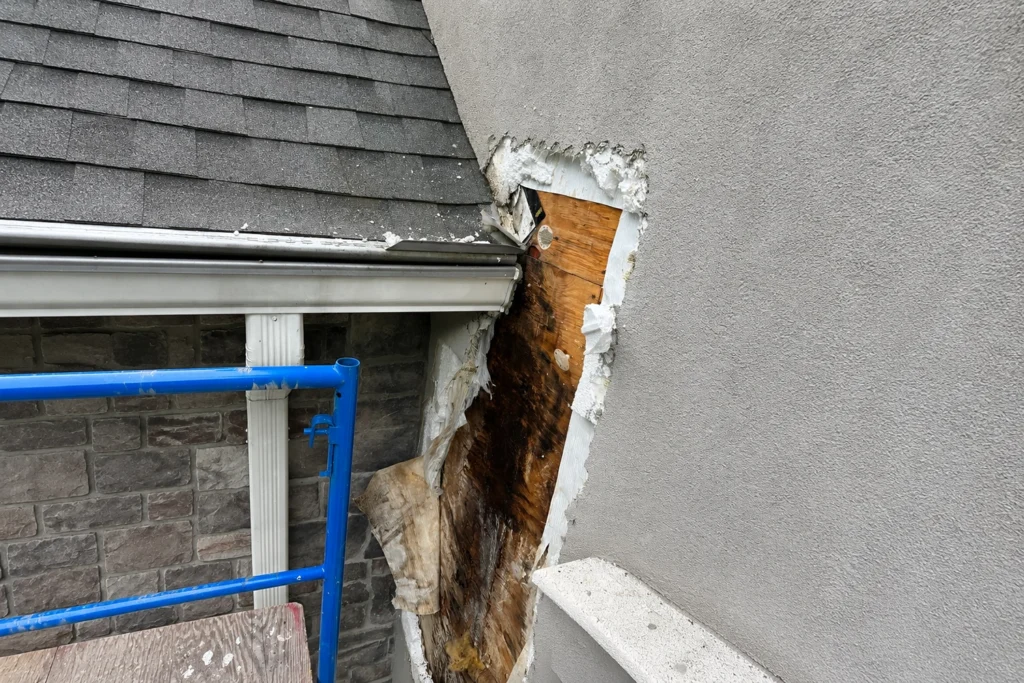
Stucco is a porous material designed to breathe. When water enters but cannot escape, it saturates the wood substrate behind it. Several factors contribute to this stucco water damage, including wood rot:
- Failed Caulking and Sealants: Gaps around windows and doors are the most common entry points for water.
- Missing or Improper Flashing: Without proper kickout flashing at rooflines, water pours directly behind the stucco instead of into gutters.
- Lack of a Weep Screed: A weep screed at the base of the wall allows trapped moisture to drain. Without it, water accumulates and rots the bottom plates.
- Cracks in the Stucco: While hairline cracks are normal, larger cracks allow significant water infiltration during heavy New Jersey rainstorms.
How to detect wood rot behind stucco: 5 Warning Signs
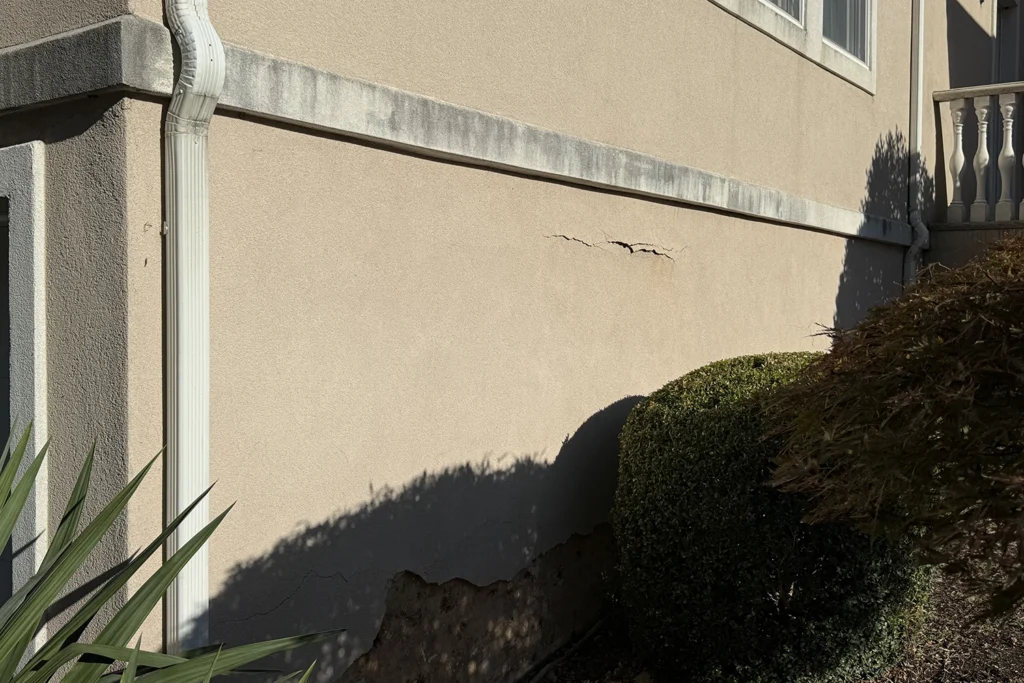
Detecting wood rot early is crucial for minimizing the cost of stucco rot repair. Because the damage occurs behind the exterior wall, you must look for subtle clues. Here are the top wood rot stucco signs:
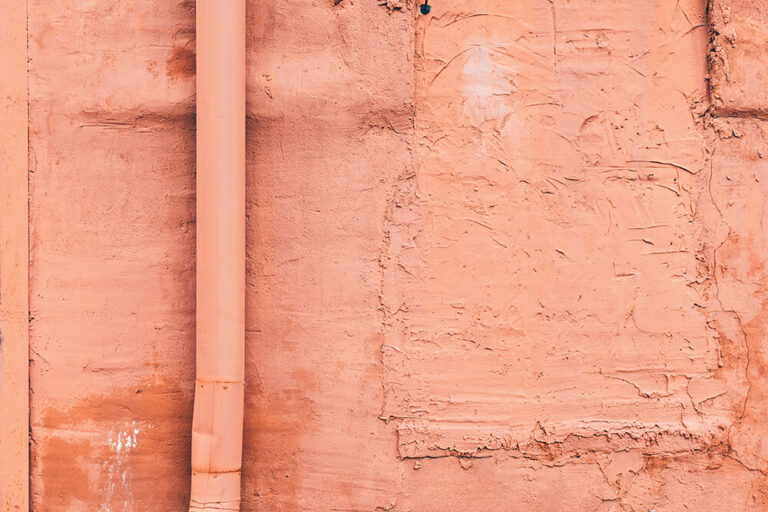
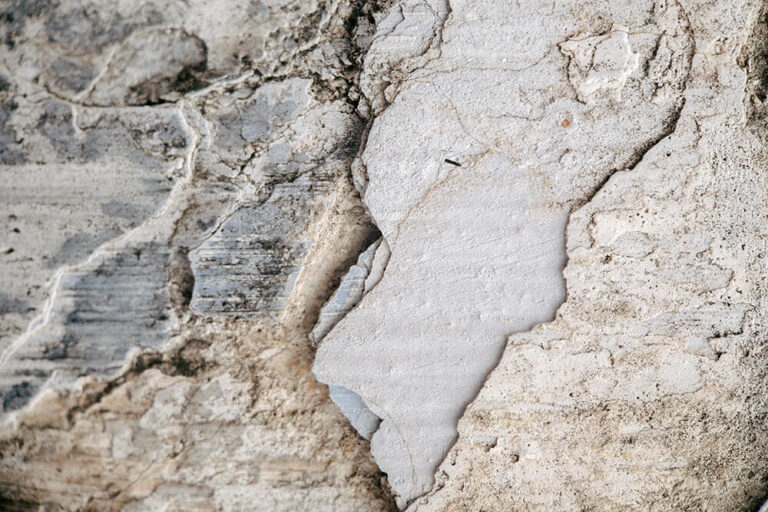
- Soft or Spongy Stucco: If you press firmly on your stucco exterior and it yields or feels soft, the structural repair is likely already needed. Healthy stucco over solid framing should feel like concrete.
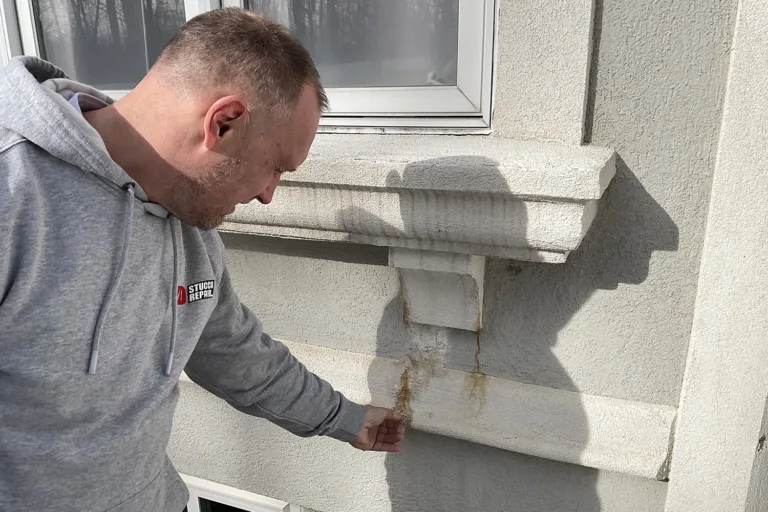
- Dark Stains and Discoloration: Brown streaks or dark water stains, especially below windows or where roofs intersect walls, indicate water is trapped behind the surface.
- Interior Peeling Paint or Musty Odors: Stucco wood damage assessment often starts inside. If interior drywall feels damp, paint is peeling, or you notice a persistent musty smell, moisture has breached the building envelope.
- Bulging or Bowing Walls: When wood sheathing rots and swells, it pushes the stucco outward. Bulging areas require immediate invasive testing to assess structural compromise.
- Pest Infestations: Termites and carpenter ants thrive in damp, rotting wood. An unexplained pest problem near your exterior walls is a major red flag.
How much does stucco rot repair cost in NJ?
The cost to repair rotting wood behind stucco varies significantly based on the extent of the damage. A small, targeted repair under a window might cost between $800 and $1,500. However, if the stucco framing rot is extensive and requires major structural repair, mold remediation, and replacing large sections of the facade, costs can easily exceed $5,000 to $10,000.
Because costs escalate quickly as rot spreads, scheduling a professional Pre-Purchase Stucco Inspection or a routine moisture evaluation is the best way to control expenses.
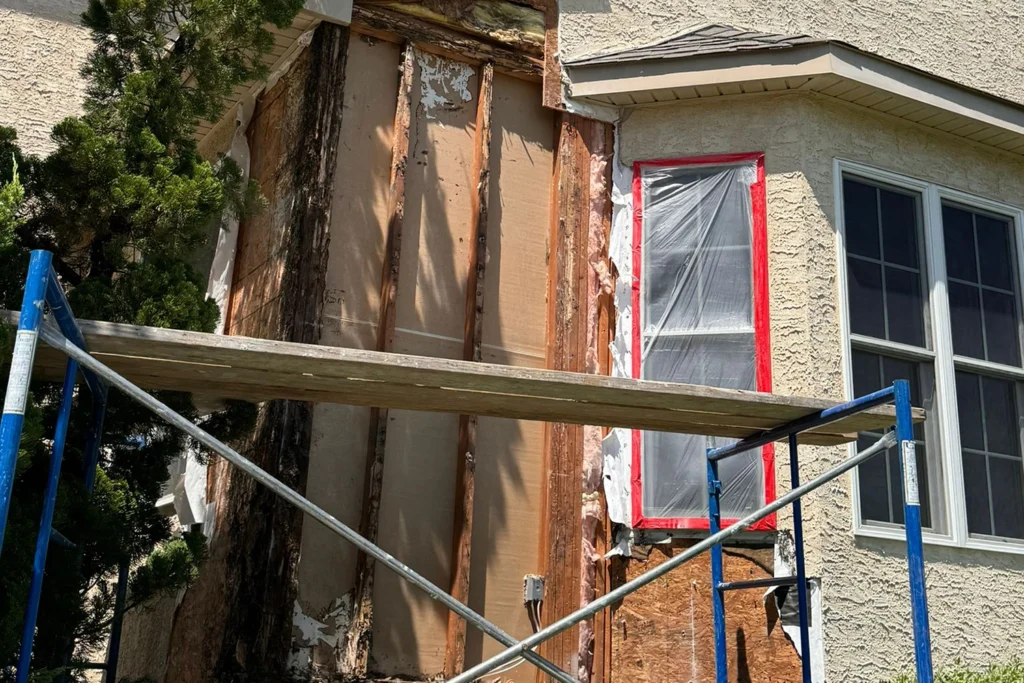
Preventing wood rot behind stucco: Best Practices
Preventing wood rot stucco damage is far more cost-effective than repairing it. Here is how you can protect your home:
- Seal Gaps Annually: Inspect and replace caulking around all windows, doors, and penetrations every year.
- Fix Cracks Promptly: Do not ignore cracks. Learn the difference between cosmetic and structural issues in our guide: Stucco Cracks: When to Worry — Settlement vs Structural Damage Explained.
- Ensure Proper Drainage: Keep gutters clean and ensure downspouts direct water away from the foundation.
- Act on Leaks Immediately: If you notice water entering during a storm, do not wait. Read our emergency guide: Stucco Leaking When It Rains? Causes & Emergency Fixes NJ.
Frequently Asked Questions (FAQ)
Does homeowners’ insurance cover stucco wood rot replacement?
It depends on the cause. Sudden water damage from a storm might be covered, but gradual rot due to maintenance neglect or poor installation is usually excluded. For more details, read Does Homeowners Insurance Cover Stucco Damage in New Jersey?.
How long does it take for wood to rot behind stucco?
Wood can begin to rot within just a few months if it remains consistently wet. In New Jersey’s humid summers, trapped moisture accelerates fungal growth and decay rapidly.
Can I fix rotting wood behind stucco myself?
No. A proper stucco wood rot fix requires identifying the source of the leak, replacing structural framing, applying a new moisture barrier, and seamlessly matching the stucco texture. This requires professional expertise to ensure the building envelope is secure.
If you suspect you have rotting wood behind your stucco, contact ZD Stucco Repair today for a comprehensive evaluation. We provide honest assessments and targeted repair solutions to protect your home.