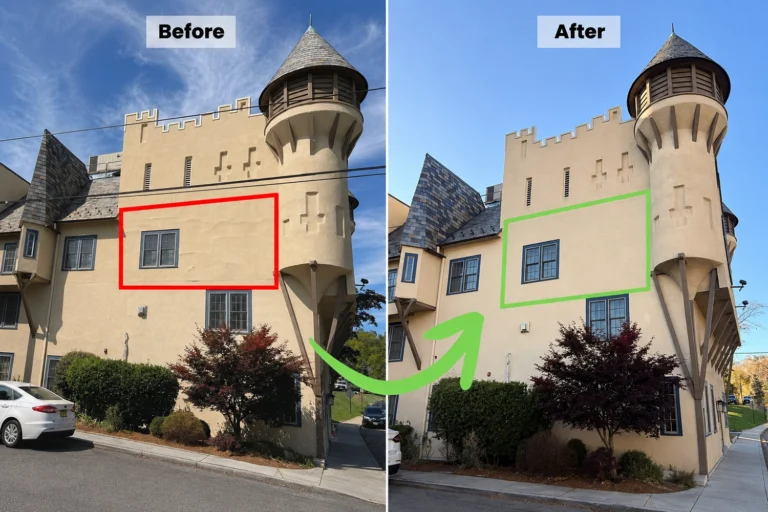
If your home has bird holes, dark staining, and worn stucco, the right fix is not to paint over the surface and hope for the best. The right fix is to wash the walls, inspect the real condition underneath, repair what is actually failing, restore the weak details, and only then apply the right finish. That is exactly what this Fair Lawn, NJ stucco repair project needed.
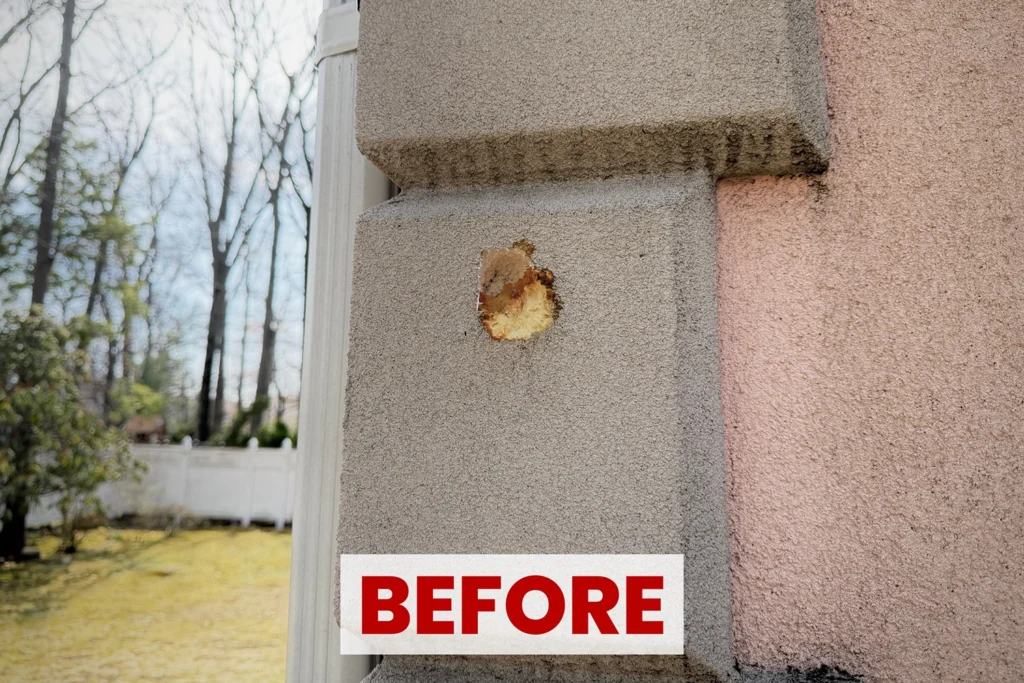
From the street, this house looked tired. Up close, the problems were much clearer. The exterior showed years of discoloration, worn sections, and multiple bird holes. The project photos also show staining below window trim, dark buildup at edges and transitions, and puncture damage in decorative stucco details. Those signs are worth checking early. DOE guidance notes that windows and doors are vulnerable points for leakage, and Benjamin Obdyke says staining around windows, dark spots where a roof meets a wall, and visible cracks can point to possible damage that should be inspected before repainting.
Why did this project start with washing first?
A lot of stucco problems look cosmetic until the surface is cleaned. That is why this project started with a full exterior wash. Washing removed dirt, organic buildup, and surface staining so the repair plan could be based on the wall’s true condition rather than on guesswork.
That first step matters because not every stain means the same thing. Some marks are only surface dirt. Some are tied to moisture movement. The Stucco Manufacturers Association defines efflorescence as a deposit left behind when water dissolves salts and brings them to the stucco surface as moisture evaporates. Cleaning first makes it easier to tell what needs repair, what needs cleaning, and what needs a closer inspection.
Why are bird holes in stucco more serious than they look?
Bird holes may look small, but they create direct openings in the exterior. Once that shell is punctured, water can find a way in, edges can break down faster, and repeated pecking can turn one small defect into a much larger repair. The provided close-up photos from this project show exactly that kind of damage in decorative stucco trim.
U.S. Fish & Wildlife Service guidance says holes made by woodpeckers should be filled and painted right away, and it says physical exclusion with taut bird netting is usually the most effective way to keep birds from coming back. In other words, the right repair is not only about making the wall look better. It is also about closing an entry point and stopping the cycle from repeating.
What was actually repaired on this Fair Lawn home?
Once the surface was cleaned, the damaged stucco sections were repaired the right way. Weak areas were rebuilt instead of being hidden under the coating. Multiple bird holes were addressed. Worn sections were brought back to a sound condition. The vulnerable details around trim, transitions, and exposed openings were also restored so the finish would look cleaner and perform better over time.
This is where good stucco repair separates itself from a quick cosmetic patch. Flat wall areas matter, but corners, bands, trim profiles, and window zones usually tell you more about the condition of the exterior. DOE explains that flashing around windows and doors is there to direct water out of the wall cavity and protect the framing behind the cladding. When those edge conditions age poorly, the wall may still look acceptable from a distance, while weak points keep letting the exterior break down.
Why do stains around windows and trim need more than paint?
Homeowners often ask if staining can be covered by paint alone. Sometimes a fresh coating improves the look for a while, but paint does not answer the real question: why is the wall staining in the first place? Benjamin Obdyke points out that staining around the corners of windows and dark spots where surfaces meet are signs that water may be running on or within the stucco, and that only an inspection can confirm what is happening below the surface.
That is a real concern in New Jersey. The New Jersey Weather and Climate Network, based at Rutgers, reports that the state’s 1991 to 2020 annual precipitation normal is 47.56 inches, up from 46.36 inches in the previous 30-year normal period. On a house in Fair Lawn, that means stucco is dealing with repeated wetting, winter exposure, and seasonal temperature swings year after year. Once staining shows up around openings or weak details, it makes sense to check the wall before repainting it.
Why finish with an elastomeric stucco coating after repairs?
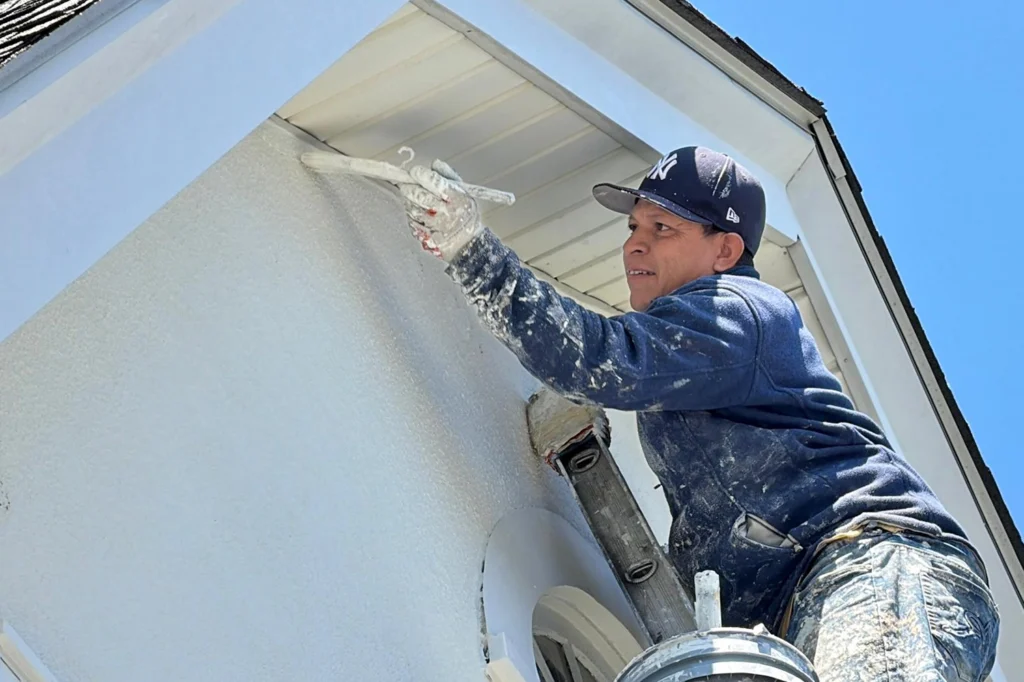
After the damaged areas were repaired, the home was finished with an elastomeric stucco coating. This gave the exterior a clean, uniform appearance, but the coating was the final step, not the main fix.
That order matters. The Stucco Manufacturers Association says elastomeric coatings can help hide cracks in stucco, though they should be chosen carefully with attention to vapor drive, texture muting, and future maintenance. Sherwin-Williams also states that elastomeric masonry coatings can cover hairline cracks and help resist water penetration from wind-driven rain on surfaces that include stucco. Put simply, coating is a smart finish when the wall has already been repaired correctly. It is not a substitute for repairing weak stucco.
What does the before and after really show?
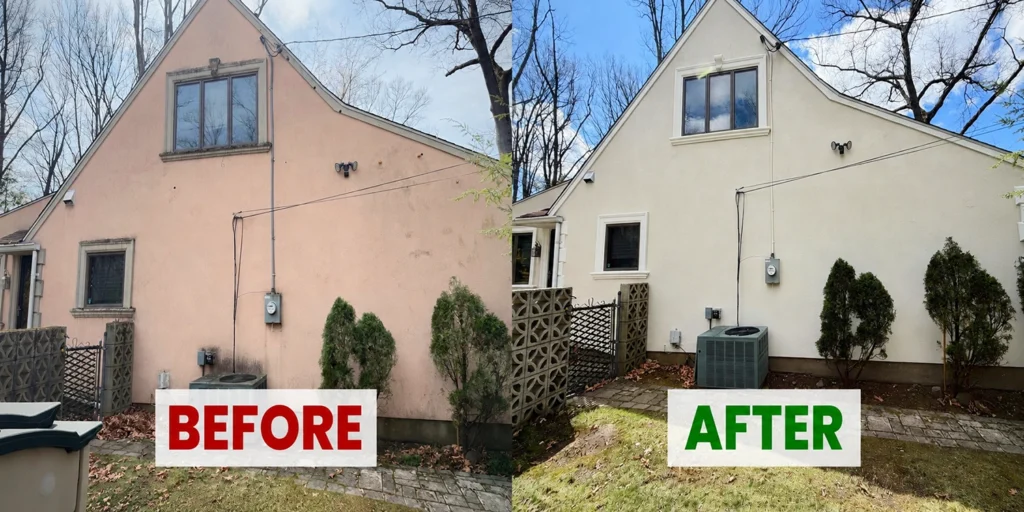
The visual change on this Fair Lawn home is obvious. The aged exterior with visible wear, punctures, and staining was turned into a much cleaner and more even finish. But the better story is not just color. It is a process.
The rebuilt details look sharper. The patched areas no longer read as weak points. The wall surface looks more consistent from one section to the next. That is what happens when a stucco restoration starts with the actual condition of the wall, not with a rushed topcoat. The final finish improves curb appeal, but it also gives the home a better layer of defense against future wear.
Why this repair process matters for long-term stucco performance
A lot of stucco problems stay small only when they are handled early. A few stains under a window can turn into larger repairs if the same area keeps getting wet. A small bird hole can become a bigger patch if moisture gets into the opening or birds return to the same spot. Weak decorative details can keep shedding material if they are only painted instead of rebuilt.
That is why the best stucco repair process is simple: clean first, inspect closely, repair what is actually failing, restore the details that take the most stress, and then use the right finish. When that order is followed, the result looks better and has a better shot at lasting.
Why homeowners in Fair Lawn call ZD Stucco Repair
ZD Stucco Repair already shows strong trust signals on its website, with a 4.9 out of 5 average customer rating, 200-plus five-star client reviews, and 1,300-plus jobs completed. The company also lists Fair Lawn among its New Jersey service areas. For local homeowners, that matters because the job is not only about materials. It is also about choosing a crew that can explain what is cosmetic, what needs repair, and what the right next step is for the property.
If your own home has staining, bird holes, cracking, or sections of stucco that simply look worn out, the next step is not to guess. It is to have the surface checked, repair the weak areas, and use a finish that protects the home after the repair work is done.