When a commercial building starts showing its age on the outside, it doesn’t just look worn. It loses weatherproofing, curb appeal, and in some cases, it starts telling customers the wrong story before they ever walk in the door.
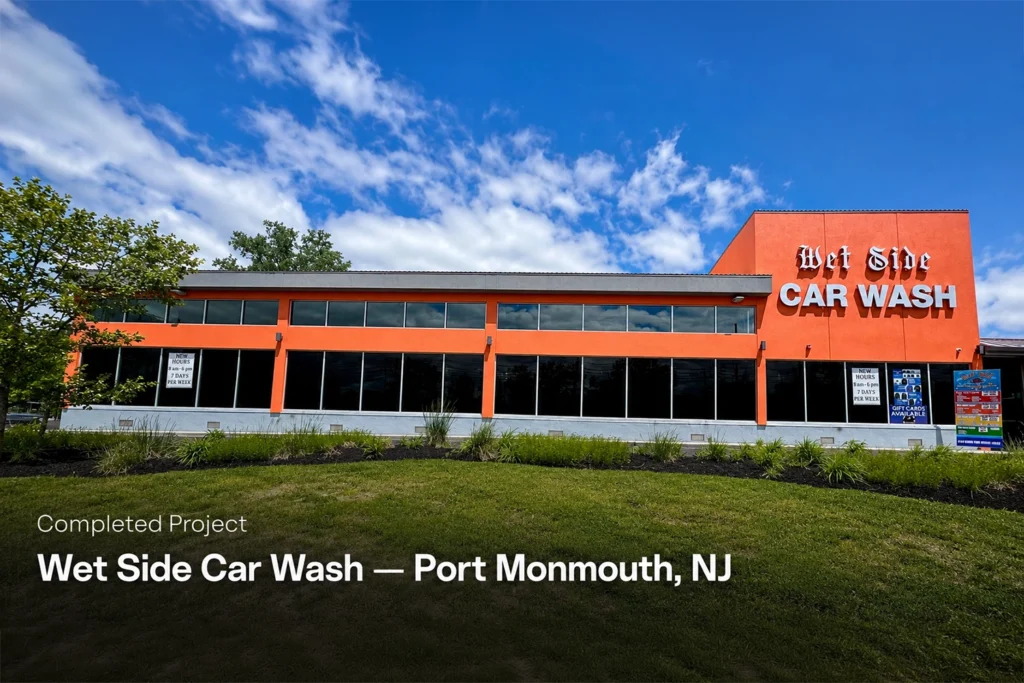
ZD Stucco Repair recently completed a full exterior stucco painting project at Wet Side Car Wash in Port Monmouth, NJ. This wasn’t a simple paint-and-go job. The building is an active commercial facility operating seven days a week, the wall sections required boom lift access, and the signage needed careful protection throughout the process.
Here’s a full breakdown of what the project involved, what materials we used, and why this approach is the right call for any commercial stucco exterior in New Jersey.
About the Project: Wet Side Car Wash, Port Monmouth, NJ
Wet Side Car Wash is a full-service commercial car wash facility in Port Monmouth, NJ. The building is a large two-story stucco structure with a bold orange and gray exterior, prominent signage, and customer-facing windows across the main facade.
The scope of work: two coats of Dryvit elastomeric paint applied across the stucco walls, with a boom lift setup for the upper and elevated sections. The car wash stayed open the entire time. That meant our crew had to plan access, manage equipment positioning, and protect the existing signs and surfaces on a live site.
The result: a clean, uniform finish with improved weather resistance and a strong visual that matches the brand.
Why We Used Dryvit Elastomeric Paint for This Commercial Stucco Job
Not every paint is built for stucco, and not every stucco paint is built for commercial exteriors in New Jersey. This state gets everything: hot summers, cold winters, heavy rain, freeze-thaw cycles, salt air near the shore. Monmouth County gets all of it.
Dryvit elastomeric paint is the right material for this application for a few specific reasons:
- Elastomeric formulas flex with the surface. Stucco expands and contracts as temperatures change. A rigid coating cracks along with it. An elastomeric coating moves with the substrate instead of against it, which keeps the surface sealed even as the building moves through seasonal changes.
- It bridges hairline cracks. Minor surface cracks in stucco are common over time. Dryvit elastomeric paint is thick enough to fill and bridge small cracks without requiring full patching before painting, saving time and reducing overall project cost.
- It repels water. The coating creates a barrier against moisture intrusion while still allowing the wall to breathe. That moisture resistance is essential in coastal NJ where salt air and humidity are constant.
- It holds color. UV-resistant formulas like Dryvit hold their color significantly longer than standard exterior paints, which means a commercial building stays looking sharp for years between repaints.
- It’s designed for EIFS and stucco systems. Dryvit makes products specifically for EIFS (Exterior Insulation and Finish Systems) and traditional stucco surfaces. Using a manufacturer-matched coating on a stucco exterior means better adhesion and longer product life.
For a high-traffic commercial building like a car wash, which faces constant exposure to moisture, pressure washing runoff, car exhaust, and direct weather year-round, elastomeric paint is not just a good choice. It’s the practical one.
What the Two-Coat Process Actually Means
A two-coat application is not just about coverage. It’s about building a proper system.
The first coat sets adhesion and establishes base coverage across the full surface, including any texture variations, minor cracks, and transitions between sections. The second coat builds film thickness to the level required for long-term weather and UV protection.
With Dryvit elastomeric, the combined dry film thickness of two proper coats delivers the flexibility and bridging capability the product is designed for. A single coat won’t get you there. It may look fine on day one, but it will fail sooner under New Jersey weather conditions.
Before any paint went on, the surfaces were cleaned and prepped. Proper preparation is what separates a coating job that lasts from one that starts peeling within a few seasons.
Working on an Active Commercial Site: What Made This Job Challenging
One thing that’s easy to overlook when you’re looking at finished project photos is how the work actually gets done. Wet Side Car Wash was open throughout this entire project. That introduced real constraints that had to be managed every day.
Boom Lift Access on a Live Facility
The upper sections of the building required a boom lift. Setting up that equipment around an operating car wash—where customers are pulling in and out, staff are moving between work areas, and equipment is running—requires coordination that goes beyond just renting a lift and parking it. We had to work around customer flow and keep the lot accessible at all times.
Sign Protection
The Wet Side Car Wash signage is a major part of the building’s identity. It’s large, prominently positioned, and directly attached to the stucco surfaces being painted. Every pass near the signage required proper masking and careful coverage to prevent overspray or paint contact with the lettering and sign faces. That takes time, but skipping it is not an option.
Zero Downtime for the Business
The client stayed open the entire time. Wet Side runs seven days a week, and closing for even a day is lost revenue. Commercial contractors who work on live facilities need to schedule work in phases, manage drying time around operating hours, and communicate clearly with the business so there are no surprises. That’s exactly how this project ran.
Why Commercial Stucco Exteriors Need More Than a Paint Job
A lot of commercial property owners treat the exterior like a cosmetic issue. It looks faded, so they want to repaint it. That thinking isn’t wrong, but it’s incomplete.
Stucco is a protective system. When the outer coating fails—whether from UV degradation, coating delamination, moisture infiltration, or simple age—the stucco underneath starts taking on water. In New Jersey, that water freezes in winter, expands in the wall, and creates damage that is significantly more expensive to fix than a proper exterior coating job.
Elastomeric paint applied correctly is not just a cosmetic refresh. It re-establishes the weather barrier, extends the life of the stucco substrate, and can bridge minor surface cracks before they develop into structural issues.
For a property manager or business owner in NJ, the choice between a proper commercial stucco coating job done now versus deferred maintenance that leads to stucco replacement later is not a close call. Replacement costs for commercial stucco easily run $25 to $50+ per square foot when EIFS or three-coat systems are involved. A well-executed painting project that extends the life of the existing system by 10 to 15 years is the smarter financial decision.
What to Look for in a Commercial Stucco Painting Contractor in NJ
If you’re a property manager, business owner, or facilities director dealing with a commercial stucco exterior in New Jersey, here’s what actually matters when hiring for this type of work:
- Experience with stucco, specifically, not just general painting. Stucco has different prep requirements, compatibility needs, and failure modes than wood, vinyl, or brick.
- Familiarity with elastomeric coatings and EIFS systems. These materials have specific application requirements. A crew that’s used to rolling latex on wood siding will not apply Dryvit correctly.
- Proper equipment for elevated access. Large commercial buildings require boom lifts or scaffolding. Confirm the contractor has the equipment and the training to use it safely.
- The ability to work around your operations. If your facility cannot close, your contractor needs to plan accordingly. Ask directly: how will you handle this on a live site?
- NJ-specific knowledge. New Jersey weather is hard on buildings. A contractor who has done commercial work in this state understands what materials hold up and what fail under local conditions.
- Licensing and insurance. Commercial exterior work requires proper coverage. Check the contractor’s NJ Home Improvement Contractor registration and general liability coverage before signing anything.
Signs Your Commercial Stucco Exterior Needs Attention Now
You don’t need to wait for visible structural damage before addressing a stucco exterior. These are the signs that tell you the coating has reached the end of its useful life:
- Fading or chalking paint (color has washed out significantly)
- Surface cracking (hairline cracks running through the coating or into the stucco itself)
- Peeling or delaminating coating (paint lifting from the surface)
- Staining or efflorescence (white mineral deposits forming on the surface, which indicates moisture is moving through the wall)
- Soft spots or areas that sound hollow when tapped (possible separation of stucco layers)
- It has been more than 10 years since the last exterior coating
Any of the above is a reason to schedule a professional assessment before the problem moves from the surface into the wall system.
Frequently Asked Questions: Commercial Stucco Painting in NJ
What is elastomeric paint, and why is it used on stucco?
Elastomeric paint is a thick, flexible exterior coating that stretches and moves with the surface instead of cracking when the substrate expands or contracts. On stucco, it provides moisture protection, UV resistance, and the ability to bridge minor surface cracks. It is the standard for commercial stucco and EIFS exteriors because standard exterior paints do not have the film thickness or flexibility to hold up long-term.
How often does commercial stucco need to be repainted in NJ?
With a quality elastomeric coating applied correctly, a commercial stucco exterior in New Jersey should hold up for 10 to 15 years before needing a full recoat. Facilities in high-exposure locations (coastal, industrial, or high-traffic areas with constant moisture or exhaust) may need attention sooner. Regular inspection every few years helps catch issues before they become costly.
Can a stucco building be painted while the business stays open?
Yes. The Wet Side Car Wash project is a good example. The facility ran its normal seven-day-a-week schedule throughout the project. It requires planning—phased work, proper equipment staging, communication with the owner—but there is no reason a commercial stucco painting project has to close a business.
Does ZD Stucco Repair work on commercial buildings?
Yes. ZD Stucco Repair works on commercial and residential stucco throughout New Jersey. Commercial projects include exterior painting, stucco repair, EIFS work, and water infiltration remediation on active commercial properties.
What counties and towns in NJ does ZD Stucco Repair serve?
ZD Stucco Repair serves Bergen County, Essex County, Morris County, Hudson County, Passaic County, Sussex County, Warren County, Union County, and Monmouth County. If your property is in northern or central NJ, contact us for a free assessment.
Does Your Commercial Exterior Need a Free Assessment?
If your building has faded stucco, surface cracking, peeling coating, or an exterior that has not been properly addressed in years, now is the right time to get a professional eye on it before the problem gets into the wall.
ZD Stucco Repair offers free professional assessments for commercial and residential properties across New Jersey. We’ll tell you exactly what the surface needs, what it doesn’t need, and what it will cost.