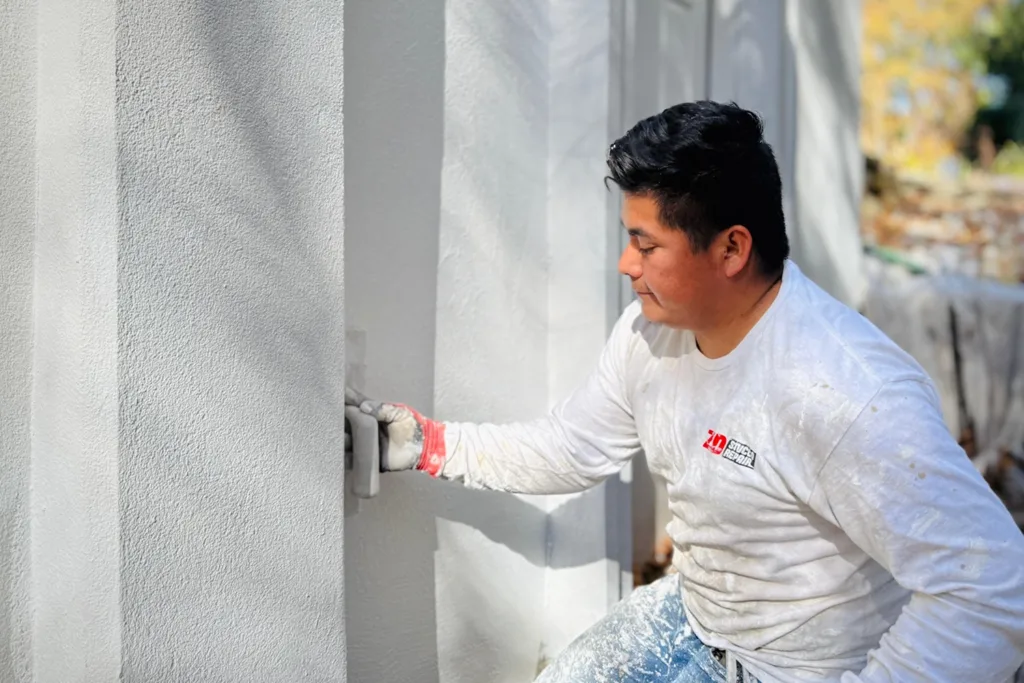
Stucco is not inherently bad for a house. Its performance depends on the wall behind it, how the exterior manages water, the quality of installation, and ongoing maintenance. A sound stucco exterior can provide a durable finish, while concealed defects can cause problems even when the surface looks attractive.
Conflicting advice makes the decision harder. One homeowner hears that stucco cannot handle rain. Another is told that it is completely waterproof. Neither statement gives you enough information to evaluate a particular house.
These five common stucco myths explain where the confusion comes from and what to check before choosing a repair, buying a home, or replacing an exterior.
Myth 1: Stucco Only Works in Hot, Dry Climates

The reality: stucco can work in different climates, but the wall must manage its actual exposure to moisture.
A shaded wall beneath a leaking gutter faces different conditions from a wall protected by a deep roof overhang. Both may be on the same house. Rain exposure, drying opportunities, and construction details help explain why one area deteriorates while another remains sound.
Building scientist Joseph Lstiburek explains this relationship in Building Science Corporation’s discussion of stucco and EIFS: damage can develop when moisture accumulates faster than an assembly can dry.
For New Jersey homeowners, the useful question is how the exterior handles rain, snowmelt, and periods of freezing weather. Look at roof runoff, window transitions, and drainage at the bottom of the wall.
Climate also affects installation. Fresh cement plaster needs suitable application and curing conditions. That does not mean a properly designed, completed stucco wall is unsuitable wherever winters are cold.
Before accepting a recommendation to replace stucco because of the climate, ask which details or conditions on your house support that recommendation.
Myth 2: Stucco Is Completely Waterproof
The reality: cement stucco is porous. The exterior needs a way to manage water that passes through or around it.
On a framed wall, several components work together:
- A water-resistive barrier, or WRB, protects the sheathing behind the cladding.
- Flashing directs water away at openings and transitions.
- A drainage path allows incidental water to move downward.
- A weep screed or other designed outlet lets that water leave the assembly.
The Building America Solution Center’s guidance on wall flashing explains how these components connect. A drainage layer is ineffective if its outlet is blocked.
Stucco applied directly to solid masonry is a different construction. It can manage moisture through the wall’s storage and drying capacity, so details for a framed wall should not automatically be imposed on it.
A fresh coating does not establish that these hidden details are sound. Before coating a wall with recurring leaks, identify the source. Also avoid filling an unfamiliar opening with caulk until you know whether it is intended to drain.
Myth 3: Every Stucco Crack Means Serious Structural Damage
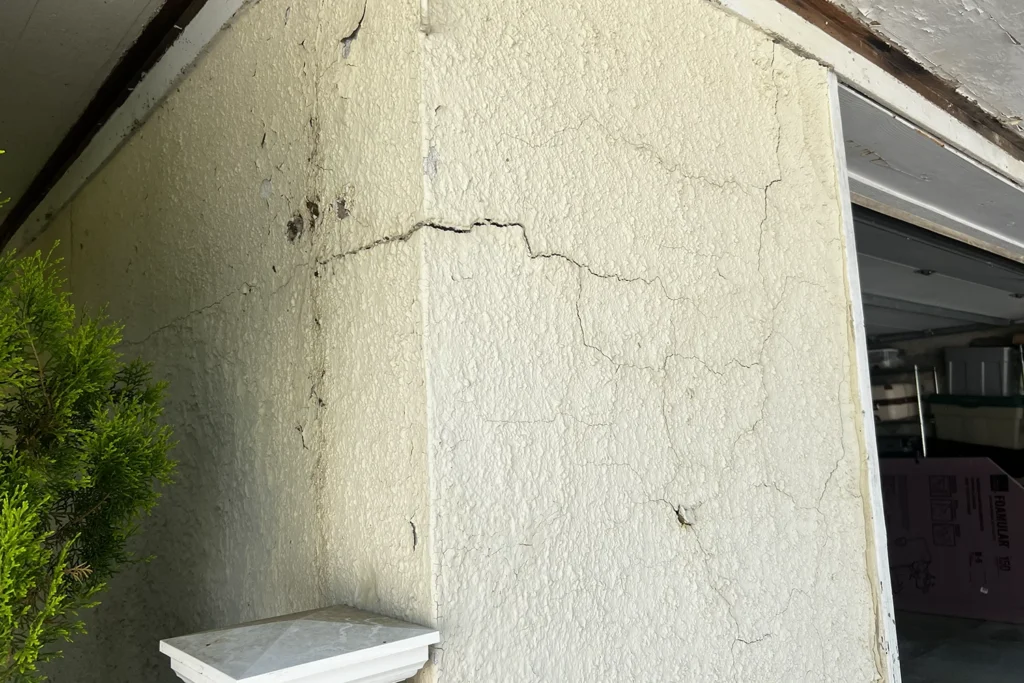
The reality: cracks have different causes, and their significance cannot be determined from width alone.
Cement plaster is rigid. Shrinkage as it dries, movement in the building, and impact can produce cracks or local damage. A crack does not automatically mean the structure is failing, but it still deserves attention.
The useful questions are specific:
- Is it new, growing, or reopening after repair?
- Does it run through a previous patch?
- Is there staining, loose material, or a bulge nearby?
- Is it beside a window, door, or roof connection?
- Has an interior leak appeared in the same area?
For example, a fine crack that has remained unchanged on an otherwise sound wall presents a different situation from a recurring crack beneath a window with brown staining. Neither can be fully diagnosed from a photograph.
Take a close photograph and a wider photograph showing the surrounding wall. Record the date so changes can be compared. If material is loose or the wall is visibly bulging, keep clear of the affected area and arrange an assessment.
Conversely, an attractive surface does not prove that everything behind it is dry. Where the history or visible conditions suggest concealed damage, an inspector can explain whether targeted moisture testing or exploratory openings are appropriate.
Myth 4: Stucco and EIFS Are the Same, and EIFS Is Always Defective
The reality: traditional stucco and EIFS are different systems, and EIFS performance depends on its design and condition.
Traditional cement stucco uses a relatively thick plaster layer. EIFS, short for Exterior Insulation and Finish System, combines insulation board with a reinforced base coat and a protective finish.
They can look similar once finished. The Association of the Wall and Ceiling Industry’s comparison of stucco and EIFS also describes cement stucco systems installed over foam insulation. Finding foam does not, by itself, identify EIFS.
Older face-sealed EIFS assemblies relied heavily on keeping water out at the exterior surface. Drainage EIFS incorporates a water-resistive barrier and a route for incidental water to escape. These are meaningful differences, but a building’s age alone does not establish which system it has.
A tap test may provide a clue, but it cannot reliably establish the full construction or its condition. Installation records, manufacturer information, and examination of accessible details are more useful.
When arranging EIFS repair, ask which layers are damaged and how the proposed materials will work with the existing system.
Myth 5: Any Stucco Problem Can Be Fixed with a DIY Patch
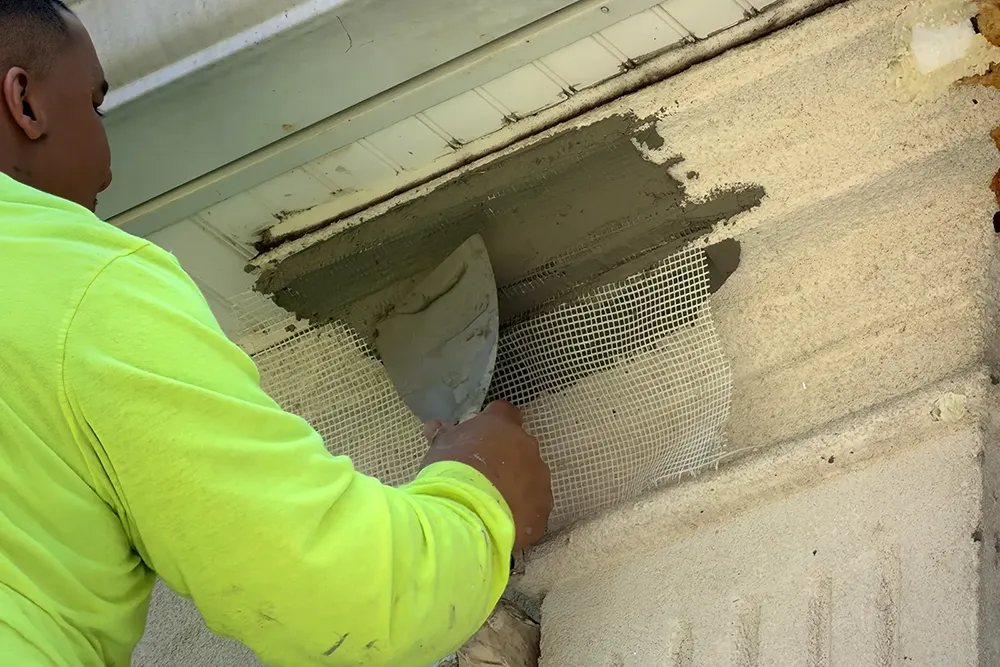
The reality: some small surface repairs are manageable, while deeper damage requires a different scope of work.
A limited chip in sound cement stucco may be suitable for a compatible repair product. For example, QUIKRETE’s stucco repair instructions distinguish small, nonstructural aesthetic repairs from other work and specify preparation and application limits.
That does not make the same product appropriate for every exterior. A patch cannot replace missing flashing, rebuild decayed sheathing, or restore damaged EIFS reinforcement simply by covering the opening.
Historic stucco needs particular care. The National Park Service’s guidance on historic stucco repair explains why a repair must be compatible with the existing material. An overly rigid patch can create problems in softer, lime-based stucco.
Before starting a repair, establish:
- What material or system you are repairing.
- Whether the surrounding area is sound.
- Whether the damage is limited to the surface.
- Which preparation, thickness, and curing requirements apply.
Texture and color matching also take planning. Test a small area before assuming that a product described as “stucco patch” will disappear into the existing finish.
What Your Stucco Wall May Need Next
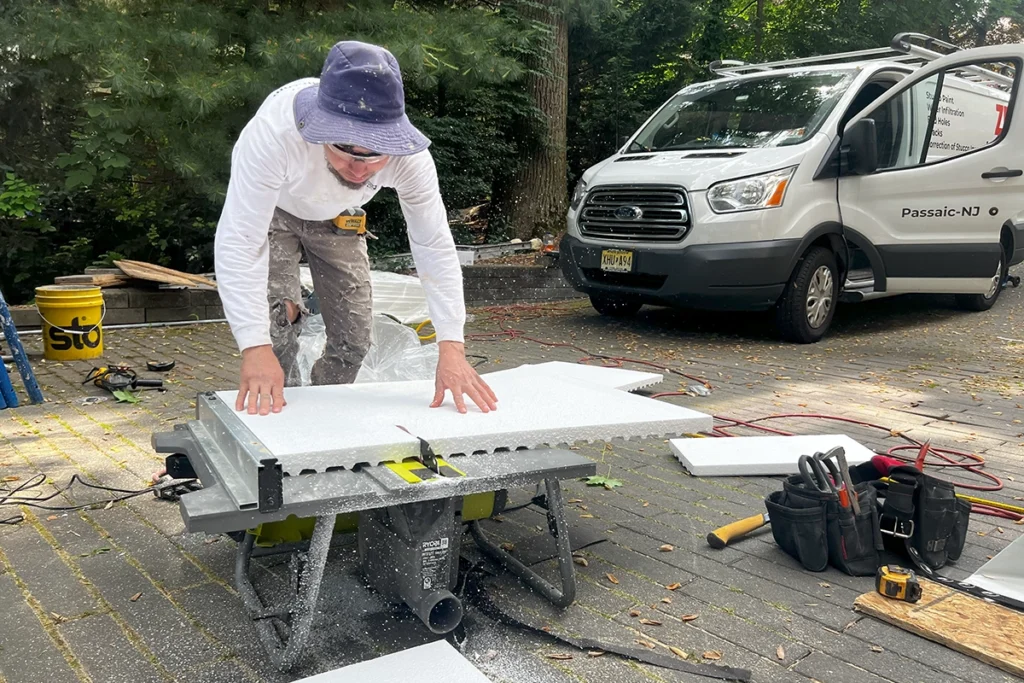
Use the conditions below to prepare for a repair discussion. They help identify the next question to investigate; they do not establish a diagnosis.
| What you notice | What needs checking | Useful next step |
|---|---|---|
| A small, isolated surface chip | The wall material and depth of damage | Confirm that a compatible surface repair is appropriate. |
| A crack that reopens after patching | Movement, repair compatibility, and nearby details | Investigate the cause before repeating the patch. |
| Staining or leaks near a window | Window transitions, flashing, and possible concealed moisture | Arrange an assessment before painting over the area. |
| Bulging or loose exterior material | Attachment and the condition of underlying layers | Keep clear of loose material and obtain professional evaluation. |
| An unfamiliar textured wall system | Whether it is cement stucco, EIFS, or another assembly | Identify the system before selecting repair materials. |
Ask for a Repair Explanation You Can Understand
A useful repair proposal should connect the observed problem to the recommended work. Ask the contractor to explain:
- What evidence supports the proposed repair?
- Which layers will be repaired or replaced?
- What remains uncertain until the wall is opened?
- How will the work address any identified water-entry path?
- How closely can the repaired finish match the surrounding wall?
Keep photographs, reports, and repair records together. They make recurring problems easier to explain and help a future inspector understand what has already been done.
If you own a property in New Jersey and have recurring stains or leaks, contact ZD Stucco Repair to discuss water infiltration assessment and repair. Share the location of the problem, when you first noticed it, and whether previous repairs have held.
Frequently Asked Questions
How Long Does Stucco Last?
Stucco can remain serviceable for decades, but there is no single lifespan that describes every wall. The plaster, finish coating, sealant joints, and concealed components can need attention at different times. Judge an existing exterior by its condition, exposure, and repair history rather than treating a commonly quoted lifespan as a replacement deadline.
Does Stucco Need to Be Painted?
Not always. Some stucco finishes contain pigment, so their color does not depend on a separate paint layer. The American Cement Association explains how pigments and aggregates provide stucco color.
Previously painted stucco needs maintenance appropriate to that coating. Before scheduling stucco painting, check adhesion, surface condition, and compatibility with the proposed paint.
Does Stucco Need to Be Sealed?
A sealer over the entire surface is not automatically necessary. Suitability depends on the existing finish, wall construction, exposure, and product requirements. Maintaining sealant joints around designated transitions is a separate task. Ask what a proposed sealer is intended to accomplish and whether it will affect drying or future recoating.
Is Stucco Fireproof?
Cement stucco is fire-resistant, but “fireproof” overstates what it provides. A stucco exterior does not make the roof, windows, vents, or other building components immune to fire. Any claimed fire-resistance rating needs to apply to the specified wall assembly; the appearance or thickness of the exterior finish alone does not establish that rating.
Is Stucco a Good Insulator?
Cement plaster alone provides limited insulation. Its ability to store heat is different from an insulating material’s resistance to heat flow. EIFS includes insulation board, and cement stucco can also be installed as part of an insulated assembly. To compare energy performance, ask about the insulation and complete wall construction rather than the finish alone.
Can You Pressure Wash Stucco?
Sometimes, but the method must suit the wall system and its condition. Aggressive washing can damage the finish. For its EIFS products, Dryvit recommends controlled low-pressure cleaning, suitable cleaners, and thorough rinsing. Follow the applicable manufacturer’s instructions, test a small area, and address damaged areas before washing. Do not assume one pressure setting is safe for every stucco exterior.