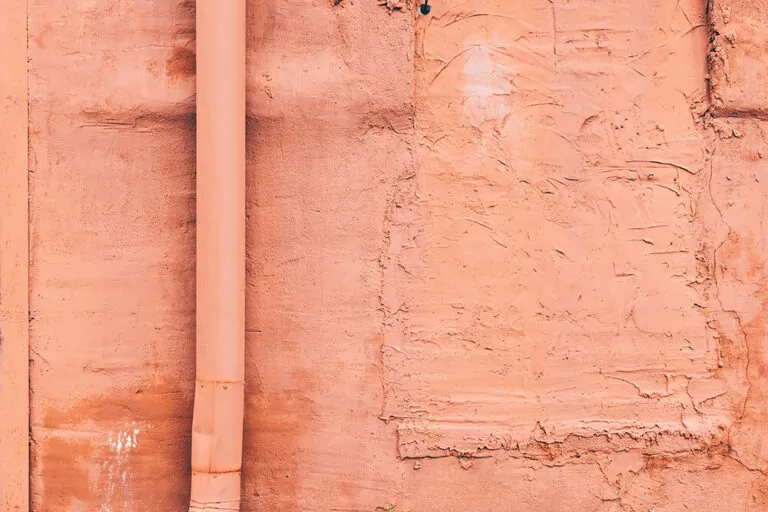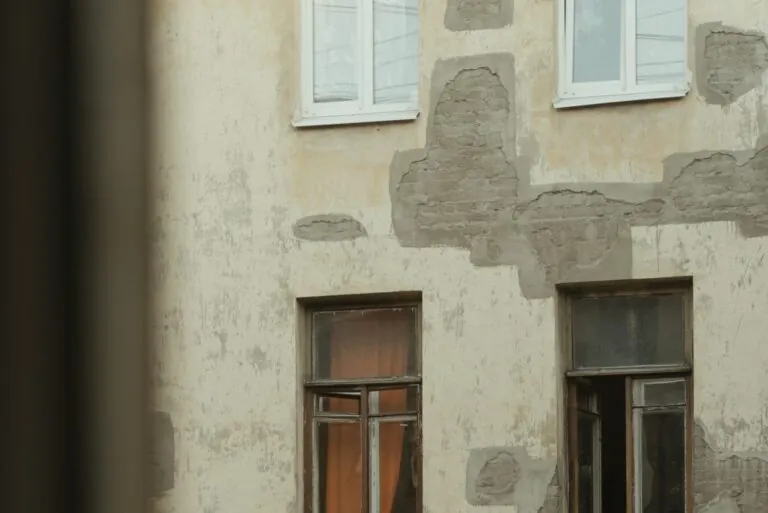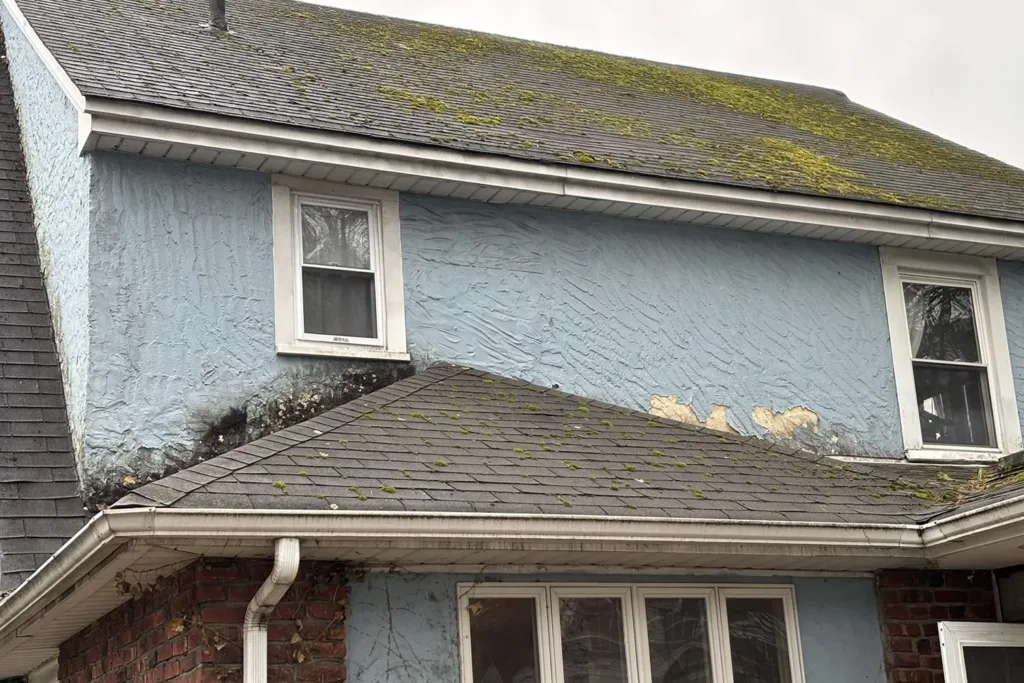
To remove mold on stucco, first check that the wall is intact and identify its finish. Use a compatible exterior cleaner, follow its application instructions, and clean without damaging the surface or forcing water into the wall. Then address whatever keeps the area damp.
A stained wall does not automatically need replacement. But cleaning alone cannot repair a leaking window, damaged flashing, or moisture trapped behind the finish. Before choosing a cleaner, look at both the discoloration and the condition of the surrounding wall.
Is It Mold, Algae, or Another Stucco Stain?
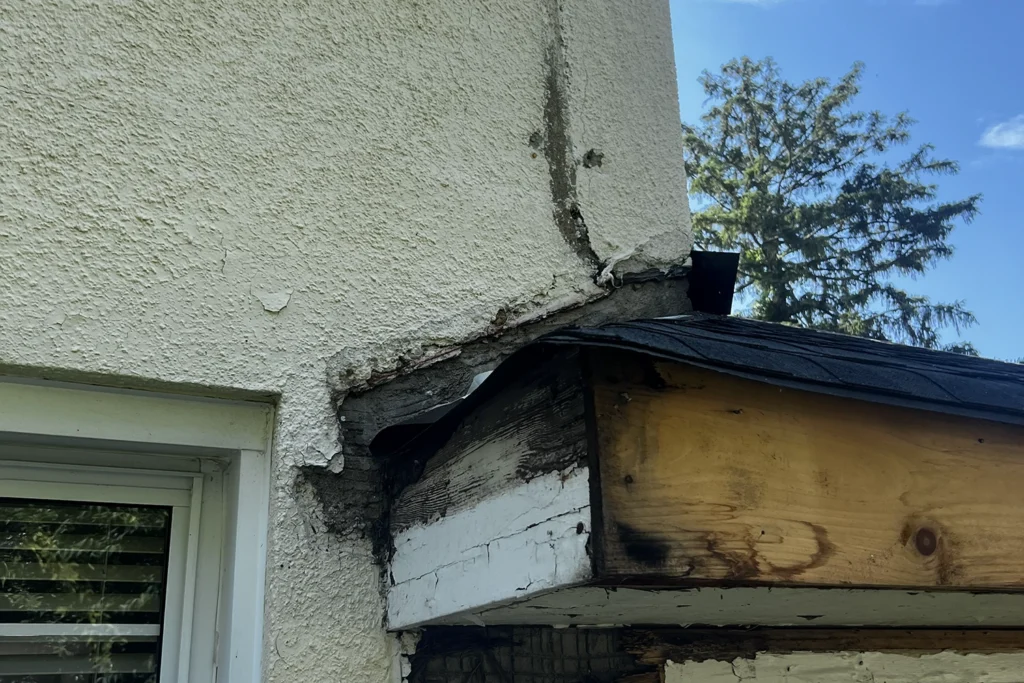
Dark spots and green patches can look similar from the ground. Their appearance offers clues, but it does not reliably identify the organism or establish whether water has reached the materials behind the stucco.
The CDC explains that mold can appear in several colors. What homeowners call black mold on stucco is therefore a description of its appearance, not a confirmed species or a diagnosis of its health effects.
Use the following observations to decide what to investigate next.
| What You See | Possible Explanation | What to Check Next |
|---|---|---|
| Dark or green patches on a shaded wall | Surface mold, algae, or accumulated staining | Persistent dampness, nearby plants, and repeated water exposure |
| White powdery or crystalline deposits | Efflorescence, which consists of mineral salts | Where moisture may be moving through cement-based materials |
| Streaks below a window, gutter, or roof connection | Runoff staining or a possible water-management problem | The condition of the detail above the stain and what happens during rain |
| Discoloration with bulging, peeling, or loose finish | Coating failure or possible moisture-related damage | Have the wall assessed before washing or recoating it |
White deposits need a different investigation from biological growth. Our guide to efflorescence on stucco explains how salts reach the surface and why the moisture source matters.
Why Mold Appears on Stucco
Outdoor surfaces collect dust and organic debris. When an area stays damp, those deposits can support biological growth. Shaded walls may dry slowly, especially where vegetation crowds the surface or water repeatedly reaches the same spot.
Start by looking for a pattern:
- A sprinkler wets the wall during every irrigation cycle.
- An overflowing gutter sends water down the facade.
- A leaking downspout keeps one corner damp.
- Shrubs or climbing plants sit against the finish.
- Splashback repeatedly wets the bottom of the wall.
There is also a separate possibility: water may be entering around an opening or connection. Flashing, the material that directs water away from vulnerable joints, and the drainage components behind the finish both matter.
A surface stain cannot tell you which situation applies. For example, discoloration below a window could involve dirty runoff, a leaking detail, or both. Photographing the area and observing it during rain can help a professional investigate the pattern.
Check the Wall Before You Start Cleaning
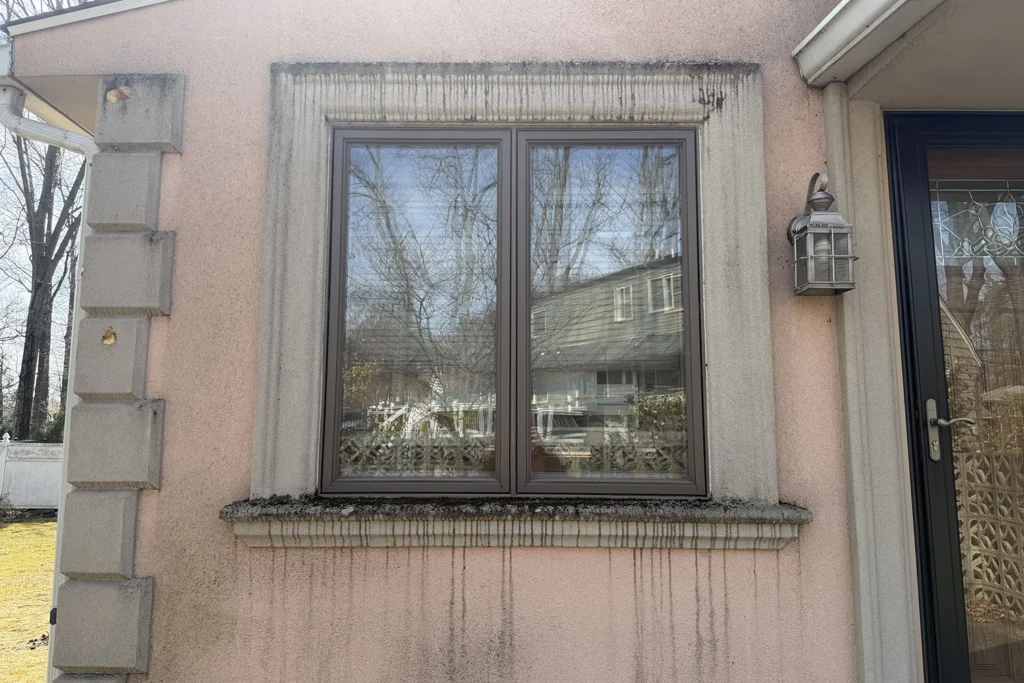
Limit homeowner cleaning to a manageable area you can reach safely from the ground, with an intact finish and a confirmed cleaning method.
Arrange an assessment first if you notice:
- Open cracks, missing material, or exposed underlying layers.
- Bulging areas or a finish that is separating from the wall.
- Recurring stains around windows or roof connections.
- Indoor dampness, staining, or a persistent musty smell near the affected wall.
- Extensive growth or a history of unresolved leaks.
Do not press, scrape, or cut into the wall to test for hidden damage.
Sto’s restoration guidance distinguishes a sound but dirty facade from one showing signs of water intrusion. The latter needs evaluation before choosing a repair approach.
Cleaning the outside cannot establish whether concealed sheathing, the board layer behind the exterior system, is dry or undamaged.
Choose a Cleaner for the Actual Stucco Finish
A textured exterior may be traditional cement stucco, a painted surface, or EIFS, an exterior insulation and finish system. Similar-looking walls can require different care.
Check installation records, coating information, or the system manufacturer’s maintenance instructions. If the finish is unknown, identify it before experimenting with cleaning chemicals.
| Surface or System | What to Confirm | Main Cleaning Concern |
|---|---|---|
| Unpainted cement stucco | The cleaner is suitable for the cement finish and its color | Avoid erosion, discoloration, and water entry through damaged areas |
| Painted or coated stucco | The coating manufacturer permits the cleaner and application method | Avoid softening, lifting, or changing the appearance of the coating |
| EIFS or an acrylic finish | The system manufacturer’s maintenance instructions and compatible products | Protect the finish and underlying layers from abrasion and forced water entry |
The cleaner’s label should cover the intended surface, dilution, application method, and rinsing requirements. A product that removes mold stains does not necessarily claim to disinfect the surface.
Should You Use Bleach?
Bleach is not an automatic requirement. EPA’s guidance on bleach during mold cleanup explains that routine biocide use is not generally recommended and that killing mold alone does not remove it.
That general guidance does not determine compatibility with every exterior finish. If a manufacturer permits a particular bleach-containing product, use the specified product and directions. Chlorine bleach and oxygen-based cleaners are different formulations; they do not share one universal mixing ratio.
Never mix bleach with vinegar, ammonia, or another cleaning product. Do not strengthen a cleaner beyond its label instructions to make it work faster.
How to Remove Mold from Stucco
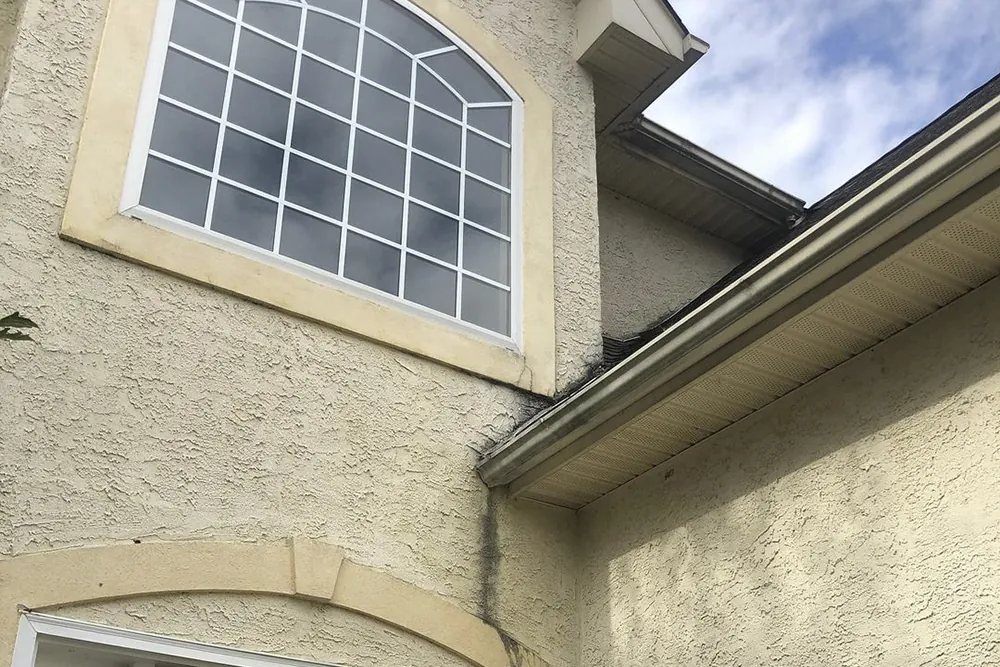
Once the surface is suitable for cleaning, use a controlled approach. Prepare the equipment and read the entire product label before wetting the wall.
1. Protect Yourself and the Work Area
Wear protective gloves and eye protection appropriate for the cleaner. For exposure to mold particles, EPA describes using a properly fitted N95 respirator. An N95 does not protect against chemical gases or vapors; follow the cleaner’s safety requirements.
Keep children and pets away from the work area. Protect nearby plants, metalwork, and other sensitive materials as the label directs. Plan where rinse water will go.
If mold exposure is a health concern for you, consult a healthcare professional before doing the cleanup.
2. Test a Small, Inconspicuous Area
Apply the cleaner using the proposed dilution and method. Rinse as directed, let the area dry, and check for a change in color, texture, or coating adhesion.
A successful test helps establish surface compatibility. It does not confirm the condition of the wall behind the finish.
3. Apply the Cleaner as Directed
Follow instructions for prewetting, dilution, and application. Work in sections you can finish within the specified treatment time.
Dwell time means how long the cleaner remains on the surface before the next step. Do not substitute a generic ten-minute wait for the product’s actual directions.
4. Clean Gently
Use a soft-bristle brush if the approved method calls for agitation. Avoid wire brushes, abrasive pads, and forceful scrubbing.
Let the cleaner perform its intended action. If the stain does not respond, stop and reassess the product or the stain rather than increasing pressure.
5. Rinse and Inspect After Drying
For products requiring rinsing, remove residue with the permitted method. Avoid directing water into cracks, openings, or joints.
Dryvit’s finish-cleaning instructions address test areas, application conditions, gentle brushing, and rinsing for its products. Use the equivalent instructions for your own system.
Inspect the dry surface before deciding whether more treatment is needed. Some discoloration can remain after cleanup, so a lingering mark is not by itself proof of active growth.
How to Reduce the Chance of Mold Returning
Prevention starts with reducing avoidable wetting and helping the wall dry. Cleaning will have a limited effect if a gutter or sprinkler keeps soaking the same area.
During routine exterior maintenance:
- Clear gutters and repair leaks or overflowing sections.
- Check that downspouts carry water away without discharging against the facade.
- Adjust sprinklers so they water planting beds rather than the wall.
- Trim vegetation that touches the finish or restricts drying.
- Keep soil, mulch, and accumulated debris away from the wall’s drainage outlets.
- Have damaged sealant joints and flashing assessed and repaired appropriately.
Drainage openings need special care. On a drainable stucco wall, a weep screed at the base provides an outlet for water. It is part of the wall’s moisture-management system, not a gap to fill with caulk. The Building America Solution Center explains how stucco flashing and drainage work together.
A new coating may be appropriate when the existing finish needs maintenance. Choose it for the actual assembly and substrate condition. Repainting or applying a sealer cannot correct a defective drainage detail, and there is no single recoating schedule suitable for every wall.
When Recurring Stains Need Professional Attention
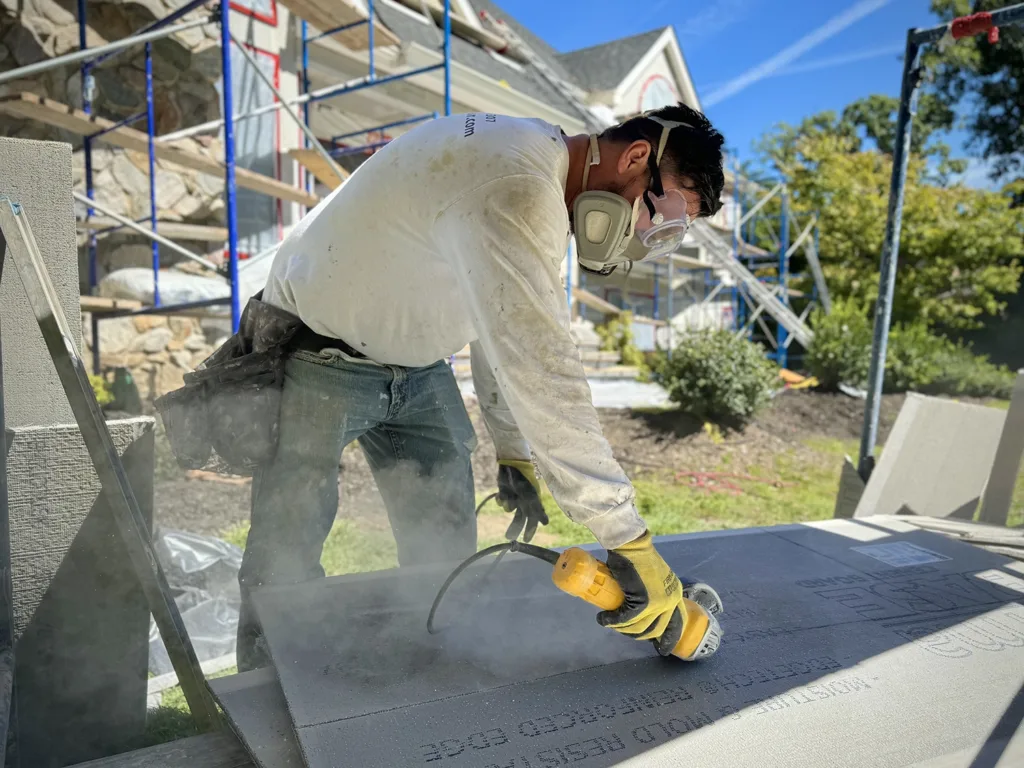
If discoloration returns, compare it with your earlier photographs. Is it in the same location? Does it follow rainfall or irrigation? Has the wall developed cracking, loose finish, or an indoor moisture symptom?
Those observations help separate a maintenance issue from a potential leak. They do not automatically mean the entire facade needs removal.
Ask the professional to explain:
- What evidence supports the suspected moisture source.
- Whether the finish is sound enough for cleaning.
- Whether further investigation is needed behind the surface.
- Which repairs address the cause of the problem.
For a New Jersey property with recurring stains or suspected leakage, ZD Stucco Repair’s water infiltration and stucco leak repair service is a relevant next step. Share photographs and describe when the area becomes wet so the assessment starts with useful information.
Frequently Asked Questions
Can You Pressure Wash Stucco?
Some manufacturers permit controlled pressure washing on suitable, intact surfaces. That does not establish one safe pressure setting for all stucco.
The finish, nozzle, working distance, application angle, and existing damage all affect the result. If the system is unknown or the surface is deteriorating, arrange an assessment before using a pressure washer.
How Do You Clean Stucco Without a Pressure Washer?
For a small, accessible area, use a compatible cleaner approved for manual application, a soft-bristle brush if permitted, and a garden hose where rinsing is required.
Follow the product’s manual-use directions. If the area is too high to reach safely or the surface does not respond to the approved treatment, seek professional help.
Will Vinegar Damage Stucco?
It can be unsuitable for the finish, so do not treat vinegar as a universally safe cleaner. Vinegar is acidic, and Dryvit advises against acids for routine cleaning of its finishes.
Use a product approved for your actual wall and coating. Never combine vinegar with bleach.
Can You Paint Over Mold Outside?
Clean up the mold, address the moisture source, and let the surface dry before painting. EPA advises against painting or caulking moldy surfaces because the coating can fail.
If discoloration remains after proper cleaning, assess the dry, sound surface for a compatible finish. Our stucco painting service explains preparation and coating considerations.